

A robot quoted at US$30,000 can easily cost five times that amount before it produces a single unit. This is not an outlier. These are the numbers most boards never see. The gap between projected and actual cost is the total cost of ownership, and it is where most automation ROI projections fail.
The Number on the Slide vs the Number on the Invoice
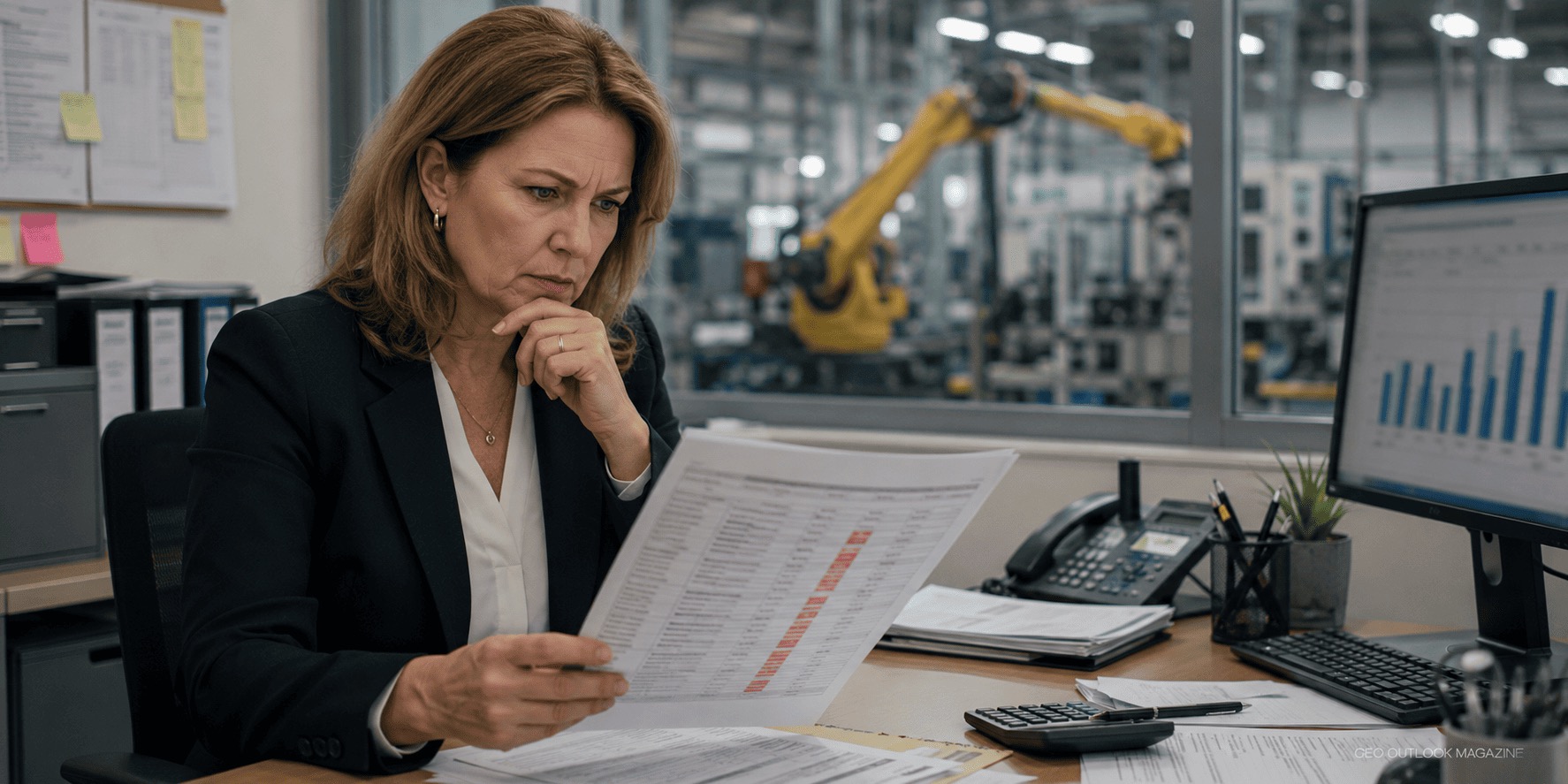
Most capital requests show only the equipment price. A standard industrial robot might cost US$50,000 to US$200,000, with collaborative models sometimes less. That number is rarely the full story. Integration, training, floor changes, maintenance, spares, and software typically add another 25 to 50 percent. Many ROI models ignore these costs or bury them in contingencies, which distorts the business case.
Where the Gap Actually Comes From
Integration labor is the most consistently underestimated cost. Robotics integrators typically charge US$125 to US$200 per hour, and integration labour is almost always underestimated. Integrators charge US$125 to US$200 per hour and often need 150 to 400 hours to design, program, and commission a cell. That adds US$19,000 to US$80,000 before the robot does any work. This does not include infrastructure upgrades like power, air lines, or floor changes for safety. Every minute of lost production while a robot is configured and tested turns a schedule slip from days into weeks into a genuinely material line item that rarely appears explicitly in the original capital request. Poorly planned installations that extend from an anticipated two-week outage into a six-week delay do not simply cost more in labor. They also cost the revenue the plant would have generated during each additional week.
The Two Line Items Almost Nobody Budgets For
Industry data shows about 40 percent of automation projects go over budget, often because of two overlooked categories: safety certification and employee upskilling. Safety compliance is not a box to check. It requires engineering time and documentation that rarely make it into the original plan. Upskilling is similar. Operators and supervisors need structured training to work with new automation, but most budgets treat this as an afterthought. The result is slower ramp-up, more errors, and delayed gains.
The Cost That Doesn't End at Installation
Automation's total cost of ownership does not stop accruing once a system goes live. Software maintenance and periodic AI model updates add to the total cost of ownership. Software maintenance and AI model updates now add 15 to 20 percent of the original investment each year, but payback models often omit these recurring costs. Physical maintenance brings its own risk. A robot can sit idle for days waiting on a US$200 part, erasing months of labor savings. Manufacturers who plan for preventive maintenance and stock spares up front avoid this. Those who do not pay for it later—presenting automation investment with a capital request that has been quietly stripped of the categories most likely to determine whether the project actually hits its promised payback period. A defensible automation business case includes system integration explicitly modelled at 15 to 30 percent of hardware cost, safety certification and training budgeted as their own line items rather than folded into a generic contingency, ongoing software and maintenance costs projected annually rather than ignored past year one, and a contingency reserve of 10 to 15 percent on top of all of it. There is genuine upside available for organizations willing to model this rigorously: condition-based maintenance systems that trigger service before failure have shown documented reductions of 20 to 40 percent in maintenance cost and more than 26 percent less unplanned downtime in recent deployments, but that data holds only when it comes from comparable production environments rather than a vendor's optimized pilot conditions, a distinction worth verifying before it goes into any board presentation.
The manufacturers getting genuine, sustainable returns from automation are not the ones who found a cheaper robot. They are the ones whose capital request already included every cost the vendor's pitch deck left out.
Does your automation business case account for integration, safety, and ongoing software costs as clearly as it does for equipment? If not, the numbers on the board slide are only part of the story.