

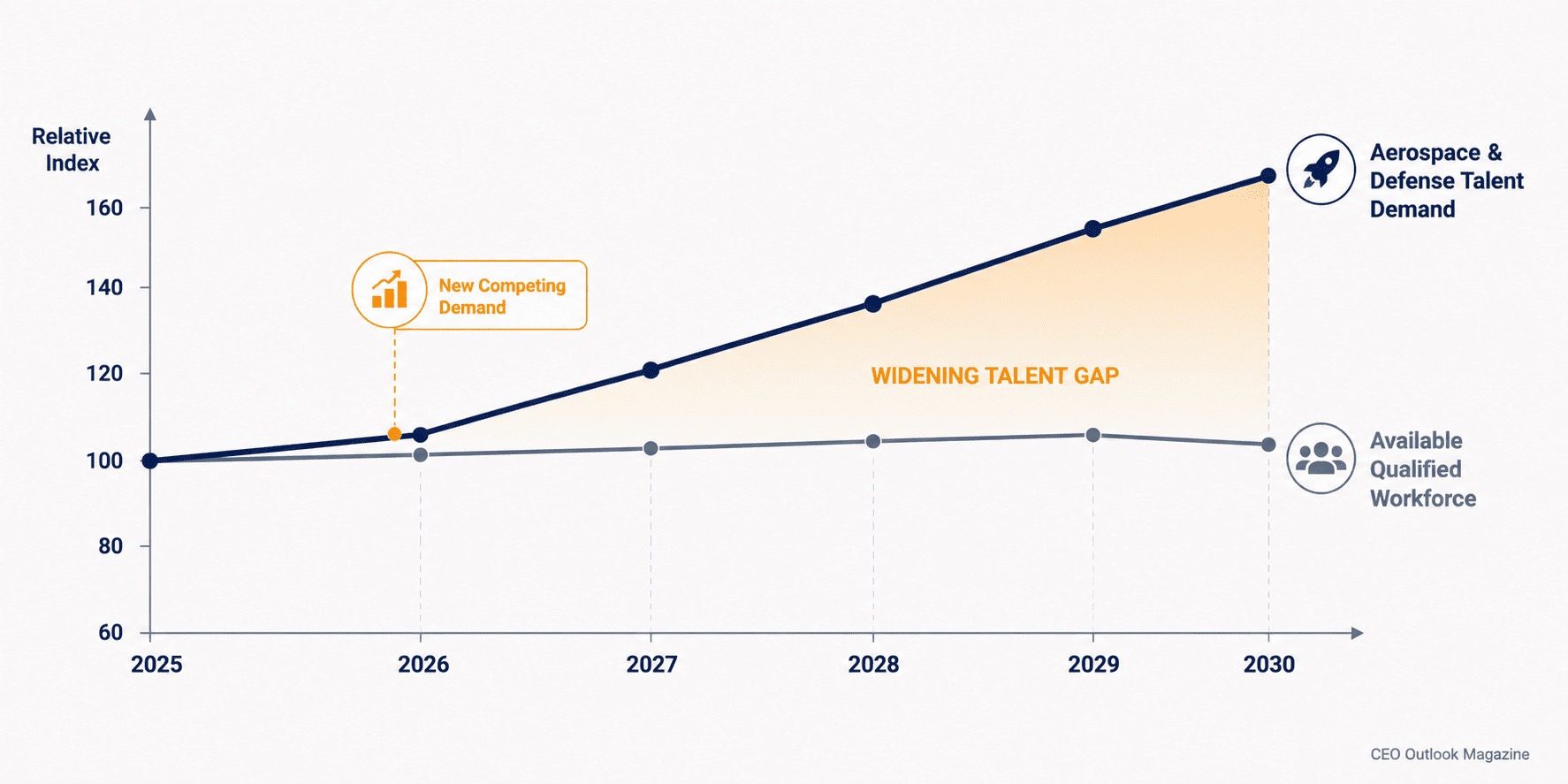
Most of the sector’s headline challenges—slow acquisition, persistent aircraft backlogs, security clearance delays, and cybersecurity gaps—share a common root. There are not enough qualified people to build, secure, or deliver what the industry has already committed to. Global military spending hit $2.7 trillion in 2025, but attrition in aerospace and defense is now more than twice the average of other industries. The talent gap is not narrowing. It is growing, and a major new competitor for the same workforce has just entered the field.
The Constraint Underneath Every Other Story in This Series
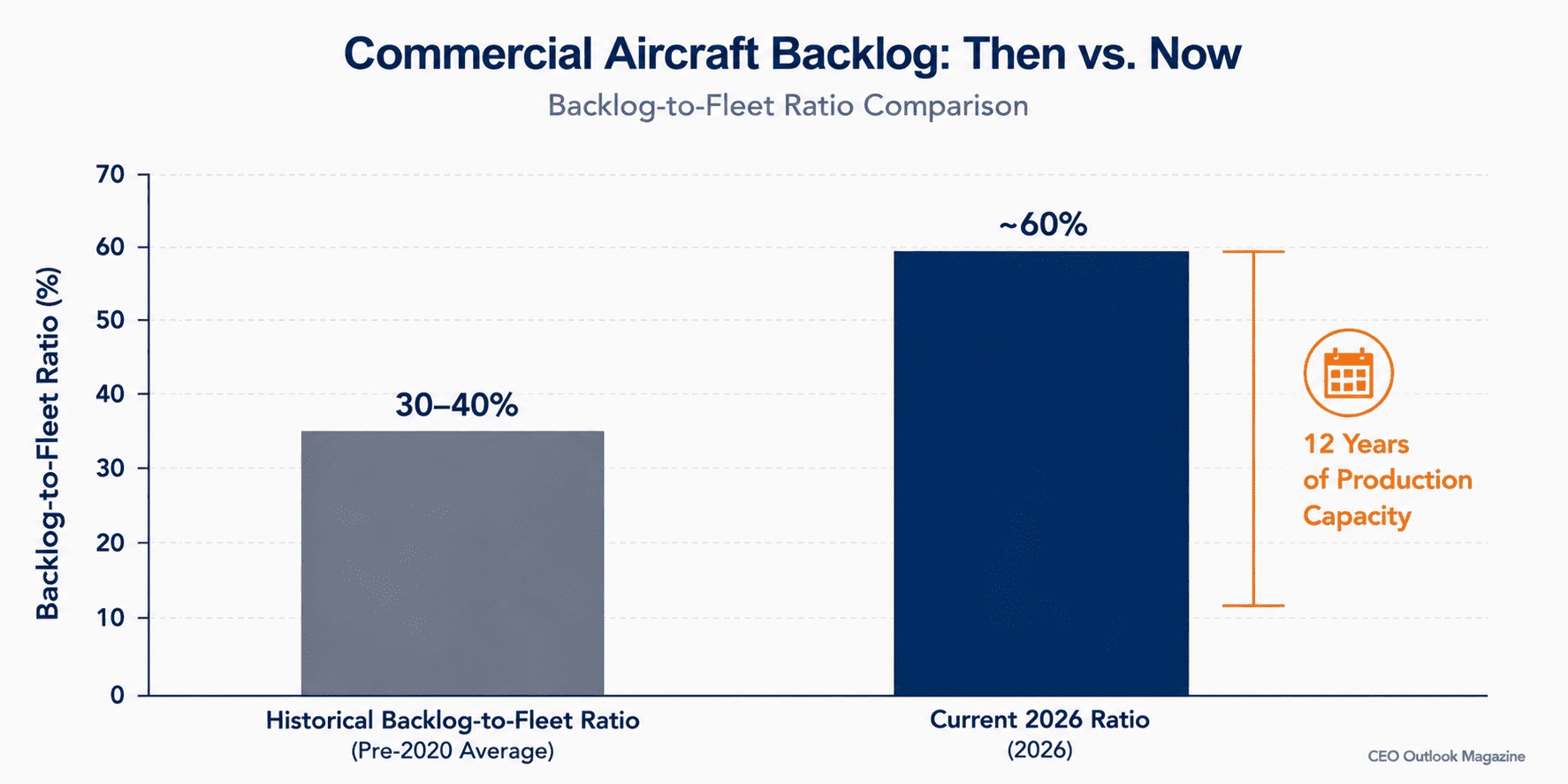
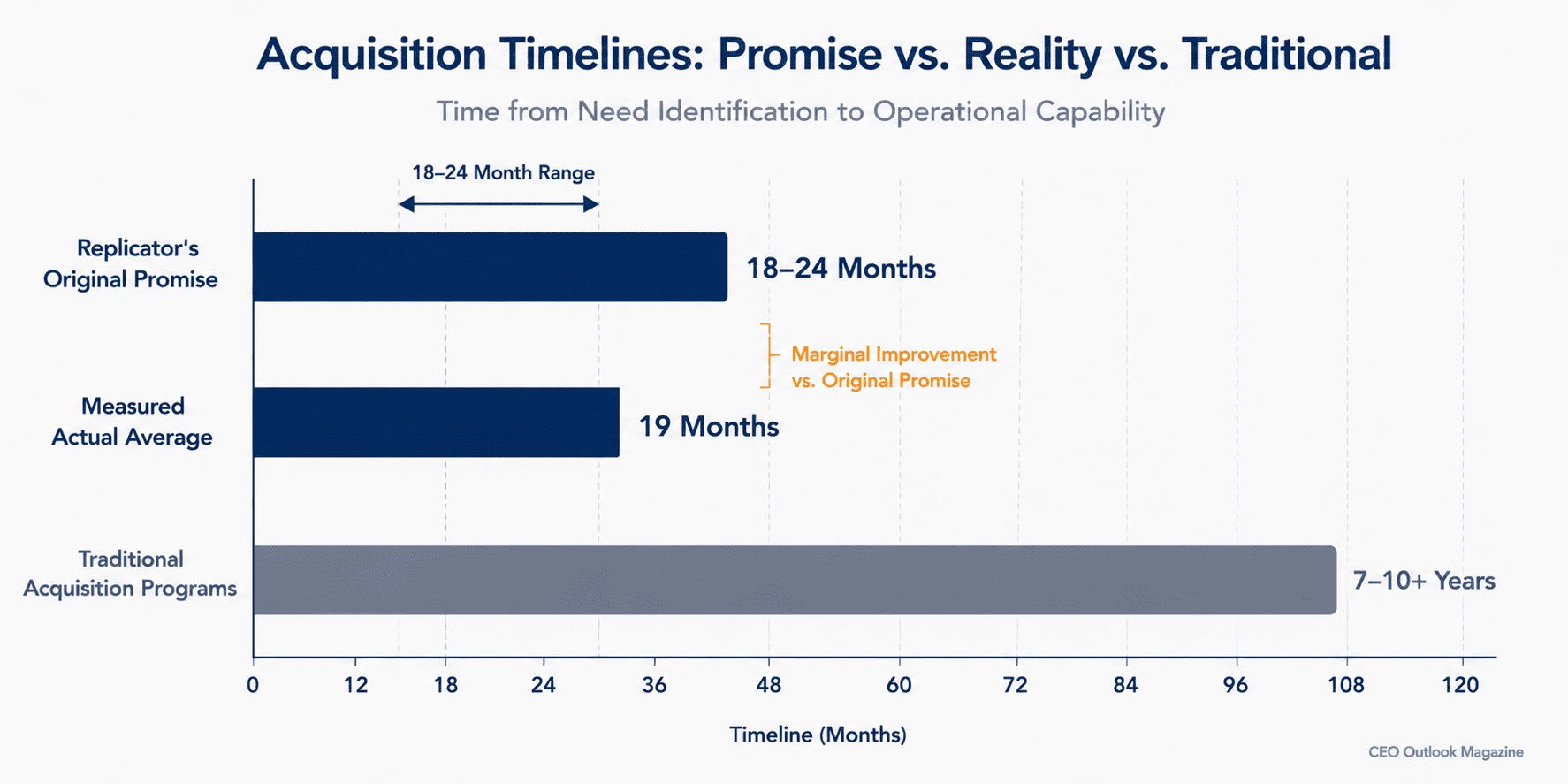
Nearly every major theme this publication has tracked across aerospace and defense this year is, at its root, a labor and capacity problem wearing a different costume. The gap between Replicator's promised 18-to-24-month delivery timeline and its actual 19-month average reflects institutional capacity strain. Most of the sector’s persistent issues are labor and capacity problems in disguise. Replicator’s delivery delays reflect institutional strain as much as process inefficiency. The 17,000-aircraft backlog, unlikely to clear before 2031 or later, is a direct result of supplier capacity cuts during 2020-2021 and never fully restored, compounded by skilled labor shifting to defense programs. Startups face longer security clearance timelines because they lack the compliance resources of larger primes. These are not isolated bottlenecks. They are symptoms of the same shortage. Of 600,000 US employees, industry-wide attrition is holding steady at nearly 15 percent, more than double the average across other US industries, with hiring challenges expected to persist through at least 2033 given ongoing retirements and limited workforce growth. Seventy-six percent of aerospace and defense companies report sustained difficulty hiring engineers, 56 percent report shortages in skilled trades critical to production, and 65 percent cite workforce gaps as their single largest supply barrier. This pattern is not confined to the United States: a separate May 2026 survey spanning North America and Europe found 72 percent of employers struggling to find qualified talent, with the same roughly 15 percent attrition rate, twice the average of other sectors, confirmed independently across both regions. Federal labor projections quantify the demand side precisely: the United States needs 3,800 new aerospace engineers every year between 2021 and 2031, even as assemblers and fabricators face roughly 210,000 annual exits industry-wide and welders and cutters face another 45,000.
The New Competitor Nobody Priced In
A new and significant competitor for talent has emerged. SpaceX’s merger with xAI and its planned IPO, valued as high as $1.75 trillion, will inject tens of billions in new capital into a company already among the largest aerospace and defense employers. SpaceX’s hiring across engineering, manufacturing, and Starlink operations will directly compete with defense primes and startups. At the same time, CHIPS Act-funded semiconductor projects are expected to create 115,000 new jobs by 2030, drawing from the same pool of engineers and skilled trades. Many of these roles are already at risk of going unfilled.
Why This Compounds Rather Than Resolves on Its Own
Several factors are making the shortage worse, not better. Stricter security clearance rules, reduced cross-border mobility, and expanding data sovereignty requirements are shrinking access to international engineering and cyber talent just as demand rises. Even a flawless clearance process cannot solve a shortage when the eligible talent pool is shrinking and other sectors face none of these barriers.
What the Next Five Years Actually Require
Industry analysis identifies six roles expected to become genuinely pivotal by 2030: advanced systems engineers, cybersecurity analysts, data scientists, autonomous systems specialists, and sustainability engineers among them, precisely the skill categories underlying nearly every technology thread this publication has examined this year, from AI-accelerated cyber threats to autonomous weapons governance to reusable launch engineering. The organizations positioned to thrive are not simply the ones trying to out-hire competitors from an already strained pool. Six roles are set to become critical by 2030: advanced systems engineers, cybersecurity analysts, data scientists, autonomous systems specialists, and sustainability engineers. These skills underpin most of the sector’s major technology initiatives. The organizations most likely to succeed are not those simply outbidding competitors for scarce talent, but those building their own pipelines. Boeing’s long-term partnership with Caltech, which includes workshops, internships, and joint research, is one example of investing directly in future talent rather than relying on the open market. A routine HR function, rather than the central strategic constraint determining which of this decade's ambitious aerospace and defense bets actually get built, is working from an outdated picture of what will actually separate winners from laggards over the next five years.
The question for leadership is whether your organization is building real talent pipelines for the next five years, or simply competing for a shrinking pool. The answer will determine who can deliver on the sector’s ambitions.