

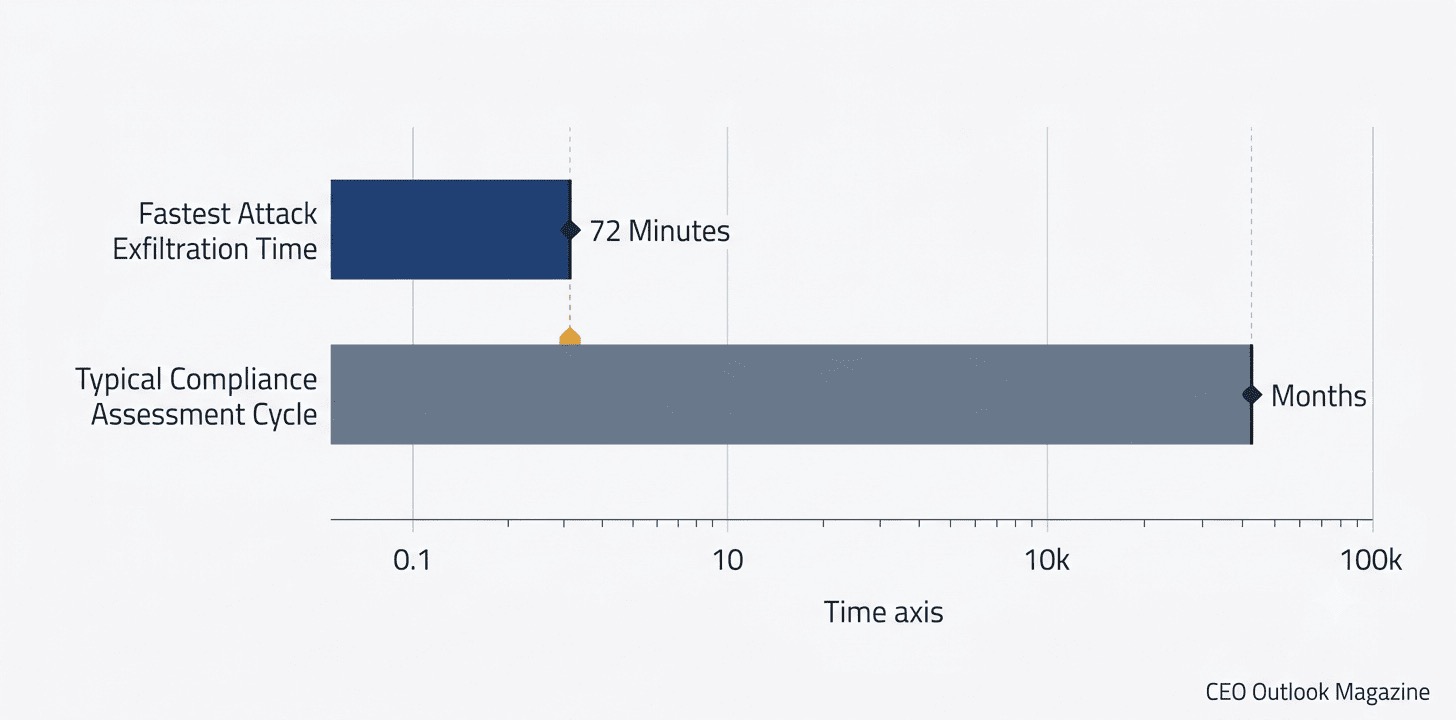
In 2025, the fastest 25 percentd of cyber intrusions reached data exfiltration in 72 minutes, down from nearly five hours the previous year. Incidents completing exfiltration in under an hour increased from 19 to 22 percent. Yet, defense contractor cybersecurity compliance still relies on assessment cycles measured in months. The current architecture—periodic certification and a chain of trust from prime contractors through thousands of subcontractors—rests on an outdated assumption about attack speed.
The Admission Hidden Inside a Compliance Framework
The Department of Defense's Cybersecurity Maturity Model Certification 2.0, enforced since November 2025, makes prime contractors directly responsible for the cybersecurity compliance of their subcontractors. A security incident at a small supplier several tiers down can jeopardize a prime's certification and contract eligibility. This structure reflects a lack of confidence in the traditional chain of subcontractor accountability to secure the defense industrial base. Yet, the framework remains focused on compliance at set intervals, not on continuous, real-time verification—a mismatch with the current threat environment.
The Speed Problem Compliance Cycles Weren't Built For
Artificial intelligence has become a force multiplier for attackers, compressing the attack lifecycle from initial access to impact and introducing new, unmapped attack vectors. This is not incremental change. Attackers now move from compromise to data theft in just over an hour at the fastest end, making any security model based on periodic assessment structurally incapable of detecting intrusions before damage is done. A compliance certificate validated every few months cannot certify protection against threats that unfold within a single work shift.
Why Identity, Not Malware, Is the Real Entry Point
The speed problem is compounded by a shift in attack methods. Nearly 90 percent of recent incidents involved attackers using stolen credentials or tokens, not exploiting software vulnerabilities. Fragmented identity systems allow attackers to escalate privileges and move laterally once inside. A compliance framework focused on patching software vulnerabilities addresses only part of the risk. The most reliable entry point is now a legitimate-looking login, not a technical exploit—a reality most compliance checklists still underweight.
The Volume Problem That Makes Comprehensive Compliance Impossible
Even when vulnerability-based attacks are the entry point, the scale is overwhelming. In 2025, global CVE publications exceeded 48,000, up 18 percent year-over-year, driven by AI-powered tools that find flaws faster than organizations can track or fix them. Attackers exploit vulnerabilities an average of seven days before public disclosure, leaving defense contractors exposed before a fix is available. Periodic assessment cannot close gaps that are already open and exploited by the time they are visible. Continuous monitoring is no longer a maturity goal; it is the baseline for defending a distributed supply chain at this scale and speed.
What Actually Needs to Change, and Why Nobody Wants to Say It Plainly
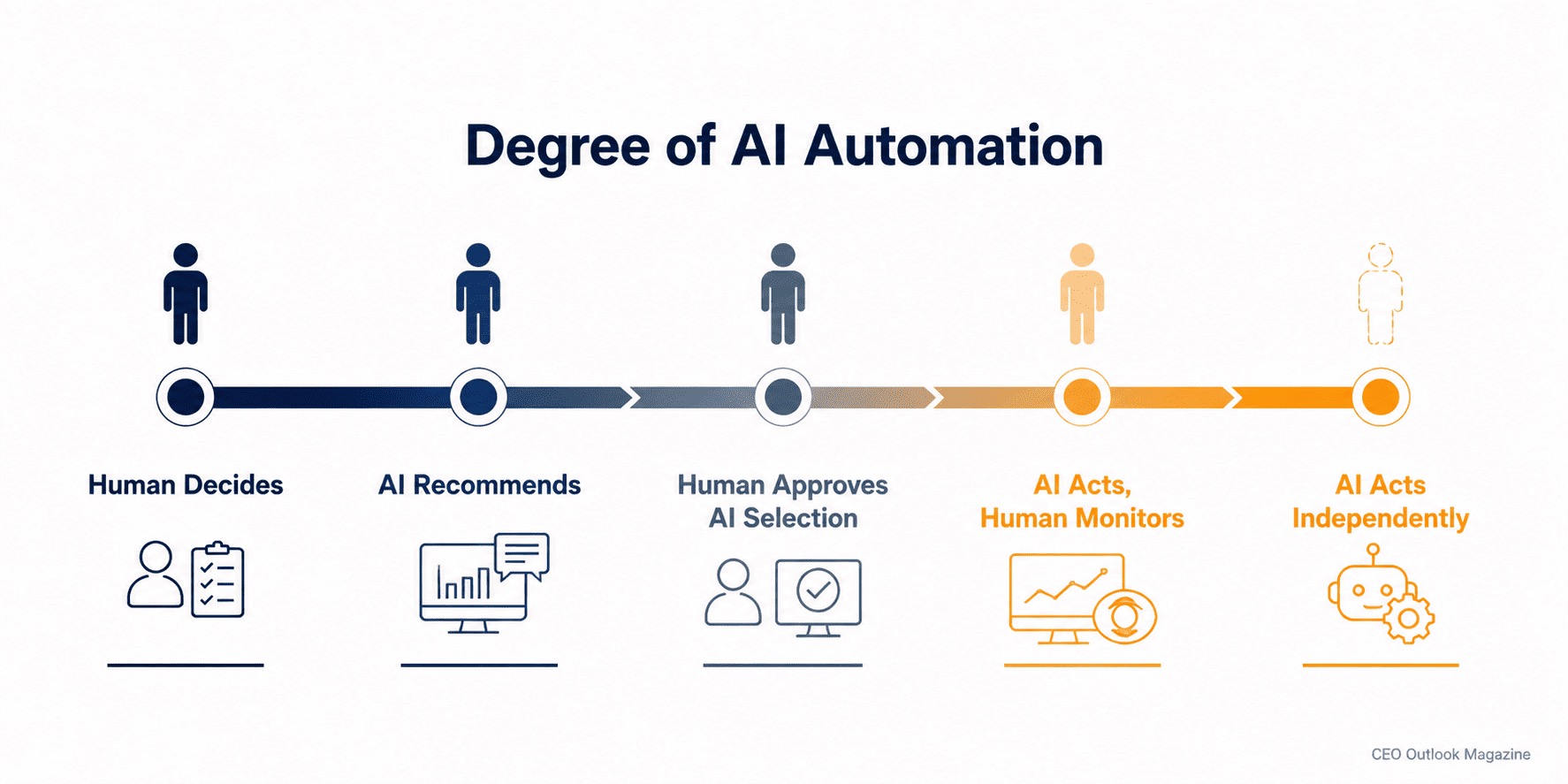
The data points to a clear conclusion: point-in-time assessments, no matter how rigorous, cannot certify protection against threats that move in minutes and hours. Some vendors are shifting to continuous risk scoring and dynamic vulnerability prediction, moving away from periodic audits. This shift concedes that the compliance-first model, while necessary as a baseline, was never designed for the current threat speed. A defense contractor can hold a valid certification and still be one compromised credential away from a breach that happens faster than any scheduled reassessment can detect.
What This Means for Defense and Aerospace Leadership
For defense and aerospace leaders, cybersecurity compliance certification should be treated as a minimum standard, not a guarantee of protection. Organizations that rely on periodic assessments to demonstrate security, rather than continuous monitoring that matches the speed of attackers, are meeting regulatory requirements but not closing the real gap. The core vulnerability is not the absence of compliance frameworks, but the persistent gap between what those frameworks verify and the pace at which threats now move.
Is your organization's defense cybersecurity strategy built around continuous, real-time monitoring, or periodic compliance certification alone? CEO Outlook Magazine wants to hear your perspective — share your view with our editorial team, and subscribe to our newsletter for more coverage on the security challenges facing the defense industrial base.