

BNSF plans to invest $3.6 billion in its network in 2026. Across the board, Class I railroads report no unfunded maintenance or deferred backlog, a sign of sustained capital discipline among the largest freight operators. The real infrastructure gap is less visible. It sits with the short line and regional railroads that connect lower-density freight to the main network, with passenger rail programs facing a federal funding cliff, and with a grant system that recently turned down over 200 qualified projects. This shortfall comes just as freight demand is set to nearly double within a decade.
The Investment Gap That Isn't Where You'd Expect
America’s largest freight railroads are not the source of the sector’s infrastructure problem. Class I railroads report no unfunded needs or deferred maintenance, a position built on decades of private capital investment. BNSF’s 2026 plan is a case in point: $2.8 billion is allocated to maintenance, covering 13,000 miles of track work, 2.5 million rail ties, and over 400 miles of new rail. This is an industry that funds its own infrastructure at scale, with freight rail companies reinvesting about 18 percent of revenue—roughly $23 billion a year—back into their networks.
Where the Real Gap Actually Sits
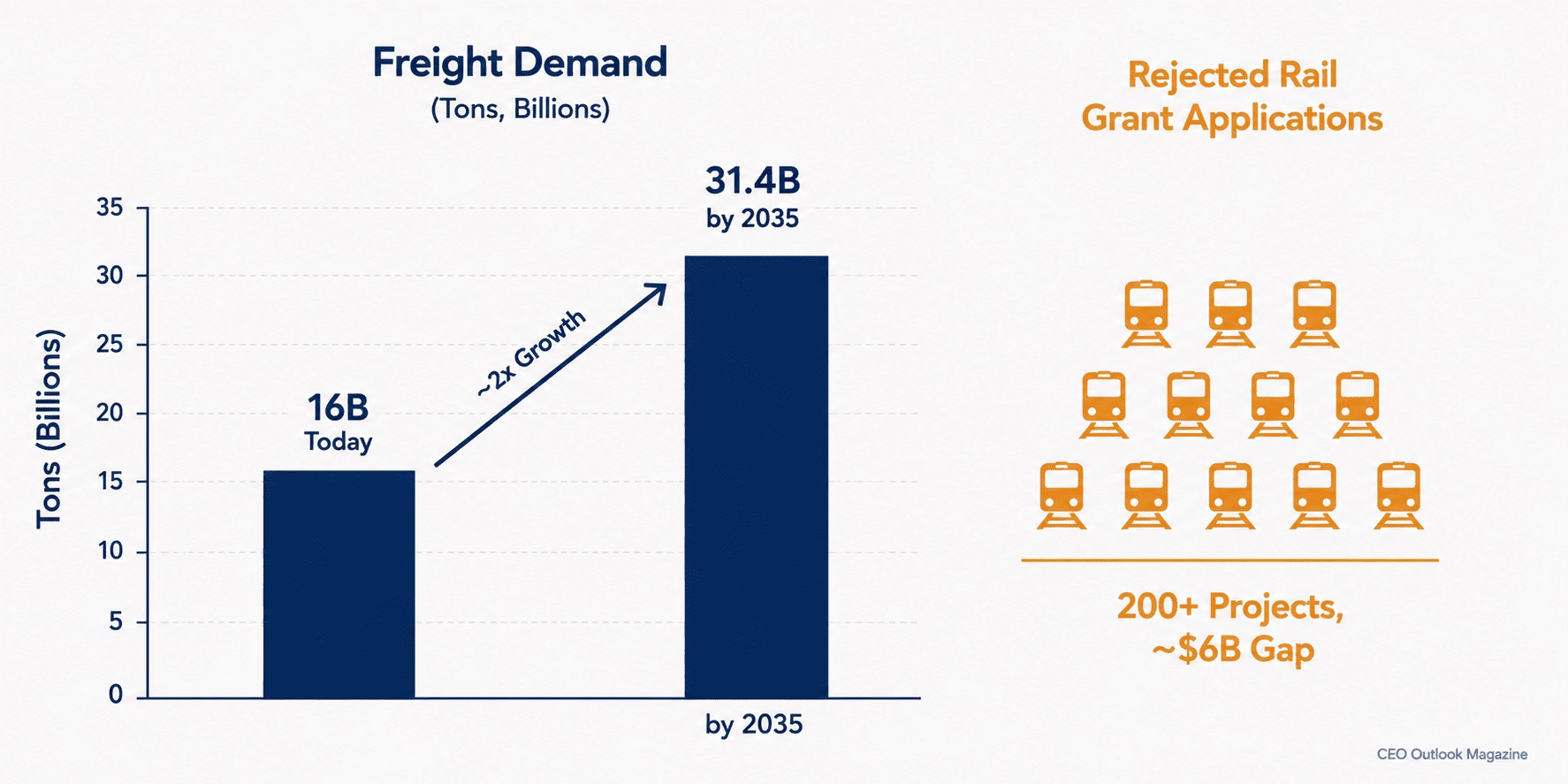
The real capital constraint sits with the smaller railroads that connect lower-density freight to the main network. Short line railroads invest about 25 per cent of their revenue in operations and maintenance, a higher share than the industry average, but their resource base is limited. The issue is not lack of effort, but lack of scale. Freight receipts alone do not cover their investment needs, so these operators depend on tax credits and public funding to maintain the infrastructure that feeds traffic into the Class I network. The funding cycle is now running out. The Infrastructure Investment and Jobs Act provided $102 billion in total rail funding across fiscal years 2022 through 2026, combining $66 billion in advance appropriations with $36 billion in authorized funding. Still, that authorization expires September 30, 2026. The competition for what federal grant funding does exist already exceeds available supply: more than 200 projects applying for funding in the last round of the Consolidated Rail Infrastructure and Safety Improvements and Railroad Crossing Elimination programs were not selected, leaving a funding gap of nearly $6 billion for qualified rail projects that could not be funded. Passenger rail infrastructure carries its own distinct, quantified need: identified Northeast Corridor infrastructure requirements for fiscal years 2026 through 2030 alone total $34.3 billion across more than 20 individual projects and programs.
Why This Gap Matters More Now Than Ever
This capital constraint comes at a critical moment. US freight demand is projected to nearly double by 2035, from 16 billion to 31 billion tons, with ton-miles following suit. Truck volumes are set to double as well, worsening highway congestion that already threatens US competitiveness. Rail is the most viable alternative to absorb this growth, but its ability to do so depends on whether short line and regional networks—currently facing the sharpest capital constraints—can handle the additional volume. Shipper demand alone will not solve the infrastructure gap.
The Physical Evidence of Deferred Investment
The effects of underfunded connector infrastructure are already visible. Federal data shows short line tracks unable to carry heavier freight cars, and over 1,600 bridges in poor condition—53 of which would require detours of 50 miles or more if closed. Oversight gaps and limited data on privately owned bridges compound the problem. One practical solution is a dedicated federal funding source for freight rail infrastructure, potentially funded by user fees from railroads and shippers, rather than diverting Highway Trust Fund revenue.
What This Means for Rail and Freight Finance Leadership
For finance and infrastructure leadership across rail and freight transportation, the practical lesson is that the sector's investment gap requires a considerably more targeted response than a blanket call for For finance and infrastructure leaders, the lesson is clear: the sector’s investment gap demands a targeted response, not a blanket call for more rail funding. Class I railroads have shown they can self-fund at scale. The real capital gap is in short-line connectors, passenger rail, and a federal grant system that can't fund most qualified projects. This infrastructure layer will determine whether rail can absorb the coming freight growth. Uniformly across the system? CEO Outlook Magazine wants to hear your perspective — share your view with our editorial team, and subscribe to our newsletter for more coverage on the financial forces shaping rail and freight infrastructure.