

Early cultivated meat production cost more than $2 million per kilogram. Today, large-scale facility projections put costs between $13 and $63 per kilogram, depending on bioreactor design and scale. The reduction is real, but the gap with conventional meat remains wide. That gap, more than any funding trend, explains the wave of alternative protein failures over the past two years. The core issue is not biology or consumer demand. It is manufacturing economics, and the underlying numbers are clearer than most sector commentary admits.
The Cost Curve That's Real, Just Not Enough
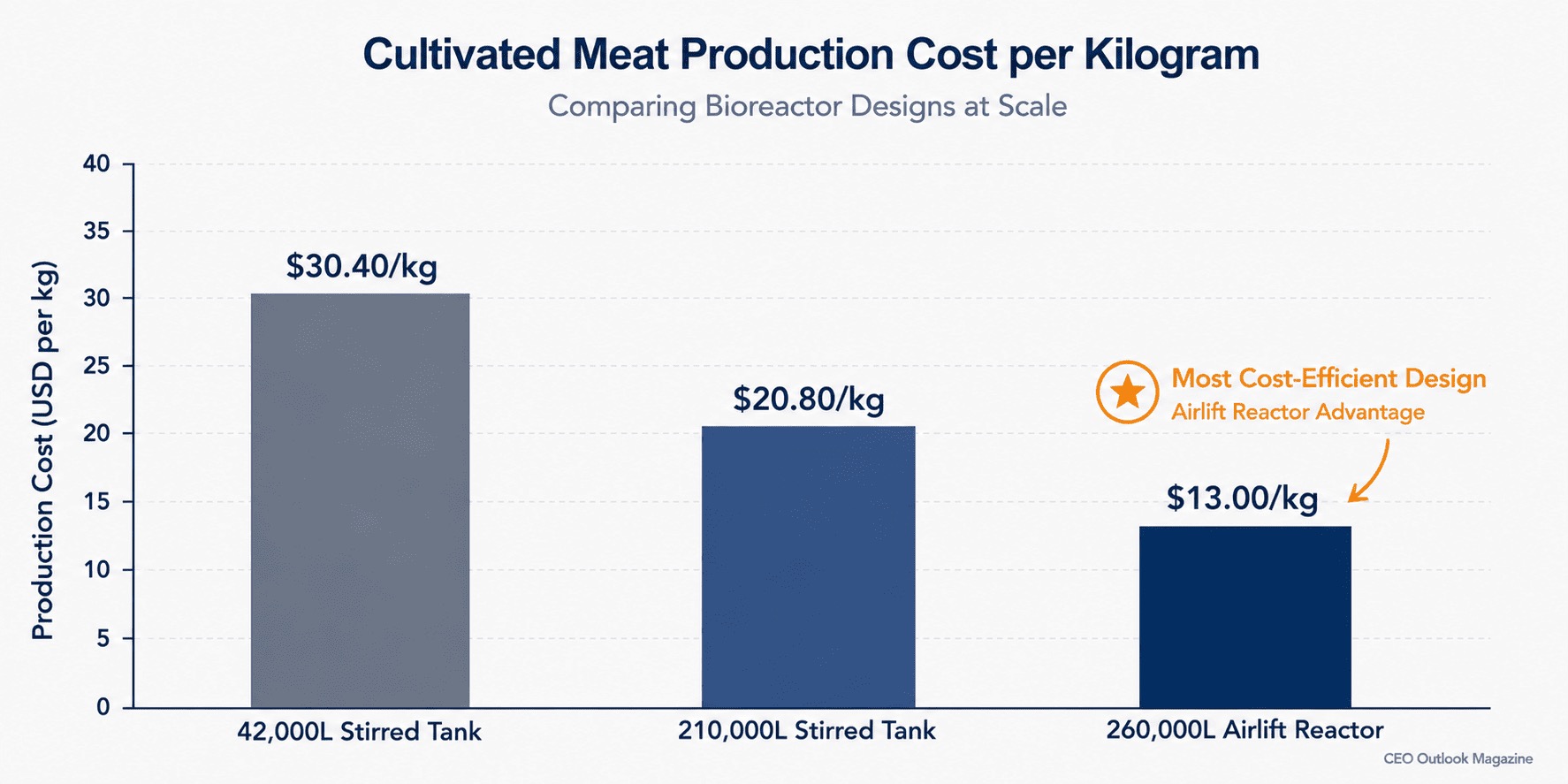
Independent techno-economic analyses put cultivated meat production costs between $37 and $51 per kilogram, depending on media purity and bioreactor setup. Other engineering studies show costs falling with scale and reactor design: a 42,000-liter stirred tank bioreactor yields $30.40 per kilogram, a 210,000-liter version drops to $20.80, and a 260,000-liter airlift reactor reaches $13.00. The lesson is clear: cost reduction depends as much on reactor architecture as on scale. Industry-reported cost figures are often lower than independent analyses, a gap that warrants skepticism when companies rely on internal projections over third-party modeling.
What Actually Drives the Cost
Every credible analysis points to three dominant cost centers: cell-culture medium, bioreactors, and labor. Culture medium is usually the largest driver, and the theoretical room for improvement is substantial. One peer-reviewed study reduced costs from $437,000 per kilogram to $1.95 under optimized lab conditions. The gap between this potential and commercial reality is wide. Lab results rarely translate directly to production economics at scale, a distinction that is often overlooked.
Why Fermentation Is Closer to Viable Than Cultivated Meat
Precision fermentation, which uses engineered microorganisms to produce proteins, is closer to commercial viability, but the cost gap remains. Industry data for 2026 puts commercial-scale whey and casein protein costs at $20 to $40 per kilogram, still two to three times higher than conventional dairy whey protein isolate at $8 to $15. Media costs make up 55 to 65 percent of the total, and current production titers are 15 to 25 grams per liter. Achieving price parity with conventional dairy protein requires titers above 40 grams per liter, media costs below $0.40 per liter, and large fermenters running at high utilization for decades. The practical reality: high-value specialty ingredients like enzymes and collagen already reach cost parity at lower titers, so fermentation economics work for premium, lower-volume products, but not yet for bulk commodity protein.
The Capital Intensity Nobody's Business Plan Fully Prices In
A commercial-scale precision fermentation facility requires $100 million to $400 million in capital, with payback periods of four to eight years. This capital intensity shapes the sector’s volatile funding patterns. Companies have a few real options to lower costs: contract manufacturing through established players like ADM or Lonza avoids upfront capital but adds $5 to $15 per kilogram in tolling fees. Repurposing decommissioned ethanol, brewing, or pharmaceutical plants can cut capital costs by 40 to 60 percent. Operating costs matter as well. Energy alone accounts for 8 to 15 percent of total production cost. A single 200,000-liter facility can use 20 to 50 gigawatt-hours of electricity per year, costing $3 million to $15 million annually in high-cost regions like the EU.
The Real Reason So Many Companies Failed
Sector data explains the recent failures in alternative proteins. More than 60 percent of biotech startups that reach proof of concept in the lab never achieve commercial-scale production. The reason is not science, but economics. The gap between pilot yields and viable production costs can drain a company’s capital runway before it closes. Companies like Meatable and Believer Meats did not fail because their science was flawed. They failed because scaling to commercial production proved a much harder and more capital-intensive problem than proving the concept.
What This Means for Food and Agriculture Finance Leadership
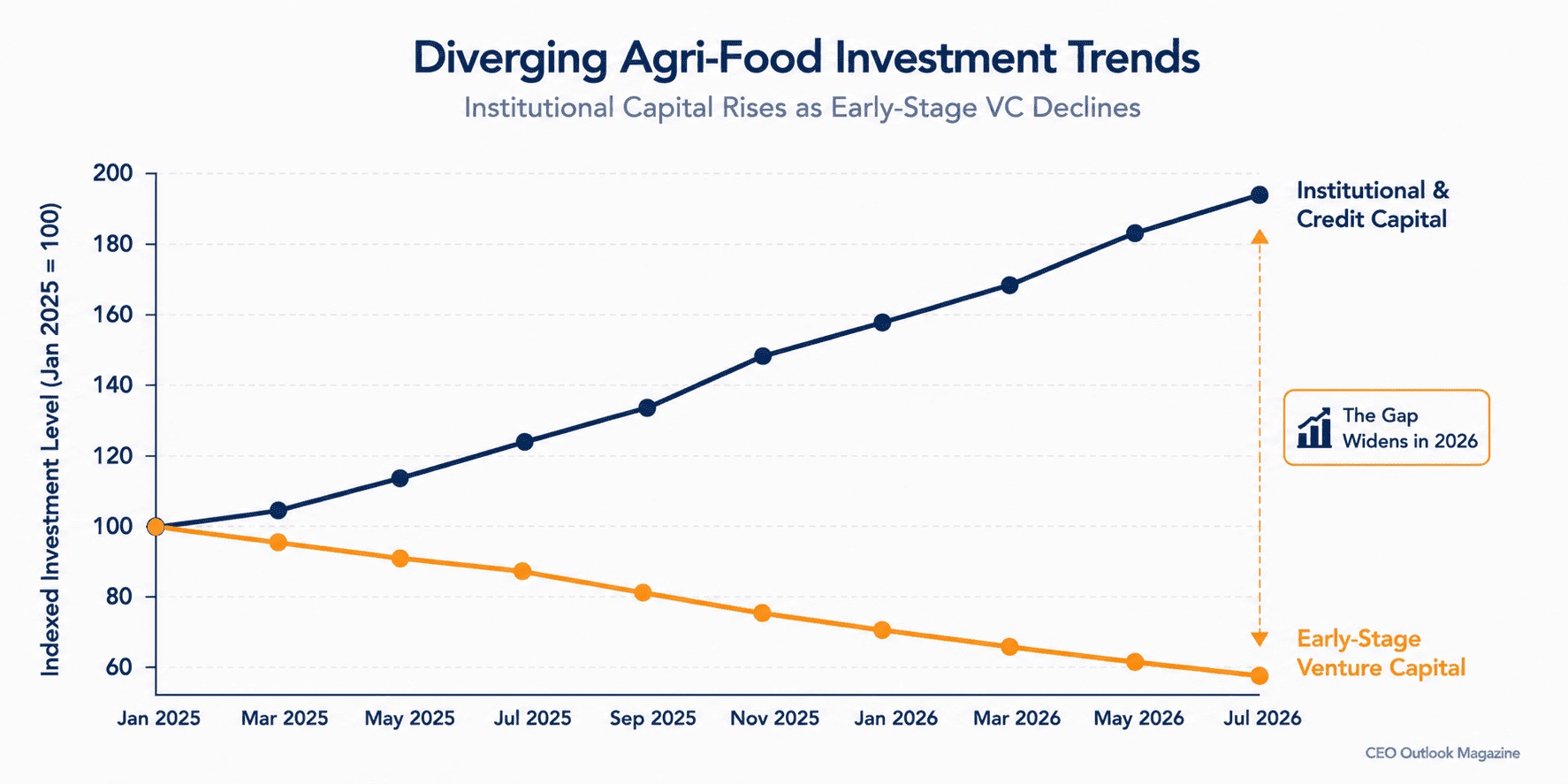
For finance leaders, the lesson is clear: lab-scale proof of concept and commercial manufacturing viability are separate milestones that require separate, more rigorous diligence. Capital invested in companies still years from the reactor scale, titer, and utilization rates needed for cost parity funds a manufacturing scale-up problem, not a biology problem. The current flow of capital toward fermentation’s viable high-value ingredients, rather than cultivated meat’s distant commodity economics, shows investors are starting to price this distinction correctly.
The critical question for any alternative protein investment thesis is whether it is grounded in demonstrated manufacturing-scale cost data or relies on lab-scale proof of concept. The distinction is not academic. It determines whether capital is funding a viable business or a science experiment.