


AI adoption in property management jumped from 20 percent in 2024 to 58 percent in 2025. Yet only 8 percent of those companies have fully automated even one operational process. The real challenge is not exposure to new technology, but integrating it into daily operations. The pattern is familiar: pilots multiply, but few become scaled, durable improvements.
Adoption Numbers Often Mislead
Headline growth figures around PropTech adoption are striking, but misleading when viewed alone. Broader data shows only 12 percent of construction sector executives report regular AI use in specific processes, and just 1 percent have fully integrated it across their organizations. In the EU, average AI use among construction firms was 6 percent in 2024, with wide variation by country. The idea of 'PropTech adoption' as a single global metric hides more than it explains.
What Gets Adopted Versus What Gets Marketed
The technologies attracting the most venture funding and industry attention—AI-driven predictive maintenance, automated leasing workflows, blockchain-based property tokenization—are not what most owners and operators deploy at scale. Actual adoption in 2026 centers on more modest tools: smart locks, amenity reservation platforms, self-guided tours, lighting controls, and thermostats. These deliver incremental gains in efficiency and tenant retention. They do not fundamentally change how real estate businesses operate, and they belong to a different category than the transformation narrative dominating PropTech discussions.
Why Pilots Stall Despite Success
Commercial real estate calls this stalled adoption. A pilot can meet every metric and deliver as promised, but still fail to scale beyond a few assets or one region. The problem is rarely the technology. Most users lack a clear plan for implementation and do not have a unified strategy. Even when tools prove valuable, companies expect rapid returns, especially in a tough economic climate. That pressure undermines the slower, deliberate scaling process real transformation requires.
The Real Return Depends on Scaling
The underlying technology has real value, but the data shows that only firms able to scale adoption capture it. Real estate companies that have adopted AI meaningfully expect 31 percent portfolio growth in 2026, compared to 12 percent for non-adopters—a gap that signals a genuine competitive divide. Estimates suggest AI and automation could unlock between $430 and $550 billion in annual value across real estate, construction, and development. The lever most correlated with capturing that value is not more advanced technology, but training. Firms investing in comprehensive training, rather than relying on vendor documentation, achieve adoption rates over three times higher and realize measurable ROI nearly twice as fast.
The Growing Divide Between Leaders and Laggards
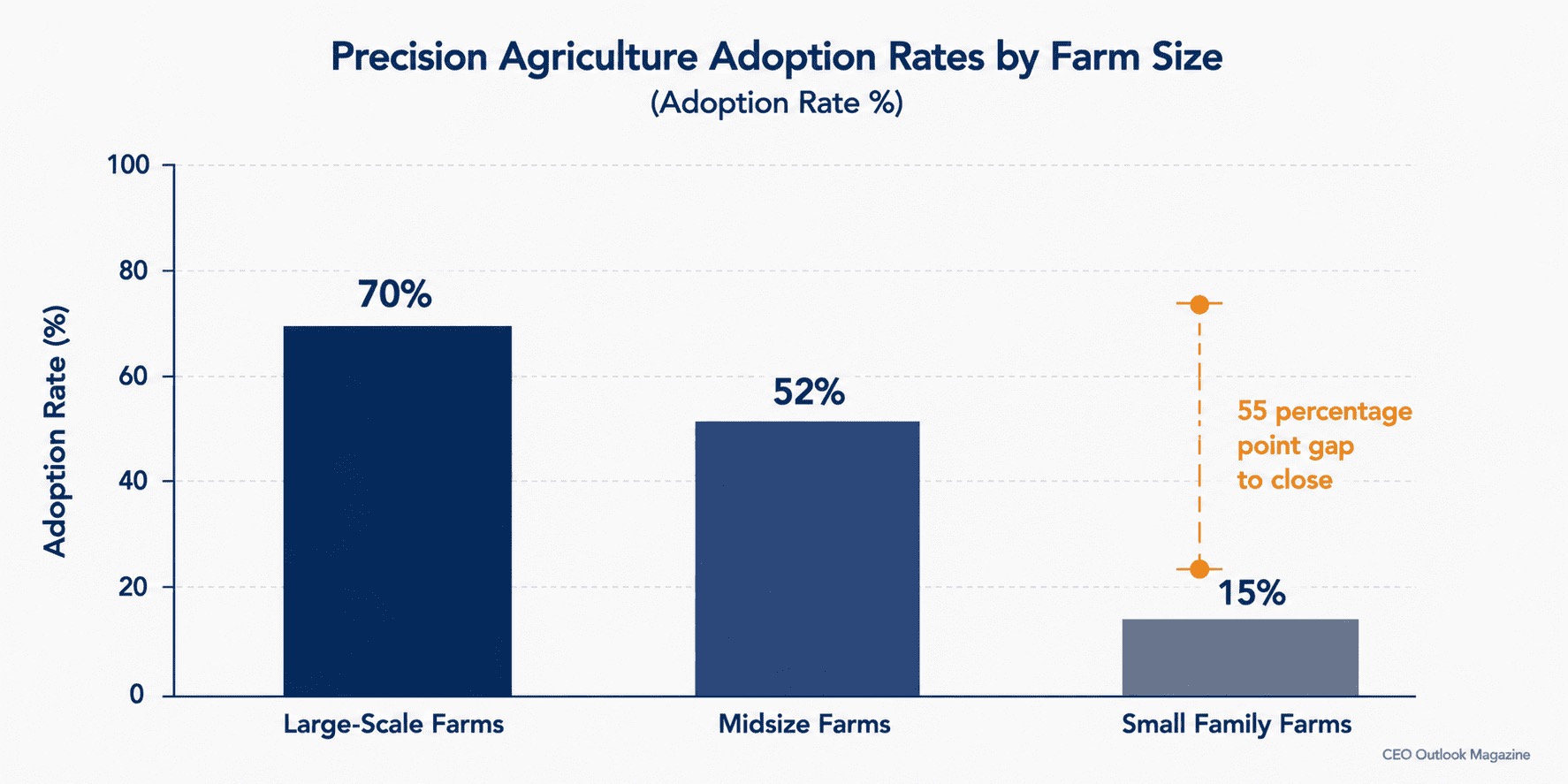
Uneven adoption is creating a widening competitive split. Smaller owners and operators cite risk aversion and unclear ROI as reasons for staying out, leaving much of the market unable to access the efficiency and cost advantages larger firms are already capturing. The gap compounds over time, echoing the digital maturity divide seen in manufacturing: early movers with real implementation discipline pull ahead, while those still running pilots without a scaling strategy fall further behind.
Implications for Real Estate Leadership
The practical lesson for real estate leadership is not that PropTech's promise is overstated. The return data for firms that scale adoption is real. The constraint is rarely the technology. Organizational readiness, a genuine AI strategy instead of disconnected pilots, sustained training investment, and realistic patience for scaling are what separate the few companies that have automated real processes from the many still running pilots that never scale.
The more useful question for leadership is whether PropTech success is measured by pilot completion or by enterprise-wide operational impact.