

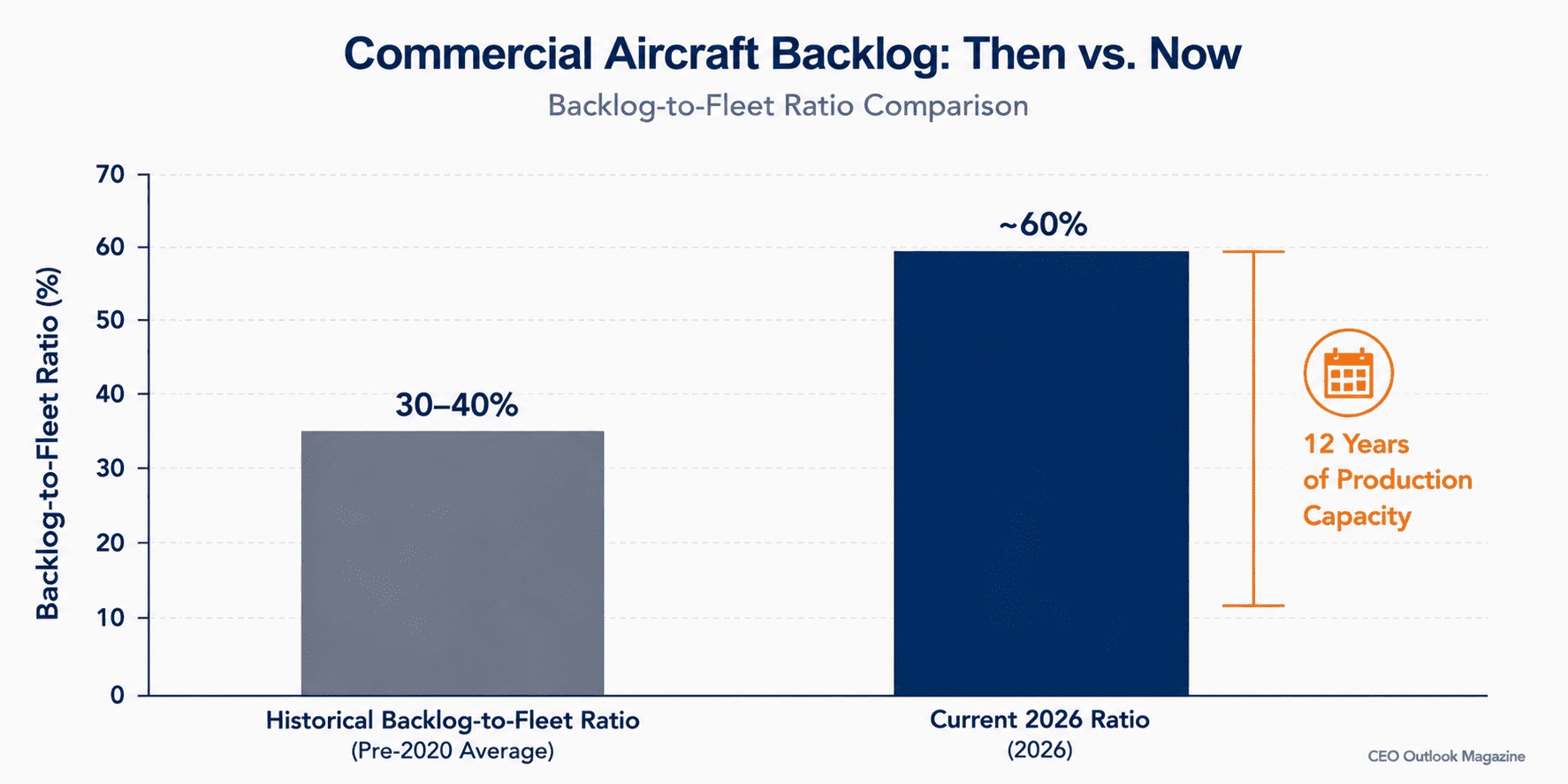
The commercial aircraft order backlog now exceeds 17,000 units, nearly 60 percent of the active global fleet. For decades, that ratio was closer to 30 to 40 percent. At current output, the backlog equates to almost 12 years of production. The International Air Transport Association does not expect a return to historical norms before 2031 at the earliest. This is not a short-term correction. The industry has shifted structurally since 2020, and the data points to a new baseline that will likely persist for years.
The Number That Broke the Historical Pattern
This is not a routine supply chain issue. Delivery shortfalls now total at least 5,300 aircraft, a gap that has accumulated over several years, not a single crisis. Boeing’s backlog alone stands at $695 billion. Combined Airbus and Boeing backlogs reached 16,683 aircraft by April 2026, the highest ever recorded, with significant economic implications for major markets. These numbers are not going to be resolved by incremental production gains.
Why This Is Structural, Not Cyclical
Independent reviews confirm this is a structural constraint, not a temporary disruption. Bain & Company found that 87 percent of major aerospace programs cite supplier bottlenecks as the main barrier to clearing backlogs. Production targets are running 20 to 500 percent above current output, a gap that is not closing. Program-level data shows the shortfall is uneven: CFM’s LEAP engine, Airbus A320, and Boeing 737 MAX are all operating well below target rates, with persistent pressure on delivery slots.
The Demand Keeps Accelerating Even as Delivery Doesn't
Demand is still rising. In April 2026, airlines placed 164 orders, the highest for that month since 2016 and a sharp increase from the prior year. Deliveries rose by just 13 aircraft, an incremental change. Airlines are absorbing more than $11 billion a year in costs from delivery delays, engine shortages, maintenance bottlenecks, and geopolitical risks. The gap between orders and deliveries continues to widen.
The Root Causes That Won't Resolve Quickly
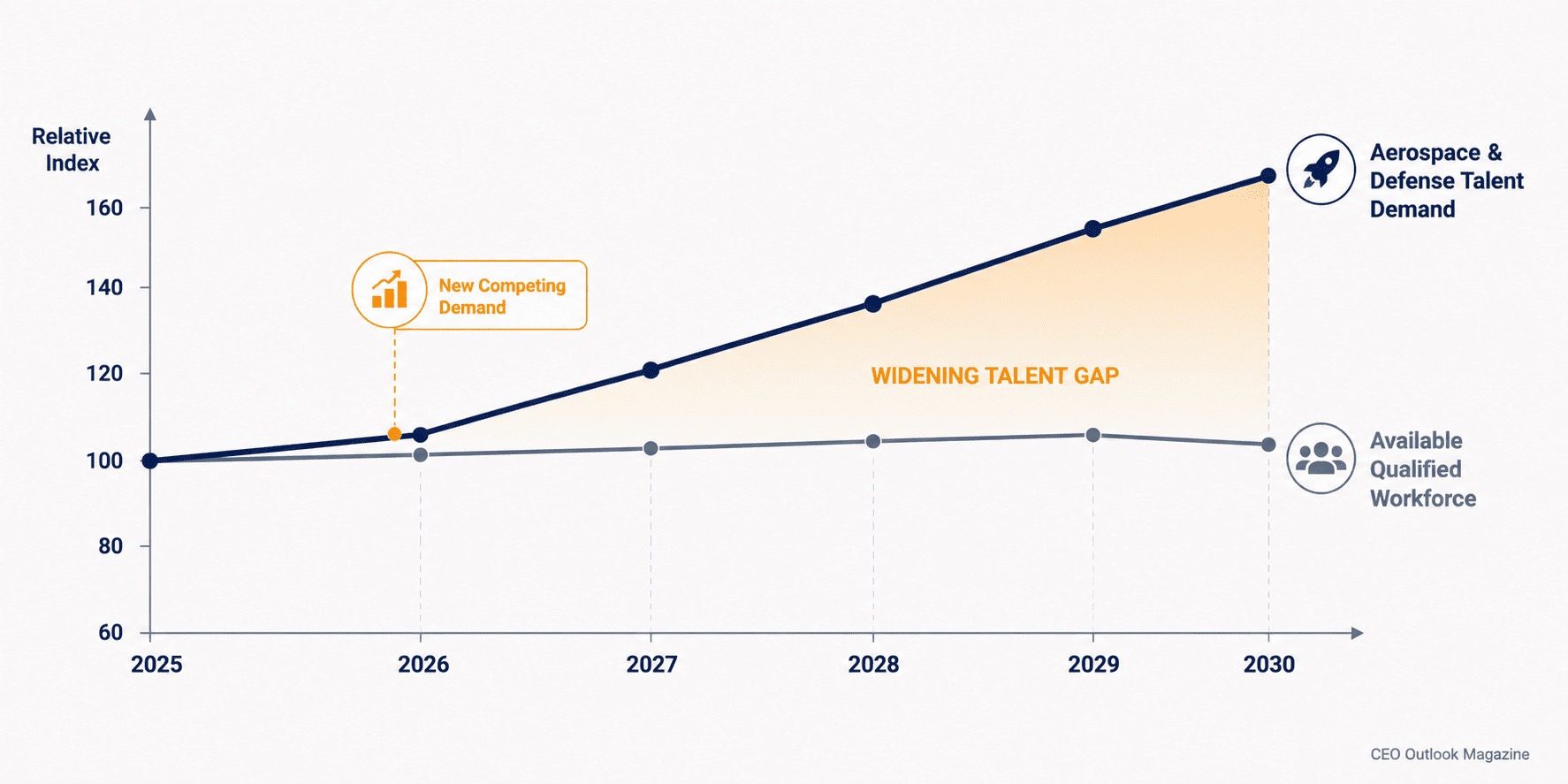
The root causes of the backlog are structural and will not resolve quickly. Tier 1 and Tier 2 supplier capacity was cut during the 2020-2021 downturn and has not recovered. Rebuilding that capacity takes years. Skilled labor lost during the same period has been slow to return, with defense programs now competing for the same talent pool. Material certification timelines have lengthened, especially for critical items like titanium, where geopolitical shifts have disrupted supply. Aerospace requalification cycles cannot keep up with the pace of production increases. Engines and components, not airframes, remain the main bottleneck. GTF and LEAP engine delays are holding back deliveries even when airframe production is on schedule. Airbus’s A220 program is still constrained by Pratt & Whitney GTF engine shortages, with further delivery drops expected in 2026. The stress is not evenly distributed: Magellan Aerospace reported $19.8 million in net income for the second quarter of 2026, while its Middletown subsidiary filed for Chapter 11 bankruptcy. Supply chain pressure can break individual links even in otherwise healthy networks. The industry is making progress—May 2026 saw a record 142 commercial aircraft deliveries—but the gap remains too large for incremental gains to close.
What This Means for Aerospace and Airline Leadership
For airline and aerospace supply chain leaders, the practical reality is clear: fleet planning, leasing, and supplier management must be based on a multi-year, possibly decade-long delivery timeline. Organizations still using pre-2020 assumptions are working from an outdated view of an industry that has changed at its core.
Is your organization's fleet or supplier planning built around the aerospace industry's current, structurally elevated delivery timelines, or an assumption that current bottlenecks will resolve quickly? CEO Outlook Magazine wants to hear your perspective — share your view with our editorial team, and subscribe to our newsletter for more coverage on the supply chain forces reshaping commercial aerospace.