

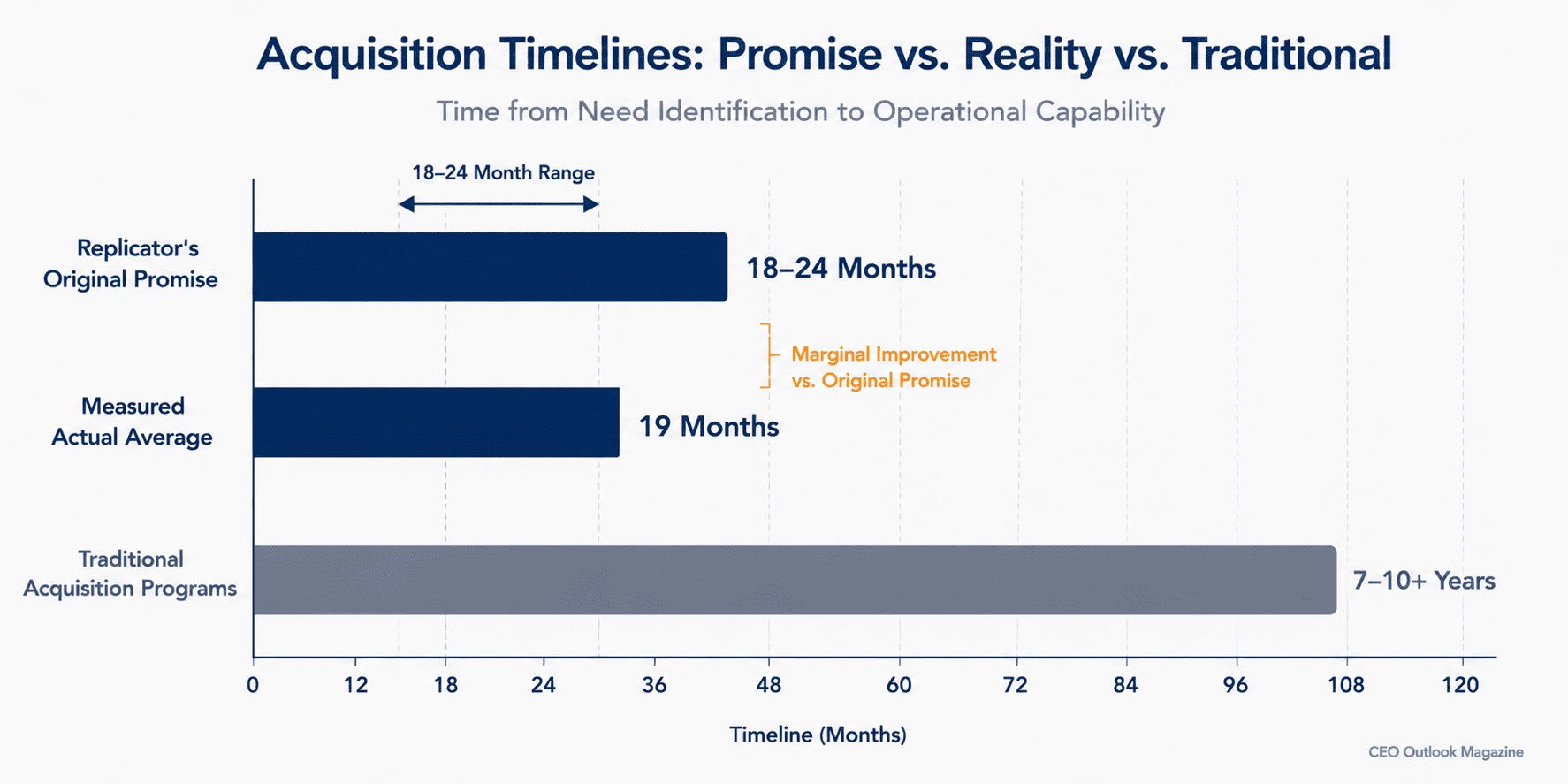
The Pentagon set an ambitious target for its Replicator Initiative: field thousands of attritable autonomous systems in 18 to 24 months. This was meant to break with decades of slow-moving defense acquisition. Yet an independent review of 27 Replicator-related contracts, based on public disclosures, found the average timeline from solicitation to first delivery was about 19 months. That meets the letter of the goal, but only barely outpaces traditional programs. Even the Department’s highest-profile speed effort has not escaped the inertia it was meant to overcome.
The Obsolescence Clock Nobody Can Slow Down
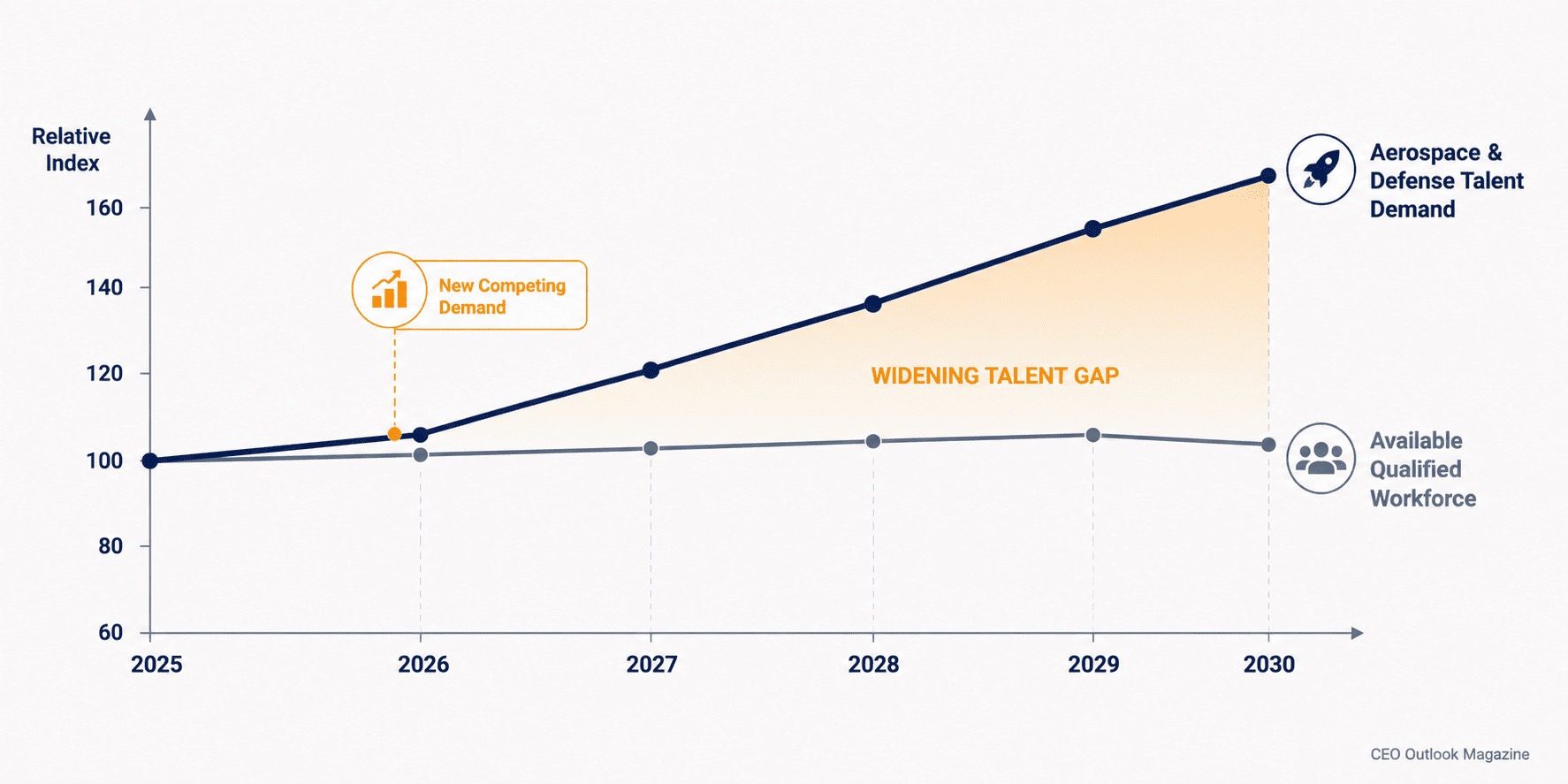
The urgency is grounded in a real and widening gap. Programs like the F-35 and Columbia-class submarine move on decade-long timelines, while technology cycles now shift in a matter of months. Each delay compounds the risk that new systems are obsolete before they reach the field. Nowhere is this more visible than in artificial intelligence. Commercial firms already use machine learning to anticipate demand and optimize operations in real time. In defense, the same data often sits unused in static reports, leaving leaders to react after the fact. Munitions stockpiles remain inadequate for sustained conflict. The war in Ukraine has made this point clear: cheap, mass-produced systems can quickly redefine what matters on the battlefield.
The Reform Already Underway, By the Numbers
Structural reform is already underway. Other Transaction Agreements and the Middle Tier of Acquisition pathway have both expanded to speed up delivery. OTA obligations reached over $18 billion in 2024, up tenfold from 2016. These mechanisms are now being used at scale, not just in pilot programs. In November 2025, Defence Secretary Pete Hegseth made speed to capability the Department’s central principle. Congress is moving in the same direction, with bipartisan support for new legislation to streamline procurement. The 2026 defense budget, at $924.7 billion, puts real weight behind artificial intelligence, cybersecurity, and uncrewed systems—the areas where speed is most critical.
The Test Case That Shows the Gap Isn't Closed Yet
Replicator remains the clearest real-world test of whether this reform push actually translates into faster delivery, and the honest evidence is genuinely mixed. Replicator 1 did field thousands of drones by August 2025, a real, substantial delivery outcome. Replicator 2, focused specifically on countering small unmanned aerial systems, the mass FPV drone threat Ukraine has demonstrated isReplicator is the most visible test of whether reform is delivering faster results. Replicator 1 did put thousands of drones in the field by August 2025—a real outcome. Replicator 2, aimed at countering the mass FPV drone threat seen in Ukraine, made its first acquisition in January 2026, with clearer leadership assigned after early confusion. Still, the 19-month average timeline shows that institutional friction remains. The system is resisting change, even in the program designed to break through it. Most would not actually serve the warfighter. This is a legitimate, reasoned tension rather than institutional foot-dragging: a faster acquisition system that delivers underperforming or overpriced capability more quickly has not actually solved the underlying problem; it has simply moved the failure earlier in the timeline.
What a Genuinely Faster System Would Actually Require
There are practical reforms available now. Experts have suggested using indefinite delivery requirements contracts with multiple-award preference, tools already allowed under current regulations. This approach would let the Department adjust market share among vendors through contract changes, rather than restarting the procurement process each time. Piloting this with systems like loitering munitions or small unmanned vessels would get real capability into the field sooner, where operational feedback matters most. Replicator 2’s logic is clear: cheap attacking drones require equally cheap defenses. Relying on expensive interceptors to stop mass drone attacks is not sustainable. Companies like Anduril, with systems such as Roadrunner-M and Anvil, are positioned for this kind of rapid, iterative procurement.
What This Means for Defense and Aerospace Leadership
For defense and aerospace leaders, the lesson from 2026 is clear. Acquisition reform is moving forward, with real budget increases and legislative support. But the gap between procurement timelines and the pace of technological change remains. Even the Department’s flagship speed initiative has not closed it. Companies that want to compete should treat iterative, field-tested delivery as the new standard. Neither the old multi-decade cycle nor the original Replicator timeline reflects where the system actually stands today.
Is your organization planning around the acquisition system’s stated reform timeline, or its actual delivery pace? The distinction matters.