

The United States is set to spend about US$135 billion on roads and bridges in 2026. In the same year, a small group of hyperscale technology companies will invest over US$600 billion in AI data centers—more than four times the public roads-and-bridges budget, and all from private balance sheets. Most still associate 'infrastructure investment' with the first figure. In reality, the capital is moving toward the second.
The Infrastructure Everyone Pictures
Traditional public infrastructure spending remains genuinely substantial and continues to climb. Public infrastructure spending remains significant and continues to rise worldwide. The United States plans to allocate US$1.45 trillion to infrastructure in 2026. China is expected to spend about US$1.75 trillion, with more than half going to renewable energy and transportation. Asia-Pacific will lead global spending at US$2.6 trillion, largely due to megaprojects in China and India. Other regions—Europe, Africa, Latin America, and the Middle East—are each committing tens to hundreds of billions to roads, rail, water, and urban development. This narrative dominates policy discussions and headlines. The needs are real, but the focus is increasingly misaligned with where capital is actually flowing. growth or the disproportionate private capital flow actually sits. Beyond the more than US$600 billion in hyperscaler capital spending already planned for 2026 alone, McKinsey estimates the global data center buildout could require on the order of US$7 trillion in capital by 2030, the large majority tied directly to AI workloads. Morgan Stanley Research puts global data center construction costs alone at approximately US$2.9 trillion through 2028, within a broader estimate of nearly US$3 trillion in total AI-related infrastructure investment flowing through the global economy by that year, with more than 80 percent of that spending still ahead of us as of this year. Global infrastructure private capital activity reached US$1.56 trillion in 2025, and the growth was concentrated specifically in the power and digital sectors, not in the traditional transportation and civil infrastructure categories that dominate public spending headlines.
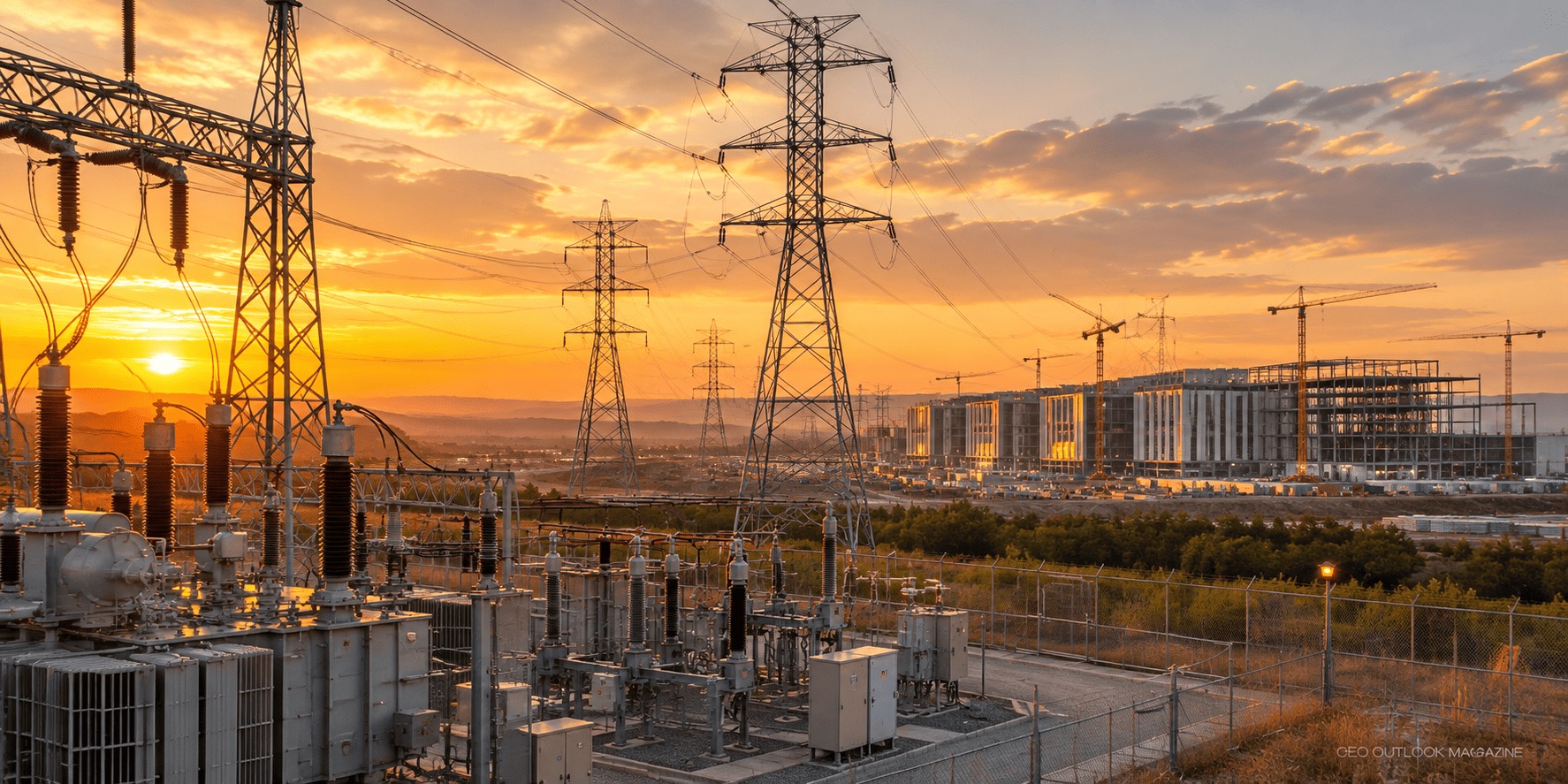
Industry analysts have started describing this shift plainly: data centres, semiconductors, cell towers, and fibre networks as the new backbone infrastructure—today’s roads, tolls, and bridges. Yet public infrastructure conversations rarely acknowledge this shift. Infrastructure capital actually flows not into compute capacity. It is electricity. AI data centre racks now require between 30 and more than 100 kilowatts of power, compared to 5 to 15 kilowatts for traditional data infrastructure, a power density increase that has begun overwhelming local grid capacity in multiple regions and forcing developers to delay projects or contract power directly from generators rather than wait on utility interconnection. Grid interconnection queues now take up to four years in some markets, creating a structural mismatch with data centres that can move from groundbreaking to operational in as little as 9 to 12 months. That timing gap- a data centre that can be built in under a year sits idle. At the same time, it waits years for adequate grid power- it has itself become one of the more significant structural investment opportunities in infrastructure, driving grid and generation capital expenditure up a projected 13 per cent through 2027 specifically to keep pace.
This is also reshaping the energy transition's investment case in ways not fully captured by climate policy. This shift is also changing the investment case for the energy transition, in ways that go beyond climate policy. The International Energy Agency expects about US$2.2 trillion to move into clean energy in 2026—almost twice the amount going to fossil fuels. Much of this is driven by hyperscale technology companies securing renewable power to meet their own AI infrastructure needs, not by policy mandates. Private capital is accelerating a broader shift in who actually funds infrastructure development. Global infrastructure fundraising reached a record of nearly US$200 billion in 2025, surpassing the previous record set in 2022, with fund managers reporting particularly strong investor demand specifically for energy transition and data centre strategies. Structured preferred equity, joint ventures, and increasingly asset-backed financing structures are emerging as the dominant mechanisms funding this buildout, a meaningful departure from the government bond and public-private partnership structures that have historically financed large infrastructure projects.
What This Means for Leadership Outside Tech
For leaders in construction, materials, and resource extraction, this is not just a technology story. It is direct competition for power generation, grid modernization, and construction capacity—the same resources traditional infrastructure projects rely on. When a utility prioritizes grid interconnection for a hyperscale data center, something else moves down the queue. Firms positioned to serve power, grid, and data center construction are capturing a growing share of infrastructure capital. Those focused only on traditional public works are left competing for a slower-growing market.
Over the next five years, infrastructure investment will not be defined by roads, bridges, or transit budgets, however necessary those remain. The real story is power—and which companies moved early enough to capture the capital now flowing into generation, transmission, and delivery.
Is your organization positioned to capture capital? Most organizations will need to decide whether they are positioned to capture capital flowing into power and grid infrastructure, or whether they remain tied to slower-growth public works. The distinction will define who benefits from the next wave of infrastructure investment.