

GM’s failed EV1 project made the risks of early electric vehicles obvious. When Nissan’s CEO committed in 2010 to launch an affordable, zero-emission car within the year, the technical and commercial risks were not theoretical. The gaps were real, and the targets were ambitious. Yet Nissan demonstrated what others had not: a mass-market electric car could be built and sold.
The Bet Made Right After the Cautionary Tale
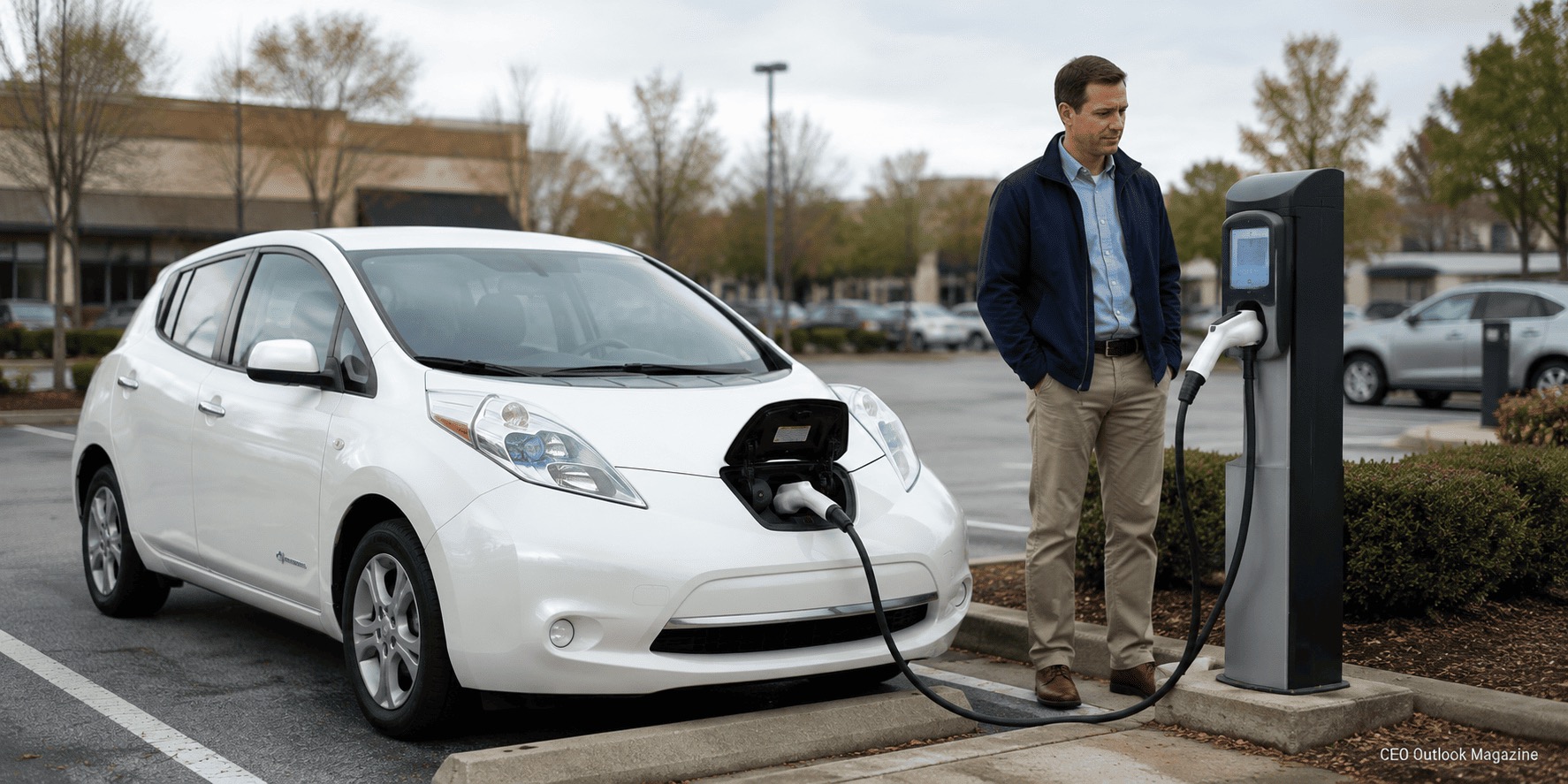
Nissan did not follow the industry’s caution. In 2009 and 2010, most automakers stayed out of the electric vehicle market, still wary after GM’s failure and unconvinced that demand would materialize. Nissan’s leadership made a different calculation, committing publicly and financially to battery-electric vehicles as a core strategy. The target—10 percent global EV market share by 2020—looked unrealistic. The Leaf, launched in December 2010, was the first mass-produced, globally available electric vehicle from a major automaker. It was built as a practical, affordable five-seat hatchback, not a technology demonstration.
The Corner Cut to Hit the Deadline
Delivering on the launch timeline required real technical trade-offs. The most significant was the decision to ship with a passively cooled battery rather than delay for a more robust thermal management system. Nissan prioritized speed over durability. The outcome was predictable: early Leaf battery packs degraded faster, especially in hot climates, with many dropping below 75 percent health by 2025. This was not a minor flaw. It affected resale values, reduced usable range, and shaped public perception of EV reliability at a critical stage for mainstream adoption.
Early sales numbers compounded the challenge. Nissan targeted 20,000 US sales for 2012 but had delivered only 6,791 by October, even fewer than the 9,674 units sold in 2011. The CEO acknowledged the shortfall publicly, a rare admission for an executive who had set ambitious targets. The gap between initial ambition and commercial reality was clear.
Yet the Leaf became the best-selling electric car in history for a sustained period, with cumulative global sales approaching 355,000 units by the third quarter of 2024. That scale mattered, not because it made Nissan the dominant EV player, but because it proved a legacy automaker could design, build, and sell an electric vehicle in meaningful volume—not as a compliance product or a low-volume showcase, but as a car people actually bought and drove.
The Bittersweet Ending
The executive who drove this strategy did not remain to see its full outcome. Nissan’s CEO left the company in 2018, just as Tesla began to overtake Nissan’s early lead. Since then, the commercial advantage Nissan established has shifted to other players—Tesla in Western markets and Chinese automakers globally. Nissan proved the category, but did not capture the market it helped create. The lesson is clear: being right about the future does not guarantee capturing its value. Nissan’s decision to go electric before the technology, infrastructure, or consumer demand was ready remains a defining example of what first movers risk and what they actually prove, regardless of who profits most from the market they open.
Which current bets in your industry carry the same kind of risk Nissan took by moving before the market was ready?