

Traditional data centers require 24 to 36 months to build. Crusoe, an AI infrastructure company, claims it can now deploy a modular data center in three months, following a US$200 million investment in a Colorado factory. This is not a marginal improvement. It is a deliberate shift, with significant capital and manufacturing capacity behind it, toward treating large-scale construction as an industrial process rather than a sequence of on-site projects.
The Bet Explained in One Number
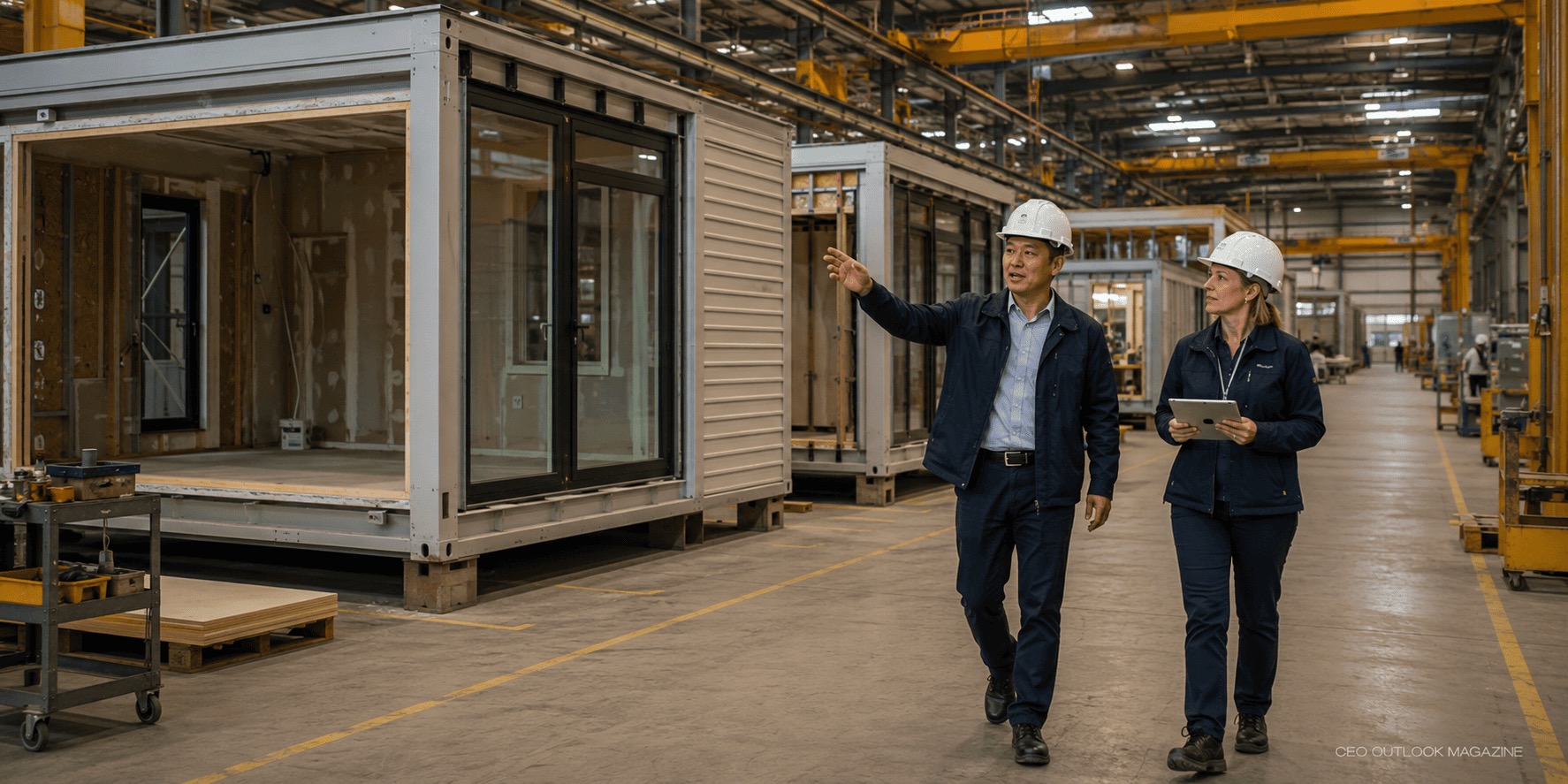
The difference in timelines between traditional and modular construction is now the central strategic variable. Conventional data center projects, once civil, mechanical, and electrical work are sequenced, typically take 24 to 36 months, with grid connection often adding further delays. Modular construction moves most integration into the factory, allowing site preparation and assembly to proceed in parallel. This is not a minor gain. KAYTUS, for example, has developed a fully prefabricated, containerized data center that reduces an 18-to-24-month build to 6 to 8 months. Individual power units can be operational within a month of arriving on site. Betting Its Global Position on It
Schneider Electric has made one of the most visible commitments to this approach. The company now operates over one million square feet of prefab factory space worldwide and is still expanding. Schneider is doubling its prefab workforce to more than 2,000 and recently acquired Motivair, a direct-to-chip liquid cooling manufacturer, to address the cooling requirements of modern AI infrastructure. This is not a side initiative. Schneider is reallocating manufacturing capacity and headcount based on the view that prefabrication, rather than traditional on-site construction, will define the next generation of critical infrastructure.
The AI Infrastructure Company Building Its Own Factory
Crusoe's move to build a 352,000-square-foot manufacturing facility, instead of relying on outside contractors, signals a different calculation: that direct ownership of manufacturing capability justifies the capital outlay. The Spark Factory in Colorado is designed to produce Crusoe's modular AI units at a scale and consistency that traditional procurement cannot match, supporting the company's own cloud infrastructure expansion.
The Precast Concrete Pivot
Many of the executives now investing in prefab did not begin there. Clark Pacific, for example, spent years manufacturing precast concrete structures for life sciences, building entire labs from standardized components. When demand shifted, that manufacturing base allowed the company to move directly into data center construction, using an existing 'kit of parts' rather than building modular capability from scratch. DPR Construction has shown the speed advantage in practice, completing a Texas data center in 13 months with prefabricated components after advising the owner to abandon traditional sequencing in favor of a prefab-first model.
China's Modular Export Boom
This shift is not limited to North America or AI infrastructure. CIMC Group, which developed modular manufacturing expertise over decades in container production, has expanded from hotels and senior housing into global data center construction. Modular building exports have risen nearly 20 percent as international demand grows. CIMC applies the same industrial standardization used in container and vehicle manufacturing, rejecting the traditional, bespoke approach to each construction project.
Why This Bet Makes Sense Right Now
The timing of this shift is not coincidental. It directly addresses the structural mismatch this publication has already identified in the broader infrastructure capital story: data centers can theoretically be deployed in under a year. Prefab construction addresses a structural mismatch: while data centers could, in theory, be deployed in under a year, traditional construction and grid connection often take two to five times longer. This creates a bottleneck between available capital and operational capacity. Executives now see prefab reaching an inflexion point, driven by high construction costs, compressed rents, and tighter capital availability. Predictable budgets and faster time-to-revenue have become more valuable than before. The large-scale construction demand category, driven by the AI infrastructure buildout examined elsewhere in this publication's coverage, will be won by whoever can manufacture and deliver capacity in months rather than years. The companies making that bet with real capital, dedicated factories, and expanded manufacturing headcount are not hedging. They are betting that traditional, sequential, site-based construction is no longer fast enough to serve the infrastructure economy actually driving demand.
For most organizations, the question is no longer whether prefab is a niche alternative, but whether it is becoming a core strategic capability. The answer will determine who can actually deliver infrastructure at the speed and scale the market now requires.