

US rail freight volumes are up 3.3 percent through the first 30 weeks of 2026 compared to last year. Intermodal traffic, which competes most directly with long-haul trucking, leads with nearly 3.8 percent growth. In early August, intermodal volume rose 4.8 percent year over year. This is not the result of a rail industry turnaround or new marketing. The underlying driver is straightforward: as trucking became more expensive and capacity tightened, rail's cost advantage began to draw freight back onto the network.
The Numbers Behind the Quiet Shift
Association of American Railroads data shows this is not a one-off spike but a sustained shift. Intermodal volume has reached over 8.4 million units in the first 30 weeks of 2026. Analysts see this as a real trend, not a statistical outlier. For several years, rail lost ground to trucking as truckload capacity was abundant and spot rates stayed low, making rail's cost advantage irrelevant for shippers who could easily secure cheap, flexible truck service.
Why This Is Happening Now, Not Because Rail Got Better
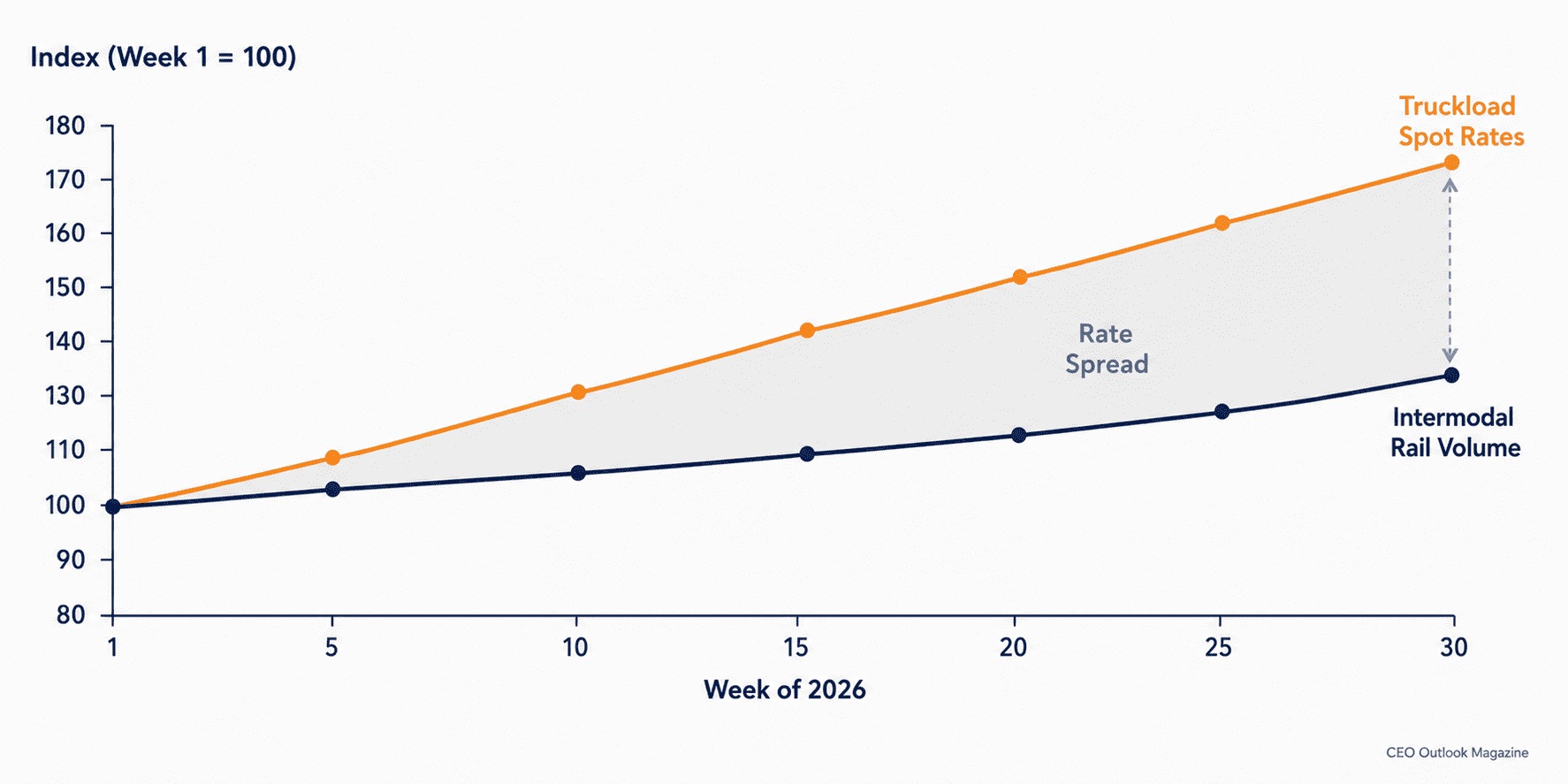
The shift is not driven by new demand for rail, but by rising costs in the truckload market. Intermodal spot rates are about half those of comparable trucking lanes, and shippers can save 20 to 30 percent by moving suitable loads to rail. This price gap has pulled volume back to intermodal in 2026. However, the rate spread is already narrowing as intermodal rates rise alongside trucking. Shippers with long-term intermodal contracts should expect higher renewal rates, and spot-market discounts are unlikely to last.
The Reliability Problem Rail Still Hasn't Solved
Rail's competitive position is still undermined by unresolved service quality issues. Surveys show many customers remained dissatisfied with rail performance through late 2024, citing missed pickups and inconsistent transit times. Shippers have warned regulators that weak rail service poses broader economic risks, prompting congressional hearings. The current shift is not a sign that rail has solved its reliability problem. Most shippers are moving freight to rail because the price gap is too large to ignore, not because service has improved.
The Capital Bet Rail Operators Are Actually Making
Rail operators are committing capital on the assumption that this shift will last. BNSF Railway has announced a $3.6 billion investment plan for 2026, including capacity expansion and continued work on its Barstow International Gateway in California, an inland hub designed for intermodal shipments. Containerized and intermodal freight now accounts for about 47 percent of total rail volume and is projected to grow at 6.23 percent annually, outpacing the broader rail market's 4.48 percent. Operators are betting that intermodal, not bulk commodities, will drive growth in the coming years.
The Strain Underneath the Surge
The current surge is straining rail capacity, and analysts do not expect conditions to normalize before 2027. Shippers should budget realistically and secure capacity in advance; rail cannot absorb unlimited volume without service impacts. At the same time, operators face a structural decline in coal traffic, down 13.6 percent in 2024 to its lowest level since 1988. The Energy Information Administration projects coal's share of power generation will fall to 15 percent by 2030. Since coal routes have historically subsidized network maintenance, this decline is forcing rate adjustments across other commodities, complicating the financial picture even as intermodal volume grows.
What This Means for Transportation and Logistics Leadership
For transportation leaders, the lesson is clear: the current cost advantage for intermodal rail is real, but it is temporary and comes with trade-offs. The rate spread is narrowing, rail reliability remains mixed, and capacity constraints could affect service for much of the year. Shippers who move freight to rail based only on price, without planning for rate changes and service variability, risk being caught off guard by the trade-offs once the shift is made.
Organizations evaluating rail conversion should weigh not just current rate spreads but also the reliability and capacity risks that have historically accompanied rail service.