

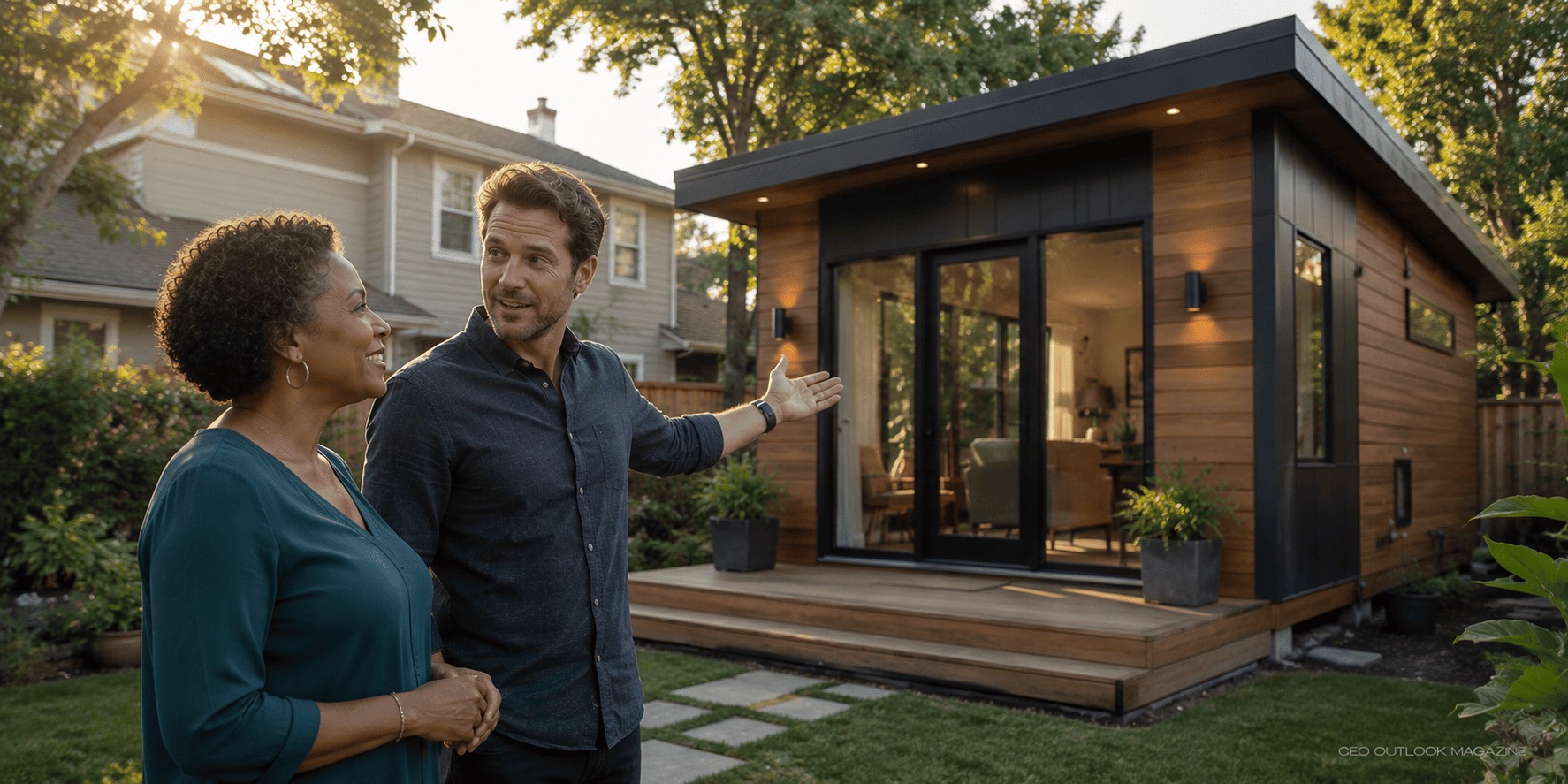
Alex Czarnecki launched Cottage after seeing firsthand how difficult it was for his parents to generate rental income in the Bay Area. Brian Gaudio founded Module to manufacture prefabricated backyard homes for vacant lots in Pittsburgh. Both are focused on small-scale, incremental housing solutions rather than large, high-profile developments. Their approach assumes that addressing the housing shortage will require many modest projects, not a handful of major ones.
The Bet Against "Bigger Is Better"
Real estate development has traditionally favored scale: bigger buildings, more units, larger capital commitments. A new group of PropTech founders is challenging that model, arguing that the path to greater affordability lies in deploying smaller, technology-enabled structures at scale across existing neighborhoods. Accessory dwelling units, once a niche concept, are now attracting venture investment as regulatory barriers fall and housing costs rise in major cities.
The Founder Who Started With His Own Parents' Backyard
Czarnecki's experience navigating ADU construction for his parents in the Bay Area exposed the operational barriers facing typical homeowners: complex permitting, high costs, and limited access to reliable contractors. Cottage was built to address these friction points with software and a contractor marketplace, aiming to make ADU development practical for more than just professional developers. The company's $15 million Series A, led by Fifth Wall, suggests that institutional investors now see potential for scale in this segment, not just a niche service.
The Modular Manufacturer Building Backyard Homes Like Products
Brian Gaudio took a more industrial approach to the same underlying bet. His company, Module, based in Pittsburgh, manufactures modular accessory dwelling units, including a model called the Berkley, and installs them directly on vacant lots and in existing backyards around the city, rather than building custom structures on-site the way traditional construction typically works. The company's approach, Module, applies a manufacturing mindset to ADU construction, producing modular units that can be installed in vacant lots and backyards rather than built from scratch on-site. This approach has attracted attention from federal agencies, including an invitation to present at the 2023 Innovative Housing Showcase in Washington. The company sees this as evidence that the conversation around ADU legalization is expanding beyond local zoning debates. Listing homes, spare rooms rented to travellers, is now applying a strikingly similar logic to underused land: enormous latent housing capacity already exists on residential lots across the country, and the constraint has never really been available space. It has been the cost, complexity, and permitting friction of actually building on it.
Why Now: The Regulatory Tailwind Making the Bet Work
These business models depend on regulatory change. California, Oregon, and over fifteen other states now allow ADU construction by right, eliminating much of the local discretion that previously slowed or blocked projects. This shift, driven by political pressure on affordability, is what has made the ADU segment investable at scale. The risk is clear: if the regulatory momentum stalls, so does the business case.
The Harder Truth: Capital Still Isn't Fully Behind the Bet
Despite recent high-profile raises, most PropTech funding remains concentrated in a few large, later-stage companies. Median round sizes remain modest, and capital isn't flowing broadly into the smaller-footprint housing segment. Institutional investors continue to favor debt products with lower risk, leaving retail capital largely sidelined from funding the distributed housing developments these founders are pursuing.
The Bet That Still Needs Proving
What unites Czarnecki, Gaudio, and the founders backing Samara is a genuine conviction that solving housing affordability does not require the next large-scale luxury development. It requires making it dramatically easier and cheaper to build small, well-designed housing on existing land. Whether that bet fully pays off depends on two things still very much in motion: whether the regulatory legalization wave continues spreading to additional states, and whether the capital markets funding this category catch up to the scale of tCzarnecki, Gaudio, and Samara's backers are aligned on one point: large-scale luxury projects are not the answer to housing affordability. The real test is whether it becomes materially easier and less expensive to build small, well-designed units on existing land. The outcome depends on two unresolved factors: continued regulatory expansion and whether capital markets scale to match the opportunity.