

The same qualities that make a defense technology startup fast and adaptable—quick fundraising, flexible ownership, global investors—are exactly what trigger the longest and most uncertain security clearance and foreign-influence reviews in defense contracting. A company can build the agile, capital-efficient structure that venture investors want, only to find that this is what delays or blocks access to classified contracts for six to twelve months or longer.
The Trap Built Into the Business Model Itself
Legal analysts in defense technology point out the core tension: the same commercial startup features that drive rapid growth—fast fundraising, foreign co-investors, flexible governance, global supply chains—can create eligibility problems or legal exposure for defense contractors, especially when these issues emerge only after the company has scaled. This is not a rare edge case. It is the standard model for most venture-backed technology companies. Defense startups face a structural bind: the capital-raising approach that enables speed often complicates or blocks access to the classified work their technology is built to support.
What the Timeline Actually Costs
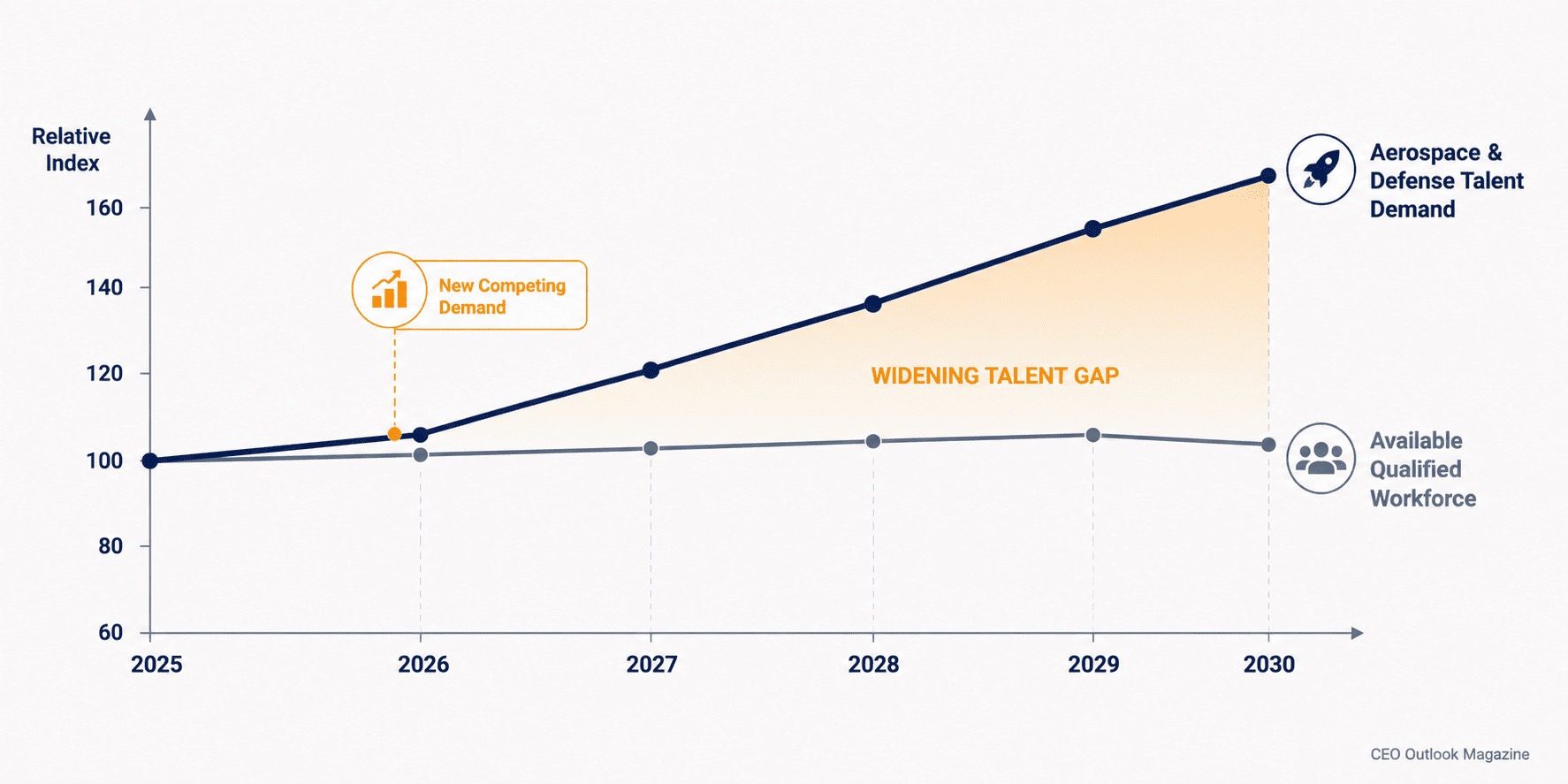
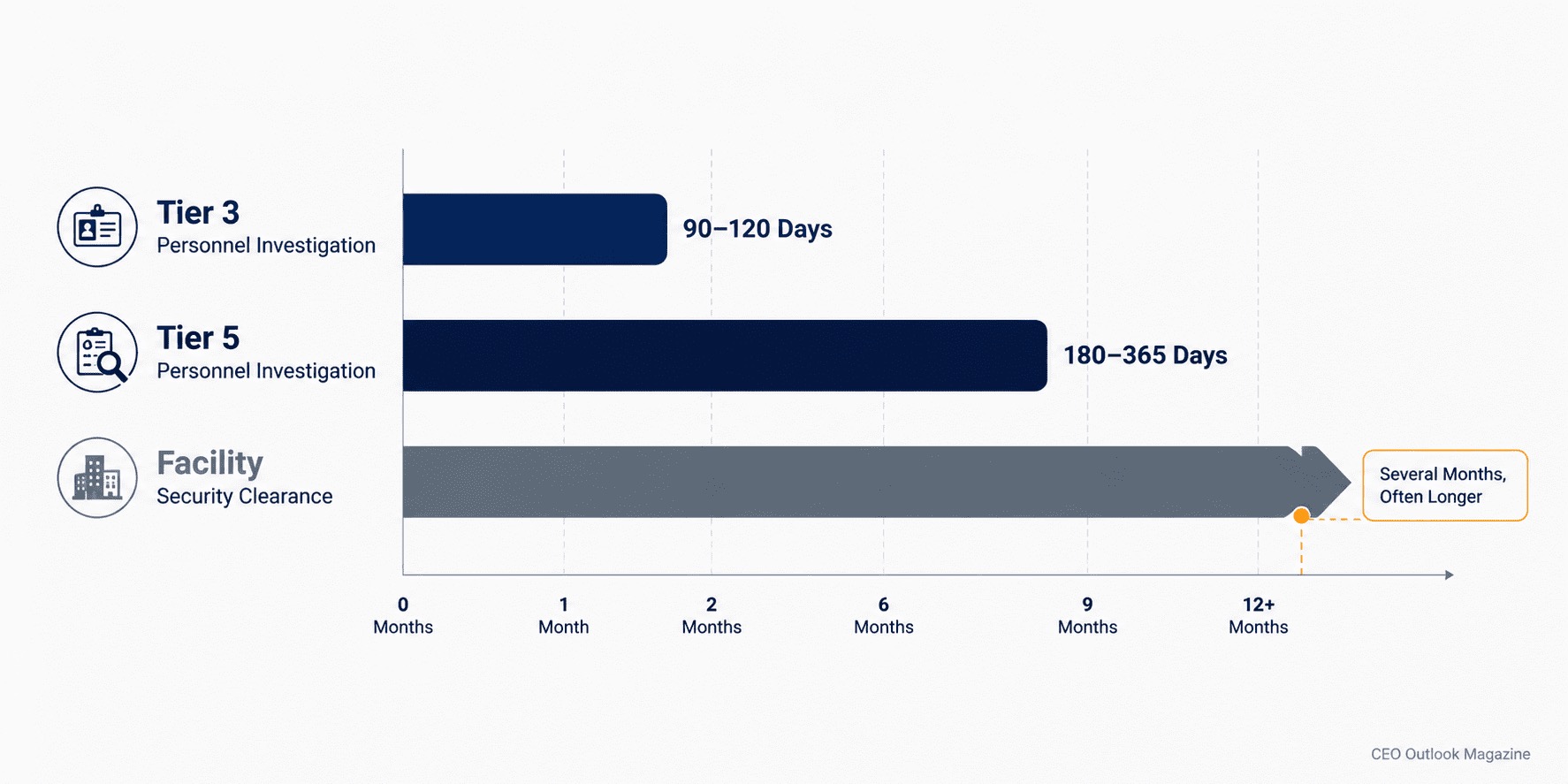
The cost of this mismatch is real. Facility clearance, which allows a company to handle classified information, often takes months or longer. Personnel security clearances add their own delays: 90 to 120 days for Secret-level access, 180 to 365 days for Top Secret. Delays and failures in these processes routinely cost companies six to twelve months and hundreds of thousands of dollars. For startups with limited runway, this is not just inconvenient—it is an existential risk. These delays stack on top of a workforce gap: about 70,000 security-cleared positions remain unfilled, and attrition in the sector is roughly 15 percent, more than double the broader economy. Even cleared talent is leaving faster than it can be replaced.
The Progress That's Real, and Why It's Not Enough
Processing times are improving. The Defense Counterintelligence and Security Agency cut its investigation backlog from about 290,000 to 100,000 cases by January 2026—a 65 percent reduction in a year. But this progress comes as the scope of scrutiny is expanding. Foreign Ownership, Control, or Influence rules now reach beyond physical access to classified information. They cover who influences technology, who funds innovation, and where supply chains begin. Even minority foreign investment or complex private equity structures can trigger new reviews. Startups may move faster through the process, but face a broader set of ownership and investment hurdles that can halt progress entirely.
Why Small Companies Feel This Disproportionately
Small businesses are not on the margins here. Of the 12,000 facilities cleared under the National Industrial Security Program, 65 percent are small businesses. The defense industrial base depends on companies of this size. But startups lack what large primes take for granted: a dedicated Facility Security Officer and the compliance infrastructure to navigate inconsistent modernization. Trusted Workforce 2.0, the government's effort to speed up clearance through continuous vetting, has been unevenly implemented. Over half of contractors report trouble getting information on investigations, and more than a third have issues with vetting alerts. For startups without compliance staff, each friction point adds hidden time to every clearance, compounding the disadvantage against primes with entire departments for this work.
What Actually Works: Planning the Constraint In From Day One
The 2026 National Defense Strategy explicitly acknowledges this dynamic, promising fewer barriers and direct support for startups and nontraditional vendors, specifically naming the "valley of death," the stage between prototype and production where many defense startups fail to secure follow-on funding or customers, as a problem the Department intends to address. In practice, the companies actually succeeding under current conditions are the ones treating clearance timeline as a core planning constraint from the outset rather than an obstacle discovered mid-process. One recruiting effort for a venture-backed defense company filled all nine open RF and electrical engineering roles in under 45 days specifically because the search was built around clearance reality from the start, prioritizing already-cleared candidates where timelines couldn't wait, rather than colliding with the constraint at the offer stage. Companies with foreign investors can still qualify for programs like SBIR if those investors are passive and come from allied nations, and small businesses without in-house compliance capacity have real, accessible resources available specifically to help navigate this terrain: Procurement Technical Assistance Centers, APEX Accelerators, and industry associations built to explain emerging requirements before they become a contract-blocking barrier.
What This Means for Defense Technology Leadership
For founders and leaders in defense technology, the lesson is clear: review ownership structure, engage FOCI consultants and a facility security officer, and map clearance timelines before closing a funding round or approaching a contract deadline. The startups that succeed in defense are not just the fastest builders. They are the ones that treat security clearance as a design constraint from the start, not as an afterthought that collides with the capital structure later.
Is your organization's defense technology strategy accounting for security clearance and FOCI review as a core business constraint from day one, or discovering it reactively once a contract or funding round is already at stake? CEO Outlook Magazine wants to hear your perspective — share your view. If your organization is treating security clearance and FOCI review as a core business constraint from the outset, you are ahead of the curve. If not, the risk is that these issues will surface only when a contract or funding round is already at stake.