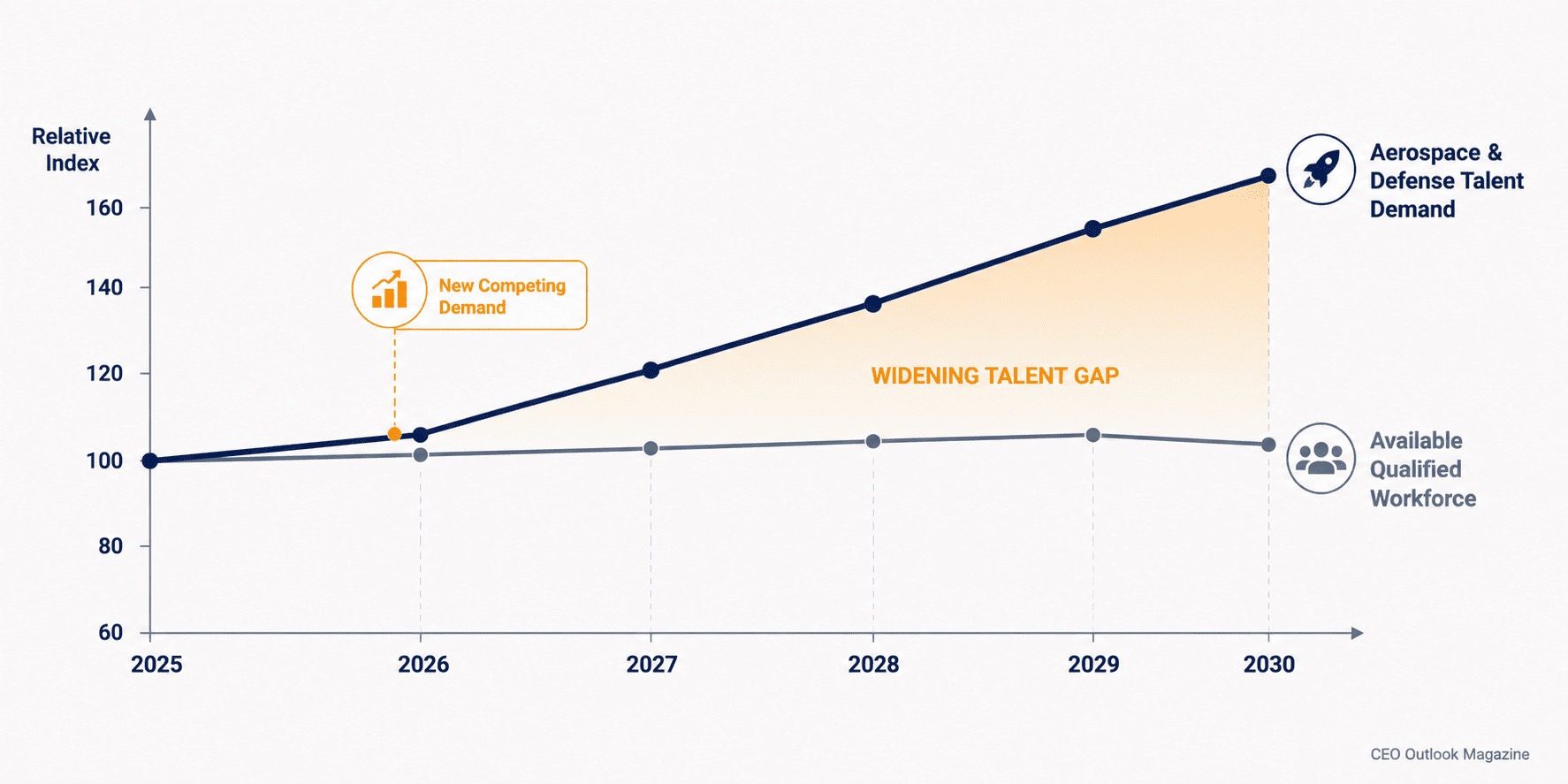



By 2030, every Baby Boomer in the United States will be 65 or older, representing about one in five Americans. At the same time, the World Health Organization projects a global shortage of 11 million healthcare workers. These trends are converging as the healthcare industry continues to face persistent trust, funding, and delivery gaps. The next five years will not hinge on a single breakthrough. Instead, they will test whether leadership can address several compounding problems at once, with fewer people available to do the work.
A Demand Surge Meeting a Supply Collapse
The demographic math is straightforward. Over 130 million US adults already have two or more chronic conditions. Adults 65 and older account for more than a third of healthcare spending, despite being less than a fifth of the population. Physician shortages in the US could reach 86,000 by 2036, especially in primary care and specialties serving older patients. More than 30 percent of active physicians are 60 or older, so a large share of the workforce is nearing retirement just as demand accelerates.
This is not a distant scenario. The timeline is fixed, and the need for action is immediate. Hiring alone will not close a gap of this scale. As the workforce shrinks and ages, every challenge—patient trust, delivery infrastructure, financial discipline, innovation funding, mental health investment—becomes more difficult to solve.
Why the Trust and Delivery Gaps Get Harder, Not Easier
Workforce scarcity makes existing problems harder to manage. Digital health adoption relies on trust, which is built through reliability and clinician recommendation, not technology alone. An understaffed clinical workforce has less time to build trust with patients and less capacity to evaluate or endorse new digital tools, even when those tools are useful. Cell and gene therapy delivery already strains clinical site capacity, requiring dedicated teams and intensive care resources for a small number of patients. As the pool of specialized staff shrinks, that strain will increase.
Financial discipline faces similar pressure. Hospital CFOs now require faster, more reliable returns on capital than in previous years. Workforce shortages raise the stakes on every staffing-dependent investment, as labor costs and recruitment challenges are now structural rather than temporary. Leadership teams evaluating patient-centric care, mental health benefits, or new service lines need to treat workforce availability as a primary constraint, not assume that more capital will secure more staff.
AI as the Genuine Accelerant, and the Genuine Risk
Artificial intelligence is the only lever with enough scale to offset the workforce gap. It will not replace clinicians, but it can accelerate how quickly new workers become clinic-ready and extend the capacity of the existing workforce. Traditional pathways into nursing and allied health are slow and costly, often taking years to produce a single graduate. AI-assisted training tools can shorten that pipeline, not just automate existing tasks. However, human oversight does not eliminate risk; it often shifts it into exactly the understaffed, high-pressure environments least equipped to catch an error before it reaches a patient. Leadership teams that treat AI purely as a headcount solution, without investing in the governance structures needed to deploy it safely, are trading a visible staffing problem for a less visible but potentially more serious safety and liability problem.
Funding the Solutions While the Money Gets Harder to Find
All of this must happen under real capital constraints. Early-stage research funding for the innovations most likely to help offset workforce pressure, from AI-driven diagnostics to new care delivery models, has become significantly harder to secure. Public funding is contracting, and private capital is concentrating in later-stage, de-risked opportunities rather than the earlier discoveries that drive real breakthroughs. An industry facing its most acute workforce pressure in decades cannot afford a simultaneous contraction in the funding needed to build the tools that could help solve that pressure.
What Leadership Actually Needs: For healthcare leaders setting strategy over the next five years, workforce planning can no longer be separated from technology investment, financial discipline, or trust-building. Organizations that model these forces together, treating clinical capacity as the binding constraint for every decision, will be better positioned than those that treat staffing as a secondary issue. Leaders who act now to build AI governance alongside adoption, invest in workforce pipeline innovation alongside recruitment, and fund early-stage discovery even as capital tightens, will be more likely to deliver reliable care when the demographic wave arrives in full. The collision between rising patient demand and a shrinking healthcare workforce is not theoretical. Every organization will need to decide how to respond. The practical question is whether your current strategy is built for the constraints ahead.