

The bill of lading has governed global ocean trade for centuries. In 2026, it remains a physical, signed document, couriered separately from the cargo it represents. A $50,000 shipment can still be delayed or lost because a $30 courier envelope fails to reach the right person at the right time. When that happens, the costs are immediate: demurrage, penalties, and in some cases, insolvency. The technology to digitize this process is not new. The industry's own data shows adoption remains limited.
The Persistent Role of Paper in Global Trade
The bill of lading is contract, receipt, and title in one. Control of the physical original determines who owns the cargo. This structure has barely changed since the 19th century, even as global trade volumes have multiplied. When the document is missing or delayed, ports and customs cannot legally release goods. The result is operational bottlenecks that compound during disruptions.
Adoption Data Exposes the Real Bottleneck
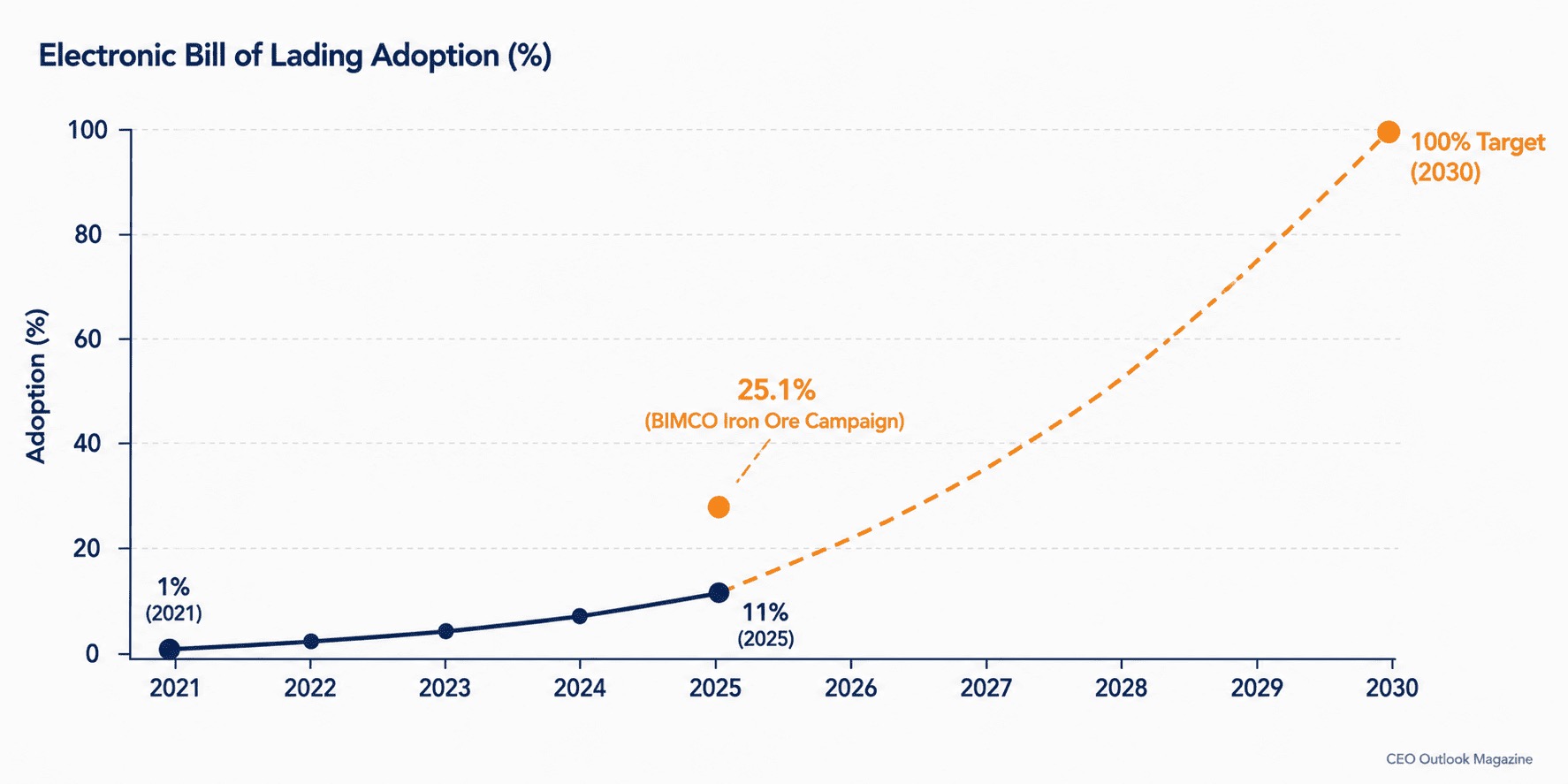
Electronic bills of lading remain the exception. DCSA data shows only 1 percent were electronic in 2021, rising to 11 percent by mid-2025. The headline number hides a deeper issue: while nearly half of industry players claim some electronic capability, only a fraction of total volume is digital. The reason is structural. Any non-digitized party in the chain—a small forwarder, a port authority, a shipper—forces the process back to paper. Even a fully digital bank must revert to paper if a single counterparty is not ready.
Technology Is Not the Limiting Factor
The industry's own analysis is clear: technology is not the main obstacle. The real barriers are organizational and behavioral—familiarity, inertia, and reluctance to change established processes. For leadership, this shifts the question from technical feasibility to execution. The financial upside is significant. McKinsey estimates $6.5 billion in annual cost savings and $40 billion in additional trade if electronic bills of lading become standard.
Where Deliberate Coordination Changed the Pace
Where industry leaders have coordinated action, adoption has accelerated. BIMCO's '25 by 25' campaign, backed by major bulk shippers, reached its target in a year—over 25 percent electronic adoption in iron ore trade, more than twice the industry average. Separately, DCSA's 2025 standards-based, interoperable transaction addressed the fragmentation that forced parties onto single-vendor platforms. These examples show that targeted coordination and technical standards can break through adoption barriers.
Regulation Is Now Setting the Pace
Government policy is now driving adoption where market forces have stalled. India's 2026 digital trade law validates electronic bills of lading, aligns with UN standards, and introduces incentives for small and medium exporters. The law sets clear targets: 25 percent electronic by 2027, 60 percent by 2029, full adoption by 2031. Projected savings exceed $2 billion annually, with up to $15 billion in new trade unlocked. The UK's Electronic Trade Documents Act provides similar legal certainty. These measures go beyond paperwork. India's Port Community System cut ship turnaround at major ports from 94 to 48 hours. Djibouti's system reduced terminal turnaround from 24 hours to one. The operational impact of targeted digitization is clear.
Implications for Shipping and Trade Leaders
For leaders in shipping, freight, and trade finance, the evidence is clear. Digitization is not held back by technology, law, or economics. The real challenge is organizational: unless every party in the chain moves together, progress stalls. The companies making real headway are those treating this as a coordination problem that demands active management, not a technology project that will solve itself.
Is your organization driving digital adoption across the full trade chain, or waiting for others to move first? The difference will determine who captures the operational and financial gains as digitization accelerates.