

Demand forecasting is a fundamentally harder problem than most enterprise AI applications. Document classifiers typically encounter the same types of documents over time. Demand, by contrast, is rarely stable. Even the most comprehensive historical dataset often describes conditions that no longer apply when the forecast is needed. This is not a technical footnote. It is the core reason AI-driven freight and distribution forecasting succeeds in some cases and fails in others, and why most organizations still struggle to distinguish between the two in advance.
The Honest Report Card Most Vendors Won't Show You
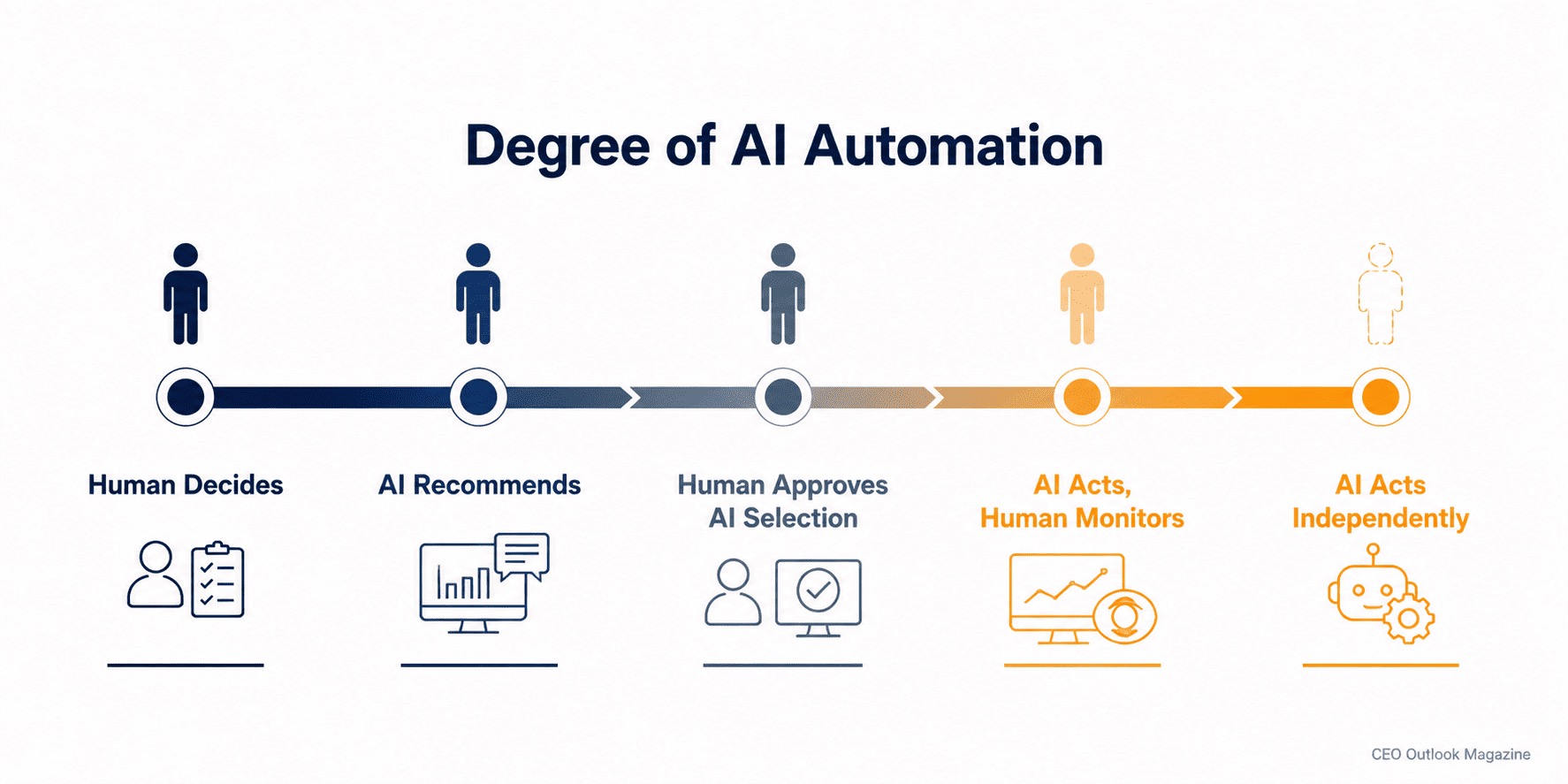
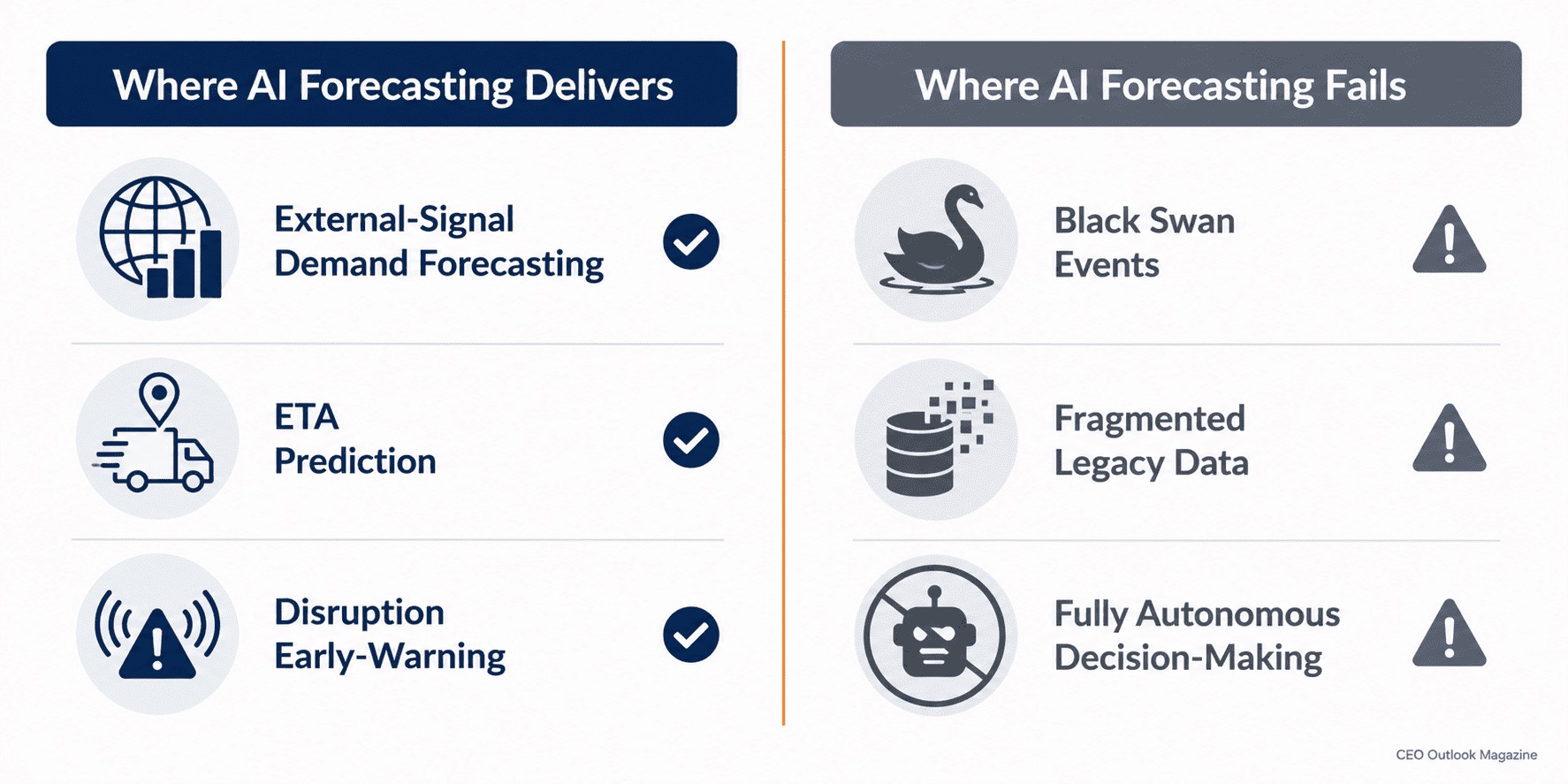
A credible industry retrospective from late 2025 provided a clear view of where AI delivered in logistics and where it did not. The most consistent gains came from demand forecasting that incorporated external signals—weather, local events, competitor pricing—alongside historical sales data. Retailers with large store networks and CPG manufacturers forecasting high-velocity regional items saw measurable improvements in accuracy. The same report was direct about the limits: fully autonomous forecasting still depended on human judgment, AI-driven carrier selection was constrained by inconsistent data, and autonomous warehouse operations encountered too many real-world exceptions to operate reliably without oversight. The distinction is important: narrow, well-defined forecasting improvements worked, while broader claims of autonomy did not.
Why Freight Is Exactly the Wrong Environment for the Technology
The underlying reason for this gap is straightforward. AI models perform best in stable, repeatable environments. Freight markets are neither. Geopolitical disruptions, port congestion, trade policy changes, and sudden demand shocks quickly undermine historical patterns. Models trained on what is considered normal often fail when conditions change most. The problem is compounded by fragmented logistics data spread across carriers, forwarders, ports, ERPs, and spreadsheets. Models built on incomplete or inconsistent data can produce forecasts that appear sophisticated but are fundamentally unreliable, creating misplaced confidence in numbers that do not hold up in practice.
What AI Actually Can't See Coming
AI's current limitation in freight forecasting is that it can detect disruptions but rarely understands their cause. A traffic delay, a customs dispute, or a vessel losing communication can all look the same to a pattern-recognition algorithm. Black swan events, port strikes, sudden border closures, and regulatory changes often render predictive models ineffective just when they are needed most. Still, the technology does provide real value. Companies using AI-driven risk prediction as an early-warning system report 20 to 30 percent faster recovery from supply chain disruptions and up to 25 percent lower demurrage costs. The benefit comes from using AI as an early alert, not as an autonomous decision-maker.
The Real Failure Point Isn't the Model
One of the most overlooked findings in current research is that AI forecasting failures in production rarely stem from the model itself. AI typically works in the lab. The breakdown happens at integration, especially with legacy ERP platforms, planning tools, and order systems that large logistics operations still depend on. In a 2026 Gartner survey, 56 percent of supply chain executives cited legacy system integration as their top challenge in deploying AI. The gap between a vendor demo and real production is where this issue emerges: a demo uses a curated dataset, while production requires connecting dozens of real data feeds, each with its own owner, format, and failure mode. Without solving integration, forecasts that could inform planning end up manually re-entered into spreadsheets, recreating the same fragmentation that continues to undermine supply chain visibility.
What Genuinely Works, Narrowly Scoped
DHL's Smart ETA system is a practical example of disciplined, well-scoped AI forecasting. Instead of attempting end-to-end demand forecasting, it focuses on ocean freight arrival prediction, using machine learning, historical carrier data, vessel positioning, and harmonized data sources to create a single, reliable view. The narrow focus and clean, unified data are what set this implementation apart from broader, more ambitious forecasting projects that fail when exposed to freight's volatility.
What This Means for Logistics and Supply Chain Leadership
For logistics leaders considering AI forecasting, the real lesson is not that the technology lacks value. The value is tangible, but only within narrow, well-defined applications built on clean, integrated data. It is far less reliable when positioned as a comprehensive solution to demand volatility or black swan events. Organizations that treat AI forecasting as a substitute for human judgment, rather than as an early-warning tool that requires integration investment and ongoing oversight, are most likely to encounter the gap between vendor demonstrations and production reality.
Is your organization's AI forecasting investment narrowly scoped around clean, integrated data, or is it being positioned as a broad solution to demand volatility? The distinction matters. If you have a perspective or experience to share, contact the editorial team.