

Consumer expectations have reset. A TikTok video longer than 15 seconds feels drawn out. Two-day shipping, once a differentiator, now seems slow. Yet most brand campaigns still require months of internal process before reaching the market. This is not a temporary gap that will close with incremental speed. It is a structural mismatch between the pace of consumer attention and the operating model of brand strategy. Understanding the mechanics of that mismatch is more useful than repeating advice to simply 'be more agile.'
The Mismatch in One Sentence
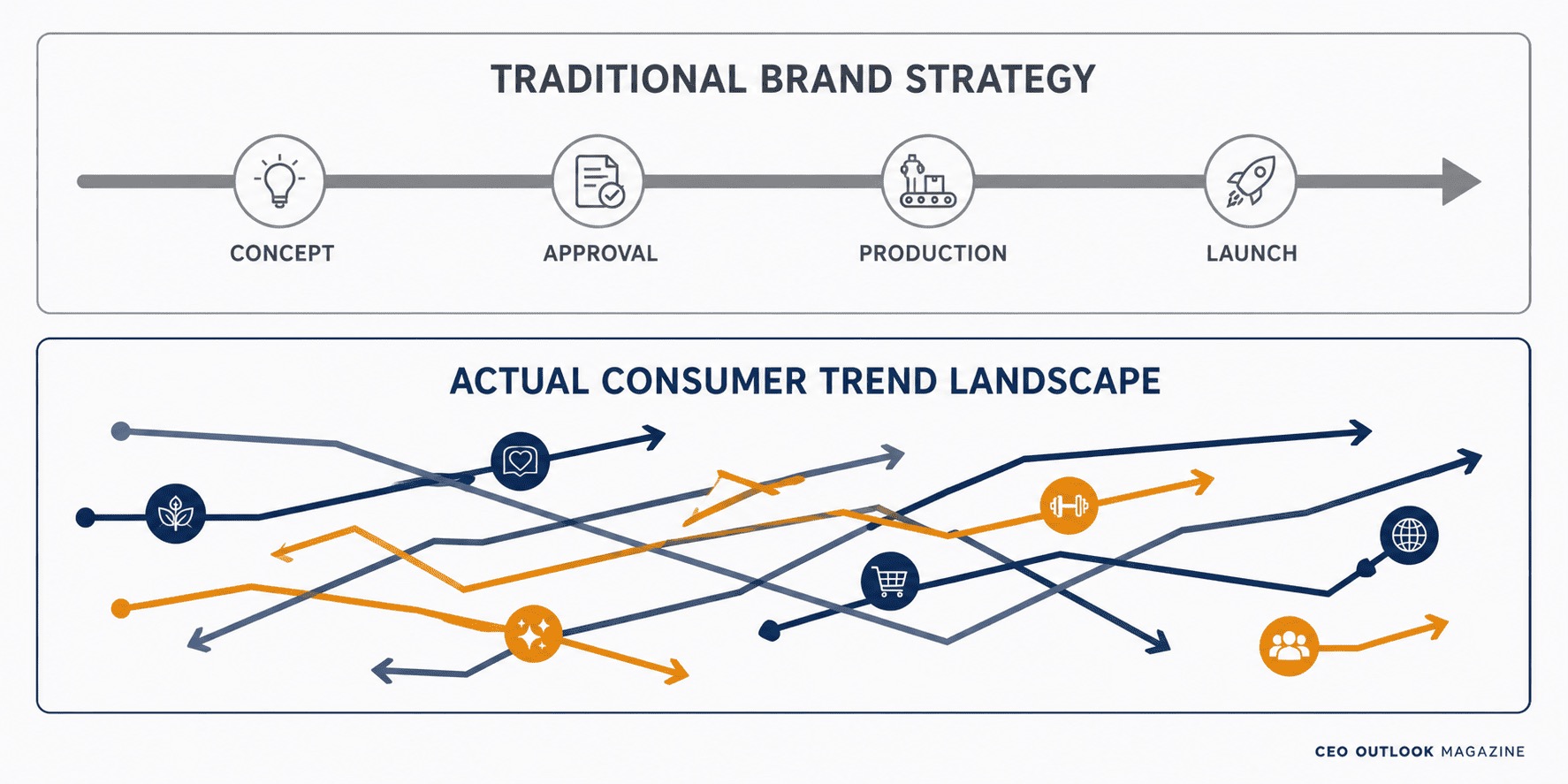
Speed now trumps strategy in most consumer environments, and the magnitude of this shift is often underestimated. Algorithmic platforms reward rapid, repetitive responses to viral moments, pushing brands to react in near real time. Traditional brand strategy, with its quarterly cycles and layered approvals, was not built for this pace. Compressing these processes rarely delivers true speed. It usually results in the same slow process forced into a tighter, more stressful window, with quality and coherence sacrificed first.
It's Not Just Speed — It's Fragmentation
Velocity is only part of the problem. Trend cycles no longer move in a single, predictable direction. Today, contradictory trends—absurdist humor and nostalgia, for example—can peak on the same platform, in the same week, even among the same audience. There is no longer a single wave to ride, only a shifting set of overlapping and sometimes conflicting micro-trends. For brand leaders, the challenge is to separate signals that justify investment from those amplified by algorithms but lacking commercial substance. Most traditional trend-tracking processes are not built to make that distinction quickly or reliably.
Why the Algorithm Now Punishes Slow, Broad Strategy
A more recent shift is that consumer discovery systems now penalize broad, unfocused brand strategies. In the past, overall growth could hide a scattered product portfolio. Retailers tolerated slow-moving SKUs, and algorithms did not downrank mixed signals. That is no longer the case. Portfolio sprawl and unclear brand positioning now amplify risk, because AI-driven recommendation systems penalize diluted or inconsistent signals. A brand strategy that is broad and slow to commit to a clear identity is not just suboptimal. It now works against the way distribution platforms operate.
The Trust Complication Making Speed Riskier, Not Safer
Moving faster by relying on AI-generated content introduces its own risks. Nearly a third of consumers say they are less likely to choose a brand using AI-generated advertising. More than half of social media users express concern when brands post AI-generated content without disclosure. The fastest response is not always the safest. Brands that chase speed through AI risk exchanging a trusted brand voice for a faster but less credible one, undermining the equity they aim to protect.
What's Actually Working: Fixed Identity, Variable Tactics
Organizations that succeed in this environment do not abandon strategy for reactive speed. They separate what must remain fixed from what should be variable. Brand identity and strategic direction stay constant. Tactics, campaigns, content formats, and platform choices are adjusted in response to real-time signals. Brands using this approach are tracking a new operational metric alongside traditional ROI: time from signal to action. The focus is on how quickly a real cultural or behavioral signal translates into a market response, not just on campaign performance in isolation.
The creator economy illustrates this shift in marketing spend. Brand partnerships are moving from flat, upfront payments to performance-based revenue shares, with creators earning a percentage of actual sales. This is not just a creator-economy trend. It is a financial adaptation that aligns cost and commitment with observed signals, rather than betting significant capital upfront on trends that may not last until a campaign launches.
What This Means for Brand Leadership
For brand leaders, the shift is not about making existing planning cycles faster. It is about distinguishing genuine signals from algorithmic noise before committing resources, restructuring approvals around a fixed strategic identity with variable tactics, and moving spend toward performance-aligned models that limit the cost of betting on the wrong trend. Brands that measure success by how quickly they can copy what is already breaking through are competing in a race they are not built to win.
Most organizations face a choice: build brand strategy around a fixed identity with adaptable tactics, or continue relying on fixed campaign calendars and hope to keep up. The difference is not academic. It determines whether the brand can respond to real signals or is left chasing trends already past.