

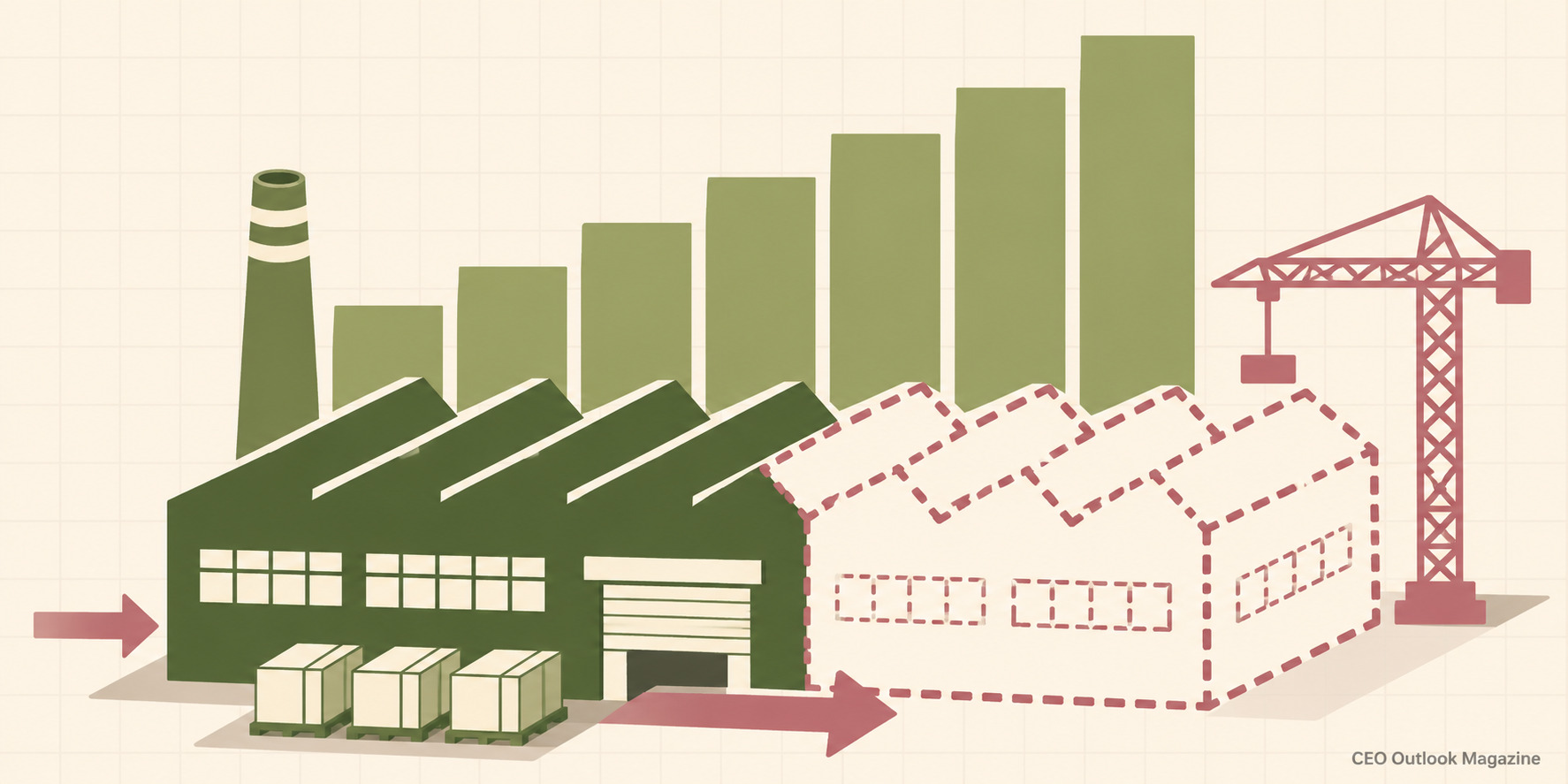
Ten months of growth, a modest jobs recovery and the strongest factory demand in five years make the rebound clear enough. Whether the sector is actually stronger, not just busier, is harder to say.
For most of the past decade, US manufacturing was defined by decline and missed expectations. The data in 2026 has shifted: factory activity is up, hiring has resumed and demand is strong. But the claim that the sector is 'back and better' is not yet supported by the evidence.
The cycle has turned.In October, thee Institute for Supply Management’s manufacturing index rose to 55.5 from 54.5 in September, the tenth consecutive month of expansion after a ten-month contraction. All five sub-indexes feeding the headline figure were in growth territory, and five of the six largest manufacturing industries expanded. S&P Global’s separate index read 54.9, easing from a 52-month high of 55.9 in September, and its economist described the sector’s best growth spell since early 2022. Reuters reported that domestic demand grew at its strongest pace in five years, supported by consumer spending and business investment in A.I.
Jobs have started to follow. In October, the Bureau of Labor Statistics reported that manufacturers added 19,000 jobs. Reuters calculated that the sector shed 93,000 jobs in the first year of the current administration before turning around, adding 101,000 since December 2025 for a net gain of 8,000 since January 2025. S&P Global said factory employment grew at its fastest pace since April 2021. Not every signal is rising: the ISM employment index slipped to 52.4 from 52.7, which still indicates growth but at a slower pace. The recovery is real, but it is recent and modest.
Output and productivity are improving. Manufacturing output rose 1.4 percent year on year in May, according to Federal Reserve data reported by Reuters, and industrial production grew at an annualised 2.1 percent in the first quarter. An earlier Wall Street Journal analysis found factory output up 2.3 percent since January 2025 even as factory jobs fell by roughly 100,000. A policy group citing Bureau of Labor Statistics data reports that manufacturing labour productivity rose 1.9 percent in 2025, the largest annual gain since 2010. If that holds, it is the best evidence for “better”. The sector is producing more with fewer workers.
The investment picture is less convincing than the headlines suggest. The tariff and reshoring narrative promised a surge in factory construction, but the data does not support it. US manufacturing construction spending has declined since 2024, with electronics and semiconductor projects down sharply. Spending outside electronics is barely above pre-tariff levels. Despite years of announced investment, actual capacity has grown only 1.5 percent and output is flat. Announcements and press releases are not the same as new production.
The drivers of the upturn are concentrated. Most of the growth is linked to AI-related capital spending and strong consumer demand, not tariffs. The sectors leading the ISM’s growth are machinery, electrical equipment and electronics, all closely tied to the AI build-out. This concentration means the recovery is vulnerable if capital spending slows. A narrow rebound is less durable than a broad one.
Costs are rising alongside demand. The ISM prices index remains well above the threshold for cost increases. Inflation pressures are visible, and CEOs continue to cite labour costs, infrastructure limits and workforce shortages as the main constraints. Strong demand without cost control does not make the sector stronger.
What it means for companies outside the US and for Brussels. Kearney’s work found that US manufacturing imports reached a four-year high, and the ISM imports index rose to 52.9 in October. Hence, the American upswing is also an opportunity for overseas suppliers and a policy issue for Brussels. The domestic recovery has not shut out foreign producers, and in several categories imports are growing faster than domestic output. The risk for non-US firms is policy. Tariff and trade decisions can change quickly, making US demand both attractive and uncertain.
What should leaders do? First, separate cyclical demand from structural change. Assume some of today’s AI-linked and defence-related demand will normalise. Second, prioritize productivity over capacity. With labor tight and costs high, automation, skills and process improvement protect margins more effectively than expanding floor space. Third, improve cost visibility through longer supply contracts, hedging where it makes sense and dual sourcing. Fourth, tie capacity commitments to actual order backlogs, not public announcements. Fifth, if you export to the US, diversify your customer and sector exposure to reduce policy risk for Brussels-based firms and others.
Treat the numbers with caution. The ISM and S&P indexes are survey-based and show direction, not volume. Ten months is not a trend. Job counts are revised and can differ by reporting period. Some sources are advocates for their positions, and definitions of investment and capacity vary across reports.
US manufacturing is back in the sense that activity, hiring and demand have improved. Whether it is better is not yet proven. The strongest evidence is higher productivity and output with fewer people. The weakest is the lack of follow-through on investment and capacity. Leaders who plan for a recovery that is real but narrow, and treat the next year as a test of whether it broadens, will be better positioned than those who assume the comeback is complete.
Is your organisation planning for a US manufacturing upswing that lasts, or one that cools? Share this article on LinkedIn, X or your preferred social channel with your thoughts, and subscribe to the CEO Outlook Magazine newsletter for more stories like this one.