

Last-mile delivery, the final stretch between a warehouse and a customer's front door, accounts for an estimated 30 to 50 percent of a retailer's total supply chain emissions while representing 53 percent of total shipping costs. For most retailers, this is also the part of their supply chain they understand the least: a package gets handed to a carrier, and everything that happens after that- the route, the vehicle, the delivery sequence- unfolds largely out of sight. Real sustainability progress in retail logistics right now isn't coming through corporate announcements. It is arriving because retailers are finally getting visibility and control over that black box, and discovering that fixing it cuts emissions and cost at the same time.
The Segment Nobody Sees, and Everyone Pays For
The scale of last-mile's footprint is difficult to overstate. Beyond its share of total supply chain emissions, last-mile delivery accounts for roughly 13 percent of total carbon emissions in the cities where it operates, according to World Economic Forum research. Yet this is also the segment retailers have historically had the least direct control over, since most brands outsource final delivery entirely to third-party carriers whose routing, vehicle mix, and fuel choices remain effectively opaque to the retailer whose name is on the package. That opacity is exactly what is beginning to change, driven less by a values-based sustainability mandate than by retailers gaining the operational data infrastructure to actually see and optimize this part of their supply chain for the first time.
The Fixes That Were Never Sold as Sustainability
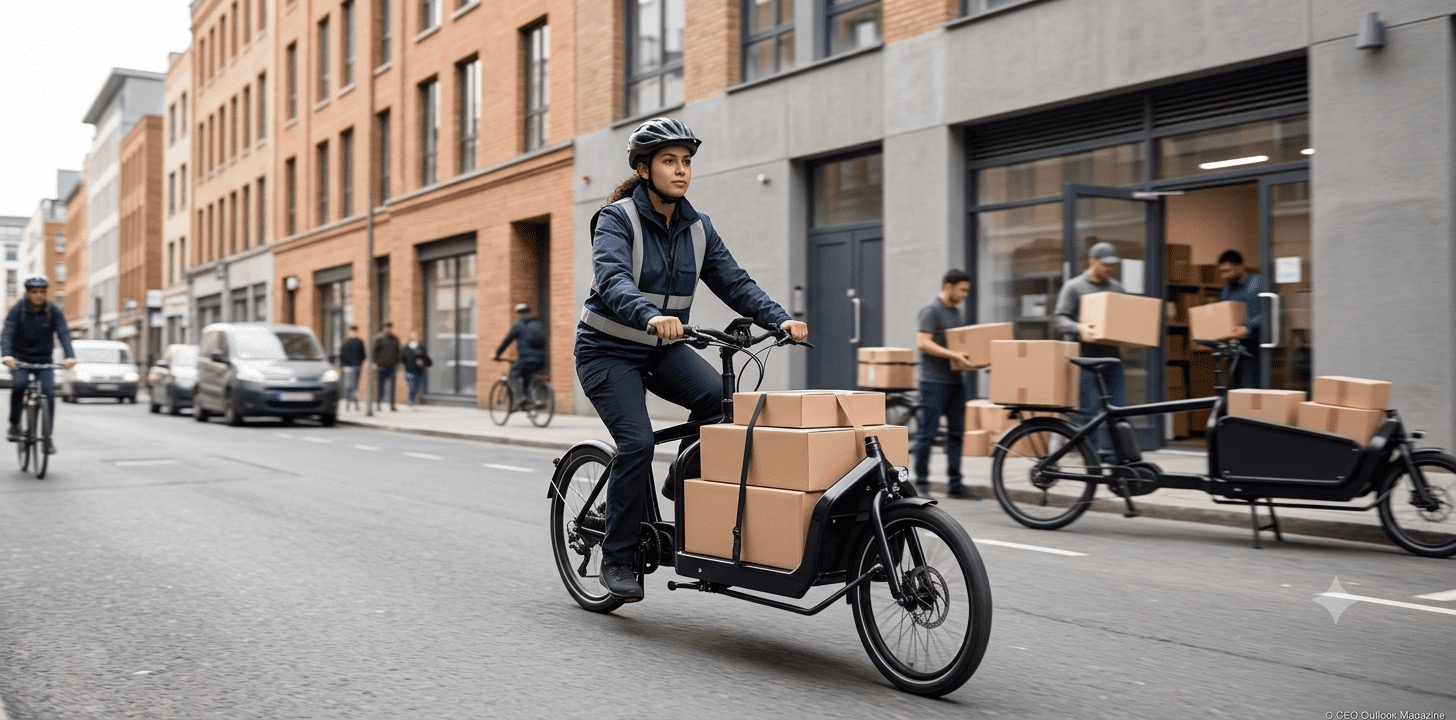
The most effective interventions currently scaling across retail logistics were not built primarily as sustainability initiatives. Deploying micro-fulfilment centres in dense urban areas can reduce average delivery distance by up to 60 percent and cut last-mile emissions in those markets by 35 percent, a result achieved by simply shortening the physical distance a package travels, a change retailers pursue primarily to reduce delivery time and cost. White-label deliveries combined with e-bikes and other zero-emission micromobility can reduce the total number of delivery journeys by 30 percent while cutting total delivery costs by as much as 51 percent, a combination that makes the sustainability benefit essentially a byproduct of a decision retailers would likely make on cost grounds alone. This is the defining pattern behind the current overhaul: the interventions delivering genuine emissions reduction are winning internal budget approval because they lower cost per delivery, not because they satisfy an ESG target.
Consolidation as the Quiet Workhorse
A less glamorous but genuinely significant shift involves how packages reach customers in the first place. Pickup point delivery, routing orders to intermediate locations such retail stores, post offices, or automated lockers rather than individual homes, consolidates delivery volume into far fewer stops, directly reducing both the number of trips required and the risk of failed delivery attempts that force a second trip entirely. None of this requires new technology or significant capital investment. It requires retailers to actively design delivery networks around consolidation rather than defaulting to the most convenient option for any single order, a genuinely unglamorous operational discipline rather than a headline-worthy innovation.
The Bigger, Quieter Opportunity: Returns
Reverse logistics represents an even less visible but genuinely significant piece of this overhaul. Returns processing generates real, measurable emissions and material waste through unnecessary handling, transportation, and disposal, yet most retailers still price returns using a flat fee that treats every returned item identically, regardless of whether it requires intensive refurbishment or can simply go back on the shelf. Activity-based costing, which assigns actual cost to specific return activities like inspection, repacking, and refurbishment, gives retailers genuine visibility into where returns processing resources are actually being consumed, enabling targeted reduction of unnecessary handling steps while directly supporting the kind of circular material recovery this publication has documented delivering genuine commercial return in other industrial contexts. Treating returns as a pure financial cost center to minimize, rather than an environmental and financial system worth genuinely optimizing, leaves real, quantifiable value unclaimed.
Why This Is Happening Quietly, Not Loudly
Regulatory and consumer pressure are real contributing forces, not absent from this shift entirely. The EU's Corporate Sustainability Reporting Directive is pushing companies toward audit-ready Scope 3 transportation emissions reporting, and McKinsey research finds 66 percent of global consumers now factoring sustainability into purchase decisions, extending that judgment to packaging, delivery timing, and shipment transparency specifically. But the practical reason these specific interventions are scaling quickly, while broader corporate sustainability pledges frequently stall, is that they were justified and funded on cost grounds first. A micro-fulfilment centre gets built because it is cheaper and faster. An e-bike delivery fleet gets deployed because it costs less per delivery. The emissions reduction rides along as a genuine, welcome, but secondary benefit, which is precisely why these changes are actually happening at scale rather than sitting in a sustainability report as an aspiration.
What This Means for Retail Leadership
For retail and logistics leadership, the practical lesson is that the most durable sustainability wins in supply chain operations are the ones that never needed a sustainability budget line to justify themselves. Interventions requiring executives to accept a cost premium in exchange for emissions reduction consistently struggle to scale past a pilot. Interventions that reduce emissions while simultaneously reducing cost, precisely because they eliminate genuine operational waste rather than adding a premium feature, are the ones quietly reshaping how retail logistics actually operates in 2026.
Is your organization evaluating logistics sustainability initiatives primarily on emissions reduction, or on the combined operational and financial case? CEO Outlook Magazine wants to hear your perspective — share your view with our editorial team, and subscribe to our newsletter for more coverage on the operational shifts reshaping retail supply chains.