

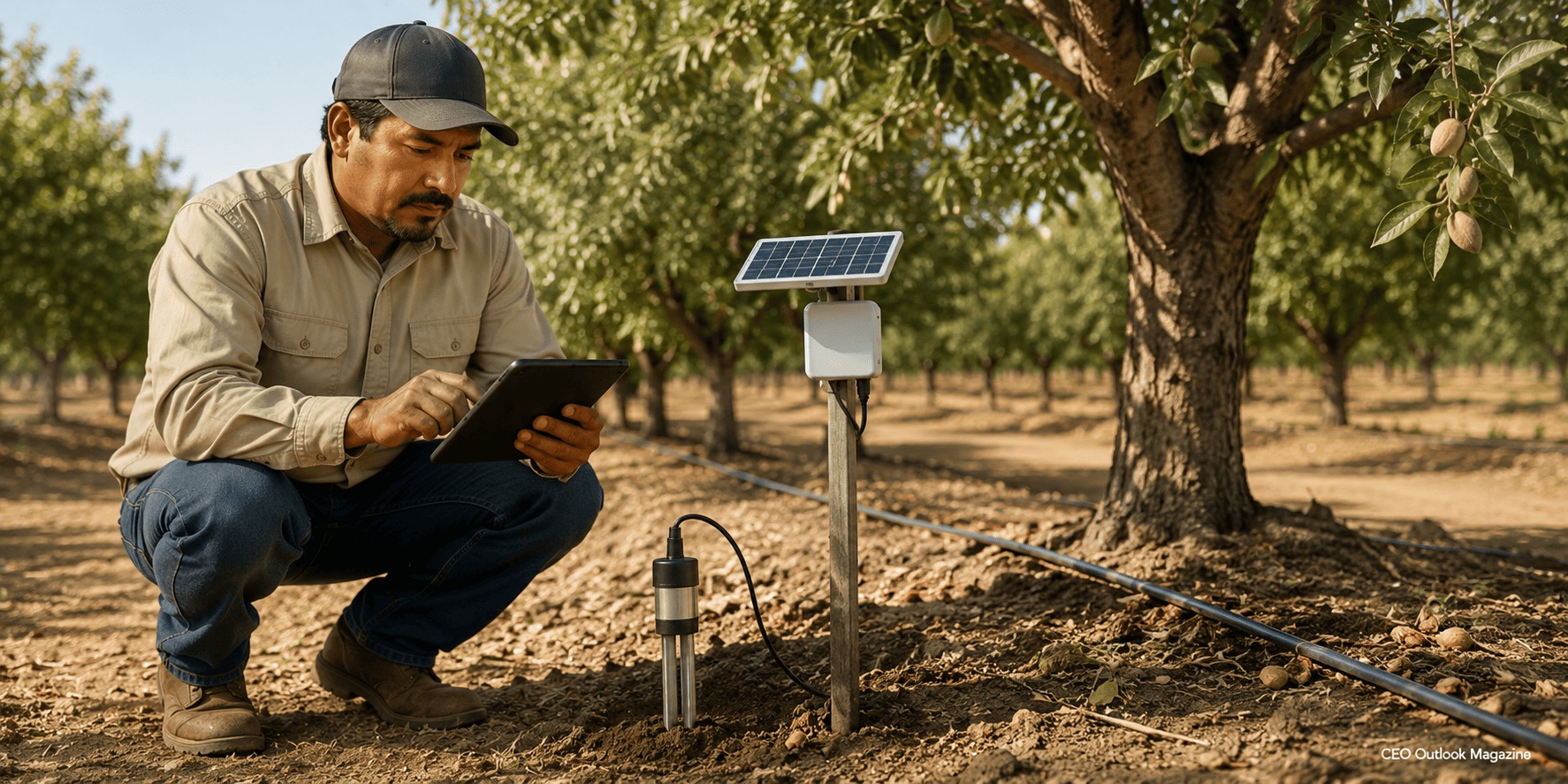
A 500-acre almond farm in Fresno County replaced calendar-based irrigation with AI-driven drip management in 2024. The outcome: water use dropped from 48 to 32 acre-inches per year, a 33 percent reduction. Yield rose 4 percent, likely due to less overwatering stress, and the farm saved about $135 per acre in water and pumping costs. These are real, documented results, but they fall short of halving water use. The more important question is not what one farm achieved, but how that compares to what broader research suggests is possible.
The Real Numbers From an Actual Farm: The Fresno farm’s experience shows what a single, well-executed precision irrigation upgrade can deliver. Previously, irrigation followed a fixed calendar and grower judgment—a standard approach that rarely adapts to actual field conditions. With the new system, irrigation was adjusted daily using real-time soil moisture, weather, and tree stress data, applying water only where needed. The $80,000 investment in sensors, controllers, and software produced a 33 percent water reduction and a modest yield gain. For a single-technology deployment, that is a strong return.ment.
Why "In Half" Is a Realistic Target, Not a Marketing Number
Broader research points to deeper water savings, but only when multiple technologies are combined. Reviews of precision irrigation case studies in major horticultural regions report water savings of 40 to 70 percent over conventional methods, with fertilizer use down 30 to 50 percent and yields up 20 to 40 percent—when drip irrigation, soil moisture sensors, and automated scheduling are integrated as a system. Some peer-reviewed studies show water savings up to 90 percent and yield gains of 26 percent, but only when several sensor-based technologies are layered, not adopted piecemeal. In desert lettuce production, combining regulated drip, soil moisture sensors, and biodegradable mulching cut water use while maintaining yields. The evidence supports the possibility of halving water use, but only with a genuinely integrated approach.
What It Actually Takes to Get There
The pattern is clear: no single technology delivers the largest water savings. The deepest reductions come from combining systems—soil moisture sensors for real-time crop needs, drip or subsurface drip irrigation to deliver water precisely, mulching to limit evaporation, and automated scheduling or AI tools to adjust plans based on live data instead of a fixed calendar. Precision fertigation adds another layer, integrating nutrient delivery into the same sensor-driven system and improving efficiency for both water and fertilizer.
The Honest Caveat: This Isn't Fully Commercialized Yet
A key caveat: fully AI-enabled automated irrigation is still rare and not yet commercialized at scale, especially for large systems like center-pivot irrigation on row crops. The most advanced combined systems—those approaching or exceeding 50 percent water savings—are mostly found in smaller drip setups on high-value crops such as orchards, like the Fresno almond farm. Even with soil moisture probes, many growers still walk their fields to confirm conditions before irrigating. Full automation is not yet a mature, widely deployed technology.
What This Means for Farm Operators
Katimbo’s advice is direct: before investing, producers need to define their goals and understand how each tool will help them use resources more profitably. The Fresno farm’s 33 percent reduction shows what a single, well-executed system can deliver now. The broader research—40 to 70 percent, and in some cases up to 90 percent—shows what is possible when multiple technologies are combined. Halving water use is not a marketing claim; it is a documented result of stacking proven systems, though for now it is most practical for smaller, high-value crops. Large row-crop operations will need further commercialization before these results are widely achievable.
For operators, the question is whether their irrigation strategy relies on a single upgrade or a genuinely integrated system capable of delivering the deeper water savings supported by research. The difference is not academic. It determines what is achievable in practice.