

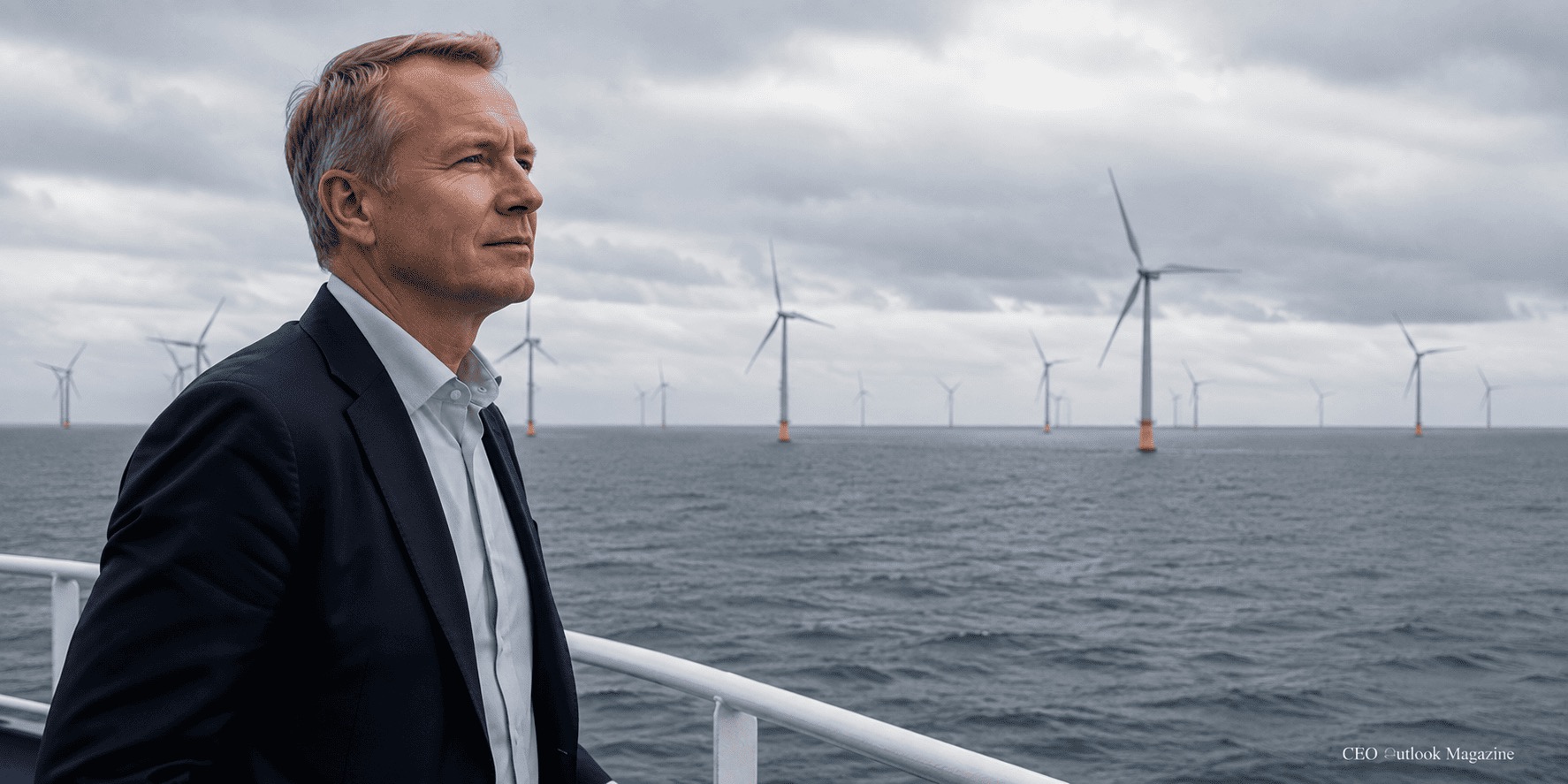
DONG, Danish Oil and Natural Gas, was exactly that when Henrik Poulsen became CEO in 2012. Eighty-five percent of its heat and power came from coal. By the time Poulsen left, the company had exited oil and gas entirely and become the largest offshore wind producer globally. This shift was not driven by clear financial logic at the outset. Poulsen committed capital to offshore wind before the economics were proven, not after.
The Foundation Laid Before the Hardest Decisions
The move toward renewables started before Poulsen. In 2009, DONG ordered 500 offshore wind turbines from Siemens—more than existed in the world at the time. The goal was to build enough scale to make offshore wind competitive, but the economics were not yet favorable. When Poulsen arrived, offshore wind capacity was only 1.7 gigawatts. The fossil fuel business still offered the safer, more profitable path by any conventional measure.
The Decision That Actually Cost Something
The defining decision came in 2017, when Poulsen sold the entire upstream oil and gas business to Ineos for $1.05 billion. This was not a forced sale. The division was profitable. The exit was a deliberate move to focus capital and management attention on renewables. Poulsen had already committed to phasing out coal by 2023. These were not incremental steps. They were a clear break from a profitable fossil fuel business, made before renewables had proven they could compete on cost.
Why "Over Easy Profit" Is the Accurate Description
The timing is critical. Offshore wind only became cheaper than coal in 2017, the same year DONG completed its oil and gas exit. Poulsen and his team committed to offshore wind before that crossover, not after. There was real internal skepticism. Market pressure on the gas portfolio, not certainty about renewables, helped justify the shift. The lower-risk option was to keep running the profitable fossil fuel business. Poulsen chose to commit to a technology that had not yet demonstrated cost parity.
The Result
The bet paid off decisively, though not without genuine risk along the way. Offshore wind capacity grew from 1.7 gigawatts in 2012 to 3.9 gigawatts by 2017, with the company targeting 11 to 12 gigawatts by 2025, backed by more than DKK 80 billion (roughly €10.7 billion) in cumulative investment. Financially, the transformation did not require sacrificing performance for principle: operating profits more than doubled under Poulsen's leadership, and return on capital employed rose substantially. The company's 2016 initial public offering was the largest in Copenhagen's history. By 2020, in PoulThe risk was real, but the results were clear. Offshore wind capacity grew from 1.7 to 3.9 gigawatts between 2012 and 2017, with a target of 11 to 12 gigawatts by 2025 and over DKK 80 billion invested. Operating profits more than doubled, and return on capital employed increased. The 2016 IPO was Copenhagen's largest. By 2020, Ørsted was ranked the world's most sustainable company, and its market value had multiplied several times over. It has already proven itself, and that's why Ørsted's transformation remains one of the most frequently cited case studies in corporate energy strategy nearly a decade later.
Would your organization commit fully to a strategic transformation before the economics have definitively proven out, or only after the risk has been substantially reduced by others moving first? CEO Outlook Magazine wants to hear your perspective — share your view with our editorial team, and subscribe to our newsletter for more leadership profiles from across the energy sector.