

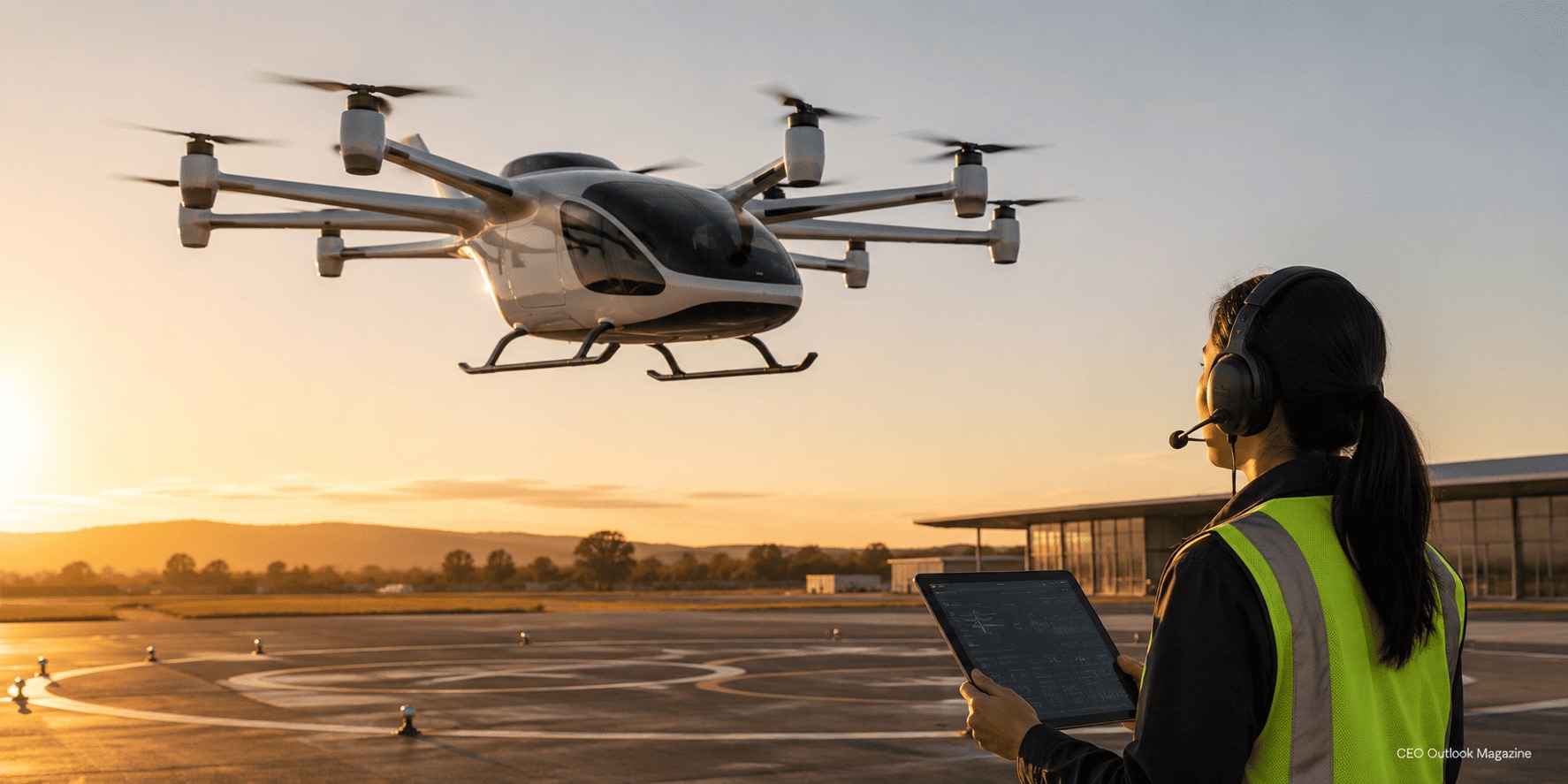
Sustainable aviation fuel accounts for less than 1 percent of global jet fuel consumption. In contrast, electric vertical takeoff and landing aircraft, previously seen as a novelty, are now nearing the final stage of FAA certification. These companies are already generating revenue and expect to carry their first paying passengers before the end of 2026. Unlike the gradual, supply-constrained shift to sustainable fuel, this is a capital-intensive regulatory contest measured in quarters rather than decades.
The Innovation Story Sustainable Fuel Headlines Have Overshadowed
Sustainable aviation fuel has dominated the conversation around aviation sustainability, largely because of the scale and complexity of the challenge. That focus has obscured a parallel innovation track moving on a different timeline. Electric vertical takeoff and landing aircraft are not constrained by refinery capacity, fuel certification, or multi-decade supply chain buildout. Their primary hurdle is a defined regulatory process. Two US companies have now advanced further in that process than most observers expected two years ago.
The Regulatory Race Already Producing Real Flights
The FAA's new eVTOL Integration Pilot Program allows pre-certified aircraft to begin limited operations across 26 states even ahead of full type certification, and companies are already using it. Beta Technologies completed the program's first flights in Maryland and Virginia on July 10, 2026, the first genuinely operational eVTOL flights under this framework anywhere in the country. Joby Aviation reported its strongest quarterly certification progress yet on August 5, 2026, describing significant movement in the fifth and final stage of FAA Type Certification, with five aircraft currently flying and twelve more in production. The company expects its own first pilot program flights in September 2026 in Texas and is still targeting its first paying passengers before the year ends. Archer Aviation became the first eVTOL company to close Phase 3 of the FAA's four-phase certification process in May 2026, with 100 percent of its required Means of Compliance accepted by the agency, and has taken over operations at Hawthorne Airport in Los Angeles as it targets commercial Midnight aircraft operations timed specifically around the 2028 LA Olympic Games.
The Honest Caveat: Full Certification Still Isn't Here
It is important to separate near-term milestones from the regulatory threshold that matters: full FAA type certification. Neither leading company has achieved this. The current pilot program flights are limited, closely supervised operations under a temporary framework. There remains a significant gap between flying early passengers in a controlled setting and operating at commercial scale. That distinction should not be lost amid headlines about progress. The regulatory work ahead is substantial.
How the Leaders Are Funding the Wait
Both companies are generating revenue while certification remains pending. Joby acquired Blade, an established passenger helicopter operator, to secure near-term revenue ahead of its own aircraft's certification. This strategy produced $36.2 million in second-quarter 2026 revenue and led to a raised full-year outlook, supported by $2.3 billion in cash and short-term investments as of June 30, 2026. Archer has taken a dual-market approach, completing flight testing of its Midnight aircraft in the UAE and securing Abu Dhabi Aviation and Etihad Aviation Training as partners, targeting commercial operations under local regulatory frameworks that do not depend on FAA timelines. Neither company is waiting for certification to build an operating business. Both are funding the path to commercial scale through active market participation.
The Innovation Happening Above and Around the Aircraft Themselves
A less visible but genuinely significant innovation thread is unfolding in airspace management. Archer is advancing its AI capabilities through partnerships with NVIDIA, Palantir, and Starlink, aligning with the US Department of Transportation's $20 billion effort to modernize air traffic control. This work focuses on AI-driven traffic flow and airspace integration systems designed to coordinate more low-altitude aircraft than current infrastructure safely allows. Parallel research into hydrogen-electric propulsion is also underway. Companies such as Beyond Aero have completed wind tunnel testing of aerodynamic designs for hydrogen-electric business aircraft using external fuel tanks. This represents a third propulsion pathway, still early but expanding the technical options under development. Leadership, the practical lesson is that measuring the industry's genuine innovation pace solely through the lens of sustainable aviation fuel materially understates how much real, near-term progress is happening elsewhere. The eVTOL certification race, real airspace modernization investment, and early hydrogen propulsion research all represent genuine technical and commercial advancement moving on considerably faster timelines than fuel production capacity, even as the sector's biggest long-haul emissions challenge remains, for now, largely unresolved. Organizations tracking aviation's transformation should weigh the near-term, verifiable progress in electric short-haul aviation and airspace management as seriously as the longer, harder fuel transition this publication has already examined.
Is your organization tracking aviation innovation beyond the sustainable fuel narrative, including the genuine near-term progress in electric aircraft certification and airspace modernization? CEO Outlook Magazine wants to hear your perspective — sMany organizations continue to focus on sustainable fuel as the primary measure of aviation innovation. That view risks missing the real, near-term progress in electric aircraft certification and airspace modernization. A single technology or timeline will not define the industry’s transformation.