

Annual turnover in manufacturing averaged 28 percent in 2025. For a 200-person plant, that means replacing 56 workers every year. Richard Finnegan’s manager-accountability approach, now used across multiple industries, has produced documented turnover reductions of 30 to 58 percent. The difference is not theoretical. It is a repeatable set of practices that most manufacturers still ignore, mainly because retention remains siloed as an HR issue instead of an operating priority.
Turnover Is Not a Soft Metric. It Is an Operating Cost.
The financial impact of high turnover in manufacturing is clear. Deloitte puts the replacement cost for a single frontline worker at up to $11,500. At a 28 percent turnover rate, this becomes a recurring, largely avoidable cost burden. The expense goes beyond recruiting and training. Unfilled roles slow production, drive up overtime for those left behind, and disrupt the daily reality for everyone who stays—managers repeating onboarding, teammates covering open shifts.
This reality is pushing retention out of the HR silo and into the metrics that finance tracks. A 2026 industry report covering over 52,000 frontline workers found that employers who applied consistent retention practices closed the engagement gap between top and average performers—from 57 percent to 72 percent—and cut turnover by about 10 percentage points year over year. That is not a minor HR improvement. For a plant at the sector’s 28 percent turnover baseline, it means moving from replacing over a quarter of the workforce each year to a far more stable operation, much closer to halving the problem.
The Two Levers Consistently Cited as Underinvested
Research on manufacturing retention consistently points to two underfunded levers: frontline supervisor quality and schedule predictability. Most supervisors are promoted for technical skill, not for their ability to manage people, even though they shape the daily experience of every production worker. Plants that invest in basic supervisor development—communication, conflict resolution, recognition—and disciplined onboarding see measurable gains in 90-day and first-year retention within two to three quarters.
Schedule predictability carries similar weight and is similarly underinvested. Workers repeatedly cite unpredictable overtime and short-notice schedule changes. Schedule predictability is equally important and just as neglected. Workers cite unpredictable overtime and last-minute schedule changes as a main reason for burnout and leaving—not because overtime is unacceptable, but because unpredictability makes planning impossible. Communicating overtime likelihood and timing as early as possible, even when the answer is uncertain, remains one of the highest-impact, lowest-cost actions plant leaders can take. A starting wage that was genuinely competitive eighteen months ago can fall meaningfully behind the local market without anyone at the facility ever deciding to make it uncompetitive, simply through inflation and shifting local labour conditions going unmonitored. Manufacturers treating wage competitiveness as a periodic, deliberate review rather than a set-and-forget line item consistently outperform peers who only revisit pay scales reactively, after turnover has already spiked.
Growth Visibility Closes the Loop
The final consistent factor across documented retention successes is whether frontline workers can actually see a path upward. Operators who cannot identify a realistic route to lead, technician, or supervisory roles inside their current employer will look elsewhere. A final retention pattern: frontline workers need to see a real path upward. If operators cannot identify a route to lead, technician, or supervisory roles, they will look elsewhere. Retention improves when skill progression is mapped, certifications are actively supported, and training programs are visible and structured—not left for employees to discover on their own—and research-based retention methodologies document reductions in the 30 to 58 percent range across real manufacturing clients. These reductions translate directly into millions of dollars in avoided replacement costs at any plant operating near the sector's 28 percent baseline. The manufacturers achieving this are not spending dramatically more than their competitors. They are investing in retention with the same operational discipline they apply to production metrics: measured, owned by frontline leadership rather than delegated entirely to HR, and improved continuously rather than addressed only after a wave of departures forces the conversation.
The Leadership Decision Underneath the Numbers
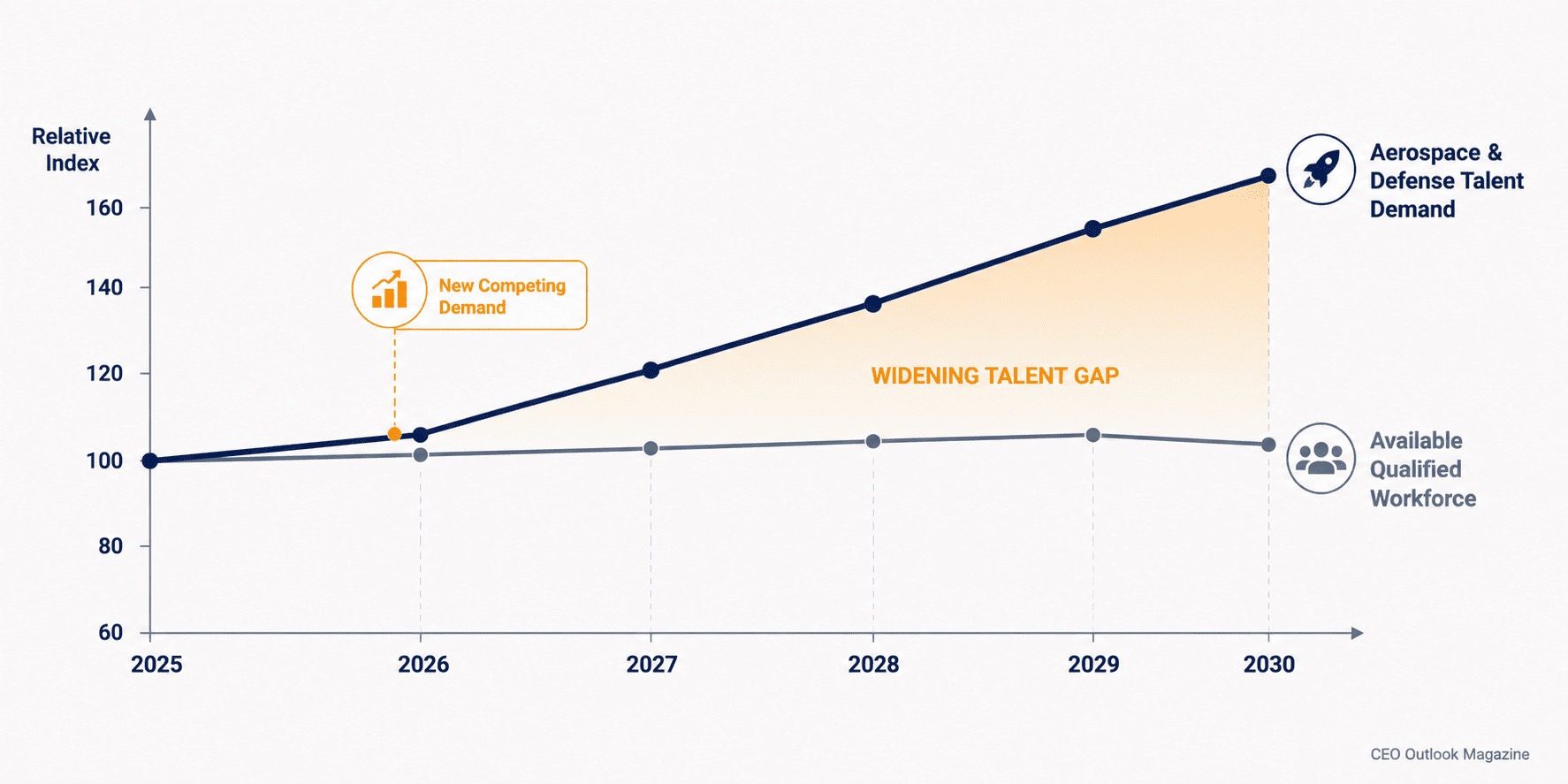
Manufacturing faces a genuine structural talent shortage over the coming decade, with the sector needing an estimated 3.8 million new workers between 2024 and 2033. The sector will need 3.8 million new workers between 2024 and 2033, with nearly half of those roles at risk of going unfilled. In this context, cutting turnover in half is not just a morale initiative. It is one of the few cost and capacity levers manufacturers can control directly, without waiting for labor markets or policy to shift. The plants that will be staffed in 2030 are, in large part, those treating retention as an operating priority now as it does to production output. That distinction will separate the plants that remain adequately staffed from those that do not.