

A Danish power plant now earns most of its income from selling byproduct steam, rather than paying to dispose of it. Companies in the surrounding industrial park collectively save €24 million each year by treating former waste streams as tradable resources. While circular economy initiatives are often framed as environmental requirements, the organizations that have integrated them into operations have found a more practical outcome: waste, if managed with discipline, can become a real revenue source.
The Original Blueprint: Six Decades of Results
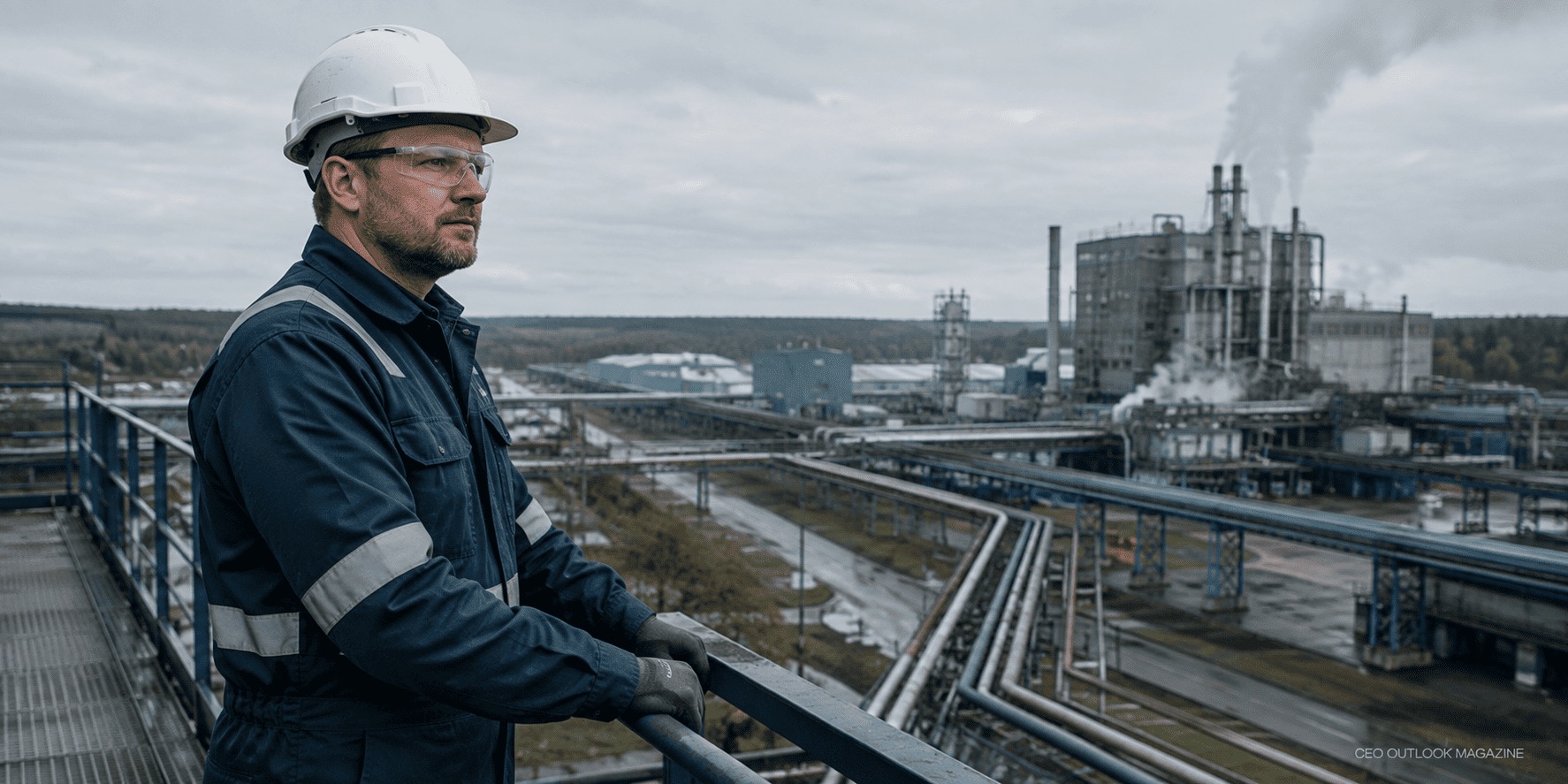
Kalundborg Eco-Industrial Park in Denmark is still the benchmark for industrial circularity, not because it is new, but because it has delivered consistent results for over sixty years. What started in the 1960s as informal exchanges between neighboring companies has become a network involving major industrial players, including Novo Nordisk, Novozymes, and Northern Europe's largest wastewater treatment plant. The process is straightforward: an electric utility supplies excess heat to nearby factories, a biology plant's organic waste is used as biogas feedstock for a refinery, and pharmaceutical sludge is processed for use as fertilizer by local farmers. The financial outcomes are clear. Companies in the park report annual savings of about €24 million from waste valorization and shared resources. Environmental benefits are also significant: 635,000 tons of CO2 emissions avoided, 3.6 million cubic meters of water saved, and 87,000 tons of solid waste diverted from landfill each year. Steam, once a byproduct of power generation, is now the utility's main product and income source. The original participants did not follow a formal circular economy framework. They describe their approach as a practical business decision to collaborate and share resources.s.Scaling the Model: National-Level Implementation
Kalundborg shows the model can work among neighboring companies. The UK's National Industrial Symbiosis Programme applies the same logic at national scale. Participants generated £1.3 billion in new sales and saved more than £1.3 billion in costs, making industrial symbiosis a measurable driver of both revenue and margin, not just a sustainability initiative. The combination of new sales and lower disposal and procurement costs has shifted circularity from ESG presentations to procurement and operational decisions for a growing number of manufacturers.
The PA Public Utility Finds Value in Wastewater. Every circular economy success story involves private manufacturers trading materials with neighbours. The Blue Plains Advanced Wastewater Treatment Plant in Washington, D.C. converts wastewater into energy and processes the remaining byproducts into a soil amendment sold directly to local farmers. The energy conversion alone saves the public utility an estimated US$10 million annually in avoided electricity costs, while the soil amendment sales save a further US$10 million a year in trucking and disposal costs, while simultaneously creating an entirely new revenue stream from material that previously existed purely as a cost centre. For an entity that most people assume exists solely to manage waste at public expense, that combination represents a genuine reframing of what an industrial byproduct is worth once someone actually builds a market for it.
A Manufacturer Built on Recycled Feedstock
Novelis, an aluminum producer and recycler, generated over US$17 billion in revenue last year by building its business around recycled aluminum feedstock. The company supplies rolled aluminum to sectors such as beverage cans, automotive, aerospace, and packaging, sourcing much of its material from scrap that would otherwise be a disposal cost for other industries. For Novelis, circularity is not an add-on to reduce costs, but the foundation of its revenue model.
Why Circularity Remains the Exception
Given the scale of documented savings and new revenue across these examples, the more interesting question is why circularity still is not the default approach across manufacturing. Remanufacturing, valorising byproducts, and structured scrap recovery programs can reduce production costs by 40 to 60 percent compared to conventional manufacturing using virgin materials, and roughly 80 percent of business leaders now describe circularity as important or very important to their organisation's strategy, up sharply from just over a third only three years earlier. The gap between that stated priority and actual implementation typically comes down to the same barrier every example above eventually had to solve: someone has to actively map what a facility's waste streams actually contain, identify a genuine buyer or internal use for that material, and build the logistics to move it, rather than defaulting to the path of least resistance, paying a fixed disposal fee and treating the material as worthless by definition.
The Leadership Decision Underneath the Trend
None of these companies relied on proprietary technology. Kalundborg's participants describe their approach as practical business, developed long before circular economy became a formal concept. The organizations turning factory waste into revenue today are making a similar decision: treating byproduct streams as commercial questions to be solved, not as fixed costs, and investing the coordination needed to determine their real value.
Is your organisation actively mapping its waste streams for revenue potential, or still treating disposal as a fixed cost? CEO Outlook Magazine asks: Most organisations still treat disposal as a fixed cost, rather than mapping waste streams for revenue potential. The difference is not technology, but a willingness to challenge assumptions about what waste is worth.