

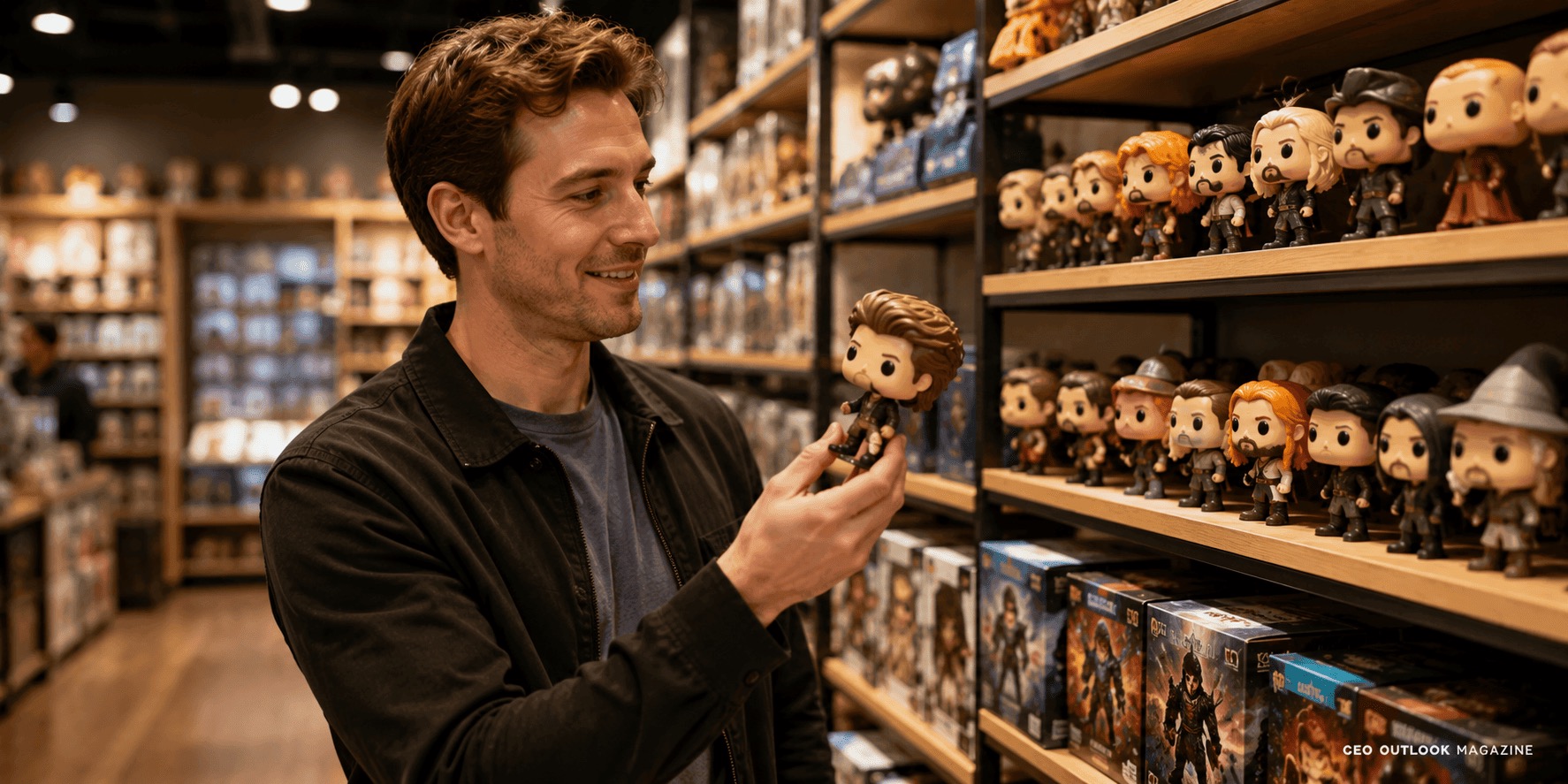
Mike Becker could not find an affordable Big Boy bobblehead, so he made one himself. That decision, made in a garage in Snohomish, Washington in 1998, led to Funko. The company did not just join the collectibles market; it redefined it, moving a niche hobby into a mainstream retail category that reached over a billion dollars in annual sales at its peak.
The Bobblehead Nobody Would Sell Him
Becker, then a T-shirt designer with a strong interest in pop culture memorabilia, realized he could license and produce a Big Boy mascot bobblehead himself rather than wait for someone else to make one. That insight, not the product itself, was the real starting point for Funko. He assumed there were others like him. The market proved him correct.
The Bet That Nearly Broke a Garage Operation
Funko's first major test came with the Austin Powers license, which required a $5,000 guarantee—a significant risk for a single-person garage business. The bet worked: Becker shipped 100,000 units from his driveway, quickly exceeding the scale the operation was built to handle. The business outgrew its original constraints almost overnight.
The Format Hardcore Collectors Doubted
After selling a majority stake to Brian Mariotti in 2005, Funko shifted direction. In 2010, the company introduced a new figure design at San Diego Comic-Con: oversized head, minimal facial detail, stylized proportions. Collectors were skeptical. The broader market was not. The format, later called Pop! Vinyl, became Funko's core product and drove its expansion.
What "Creating a Category" Actually Looked Like
Funko did not just build a toy line. It established a new retail category: licensed pop culture collectibles sold through mass retailers as well as specialty shops, reaching both casual buyers and dedicated collectors. The company has produced nearly 20,000 products across multiple licenses. By 2022, Funko reported $1.32 billion in annual revenue as a public company.
The Honest Complication
Funko's growth has not been uninterrupted. The collectibles market has faced significant challenges, including a slow recovery in the convention circuit and weak periods for major players like Hasbro and Mattel. Funko reported plans to destroy $30 million in unsold inventory after a difficult earnings period. Becker has downplayed these pressures, focusing on the creative work rather than claiming immunity from market cycles. That approach is unusual among founders, but it aligns with the mindset that built the business.
Where the Founder Is Now
Becker stayed involved in Funko's creative direction for over two decades, even after stepping back from daily operations. In 2024, after 26 years, he left the company and started a new collectibles venture, ROKIMOTO. The market he helped create now operates at a scale far removed from Funko's early days as a garage business.
Which category creators in consumer and entertainment are worth watching now? The most interesting cases are rarely the most obvious.