

Most manufacturers report that robots are augmenting, not replacing, their workforce. The data is less reassuring. Independent research shows that each robot added per 1,000 workers displaces between 3 and 6 jobs and reduces wages for those who remain. Both perspectives are accurate, and the real leadership challenge is to address the gap between industry optimism and the evidence, not to choose whichever narrative is easier to repeat.
The Story the Industry Tells Itself
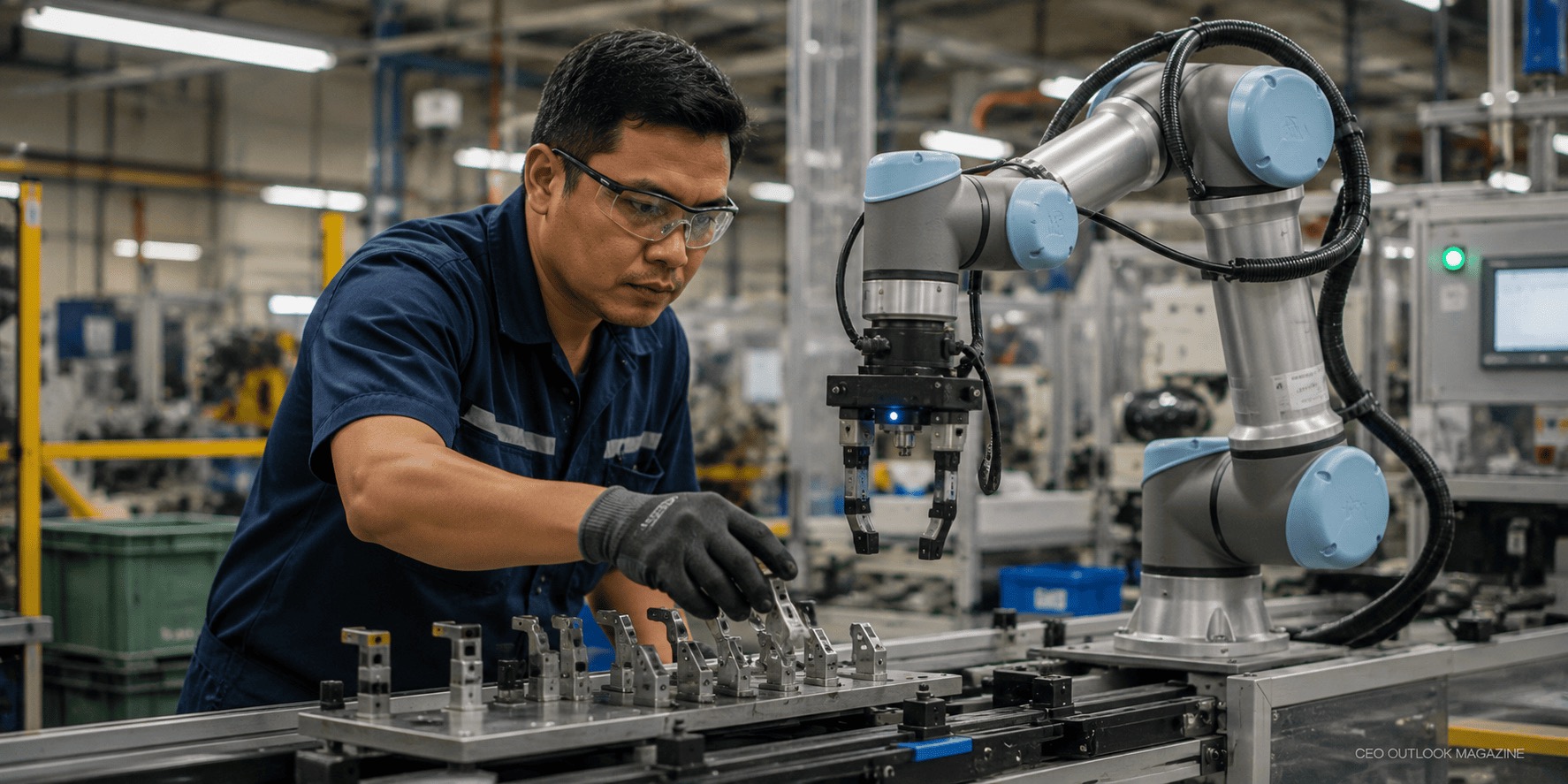
Manufacturing leaders tend to view automation as a positive force. The standard argument is that robots take on repetitive or hazardous tasks, allowing people to focus on higher-value work such as data analysis, product engineering, or supervising the robots themselves. Collaborative robots are designed to fit this model, working alongside human operators rather than replacing them. Many executives see automation as a growth driver, not just a cost reduction lever.
There is evidence to support this optimism. Automation does remove the most dangerous and repetitive jobs first, and it creates new roles—robotics coordinators, data analysts, maintenance technicians—that did not exist on traditional factory floors.
What the Rigorous Research Actually Shows
Labor market research is less optimistic. Multiple studies in the US and Europe show that robots do not just shift tasks—they reduce overall employment. One analysis found that a single robot can displace up to 6.2 workers in the US and 3.4 in Europe, with clear downward pressure on wages for those who remain. The impact is not evenly distributed. Lower-skilled workers are most at risk, and regions without reskilling or transition support see greater economic inequality and political polarization.
Leaders need to confront this gap directly. Manufacturers who see robots as augmenting their workforce may be correct in their own context, but the broader research shows that displacement is real and concentrated among workers with limited alternatives. Relying solely on the optimistic narrative risks underinvesting in the transition support that determines whether automation is genuinely additive or quietly displacing.
The Disruption Most Factories Haven't Faced Yet
This is not a settled debate. About 80 percent of US factories still operate without automation or robotics. Until now, the tension between optimism and displacement has played out mainly in larger, well-capitalized facilities. That is changing. New, lower-cost collaborative robots from manufacturers like Fanuc and ABB are making automation accessible to smaller factories that previously could not justify the investment or manage the operational requirements.
This shift matters for the workforce. The decision about how to manage the human transition through automation is about to affect a much larger share of factories and workers. Many smaller manufacturers now gaining access to affordable cobots have little infrastructure for structured reskilling—the exact condition most likely to produce displacement rather than augmentation, according to the research.
The Net-Positive Job Math Only Works Under One Condition
The World Economic Forum projects that AI and automation will displace about 9 million jobs globally while creating 11 million new ones—a net gain on paper. But this outcome depends on whether displaced workers can move into the new roles. Skills shortages are already a constraint, with many companies reporting workforce gaps before the next wave of automation. A net-positive job count at the global level does not help a displaced assembly-line worker if the new robotics technician role requires training that was never provided.
What Actually Keeps the Workforce Through the Transition
Manufacturers who avoid workforce disruption during automation treat reskilling as part of the capital investment, not as a separate HR project. They budget for training alongside equipment, involve frontline workers early in deployment planning, and create clear pathways from displaced roles to new, higher-skilled positions. They do not assume workers will find their own way into new jobs.
The evidence does not support automation as either inherently destructive or purely additive for the workforce. Its impact depends on whether leadership invests in the transition up front. Underfunding transition support and relying on optimistic narratives is a risk most organizations cannot afford to discover after the fact.
How is your organization investing in workforce transition as it deploys automation and robotics? The practical choices made now will determine whether automation strengthens or weakens the workforce over time.