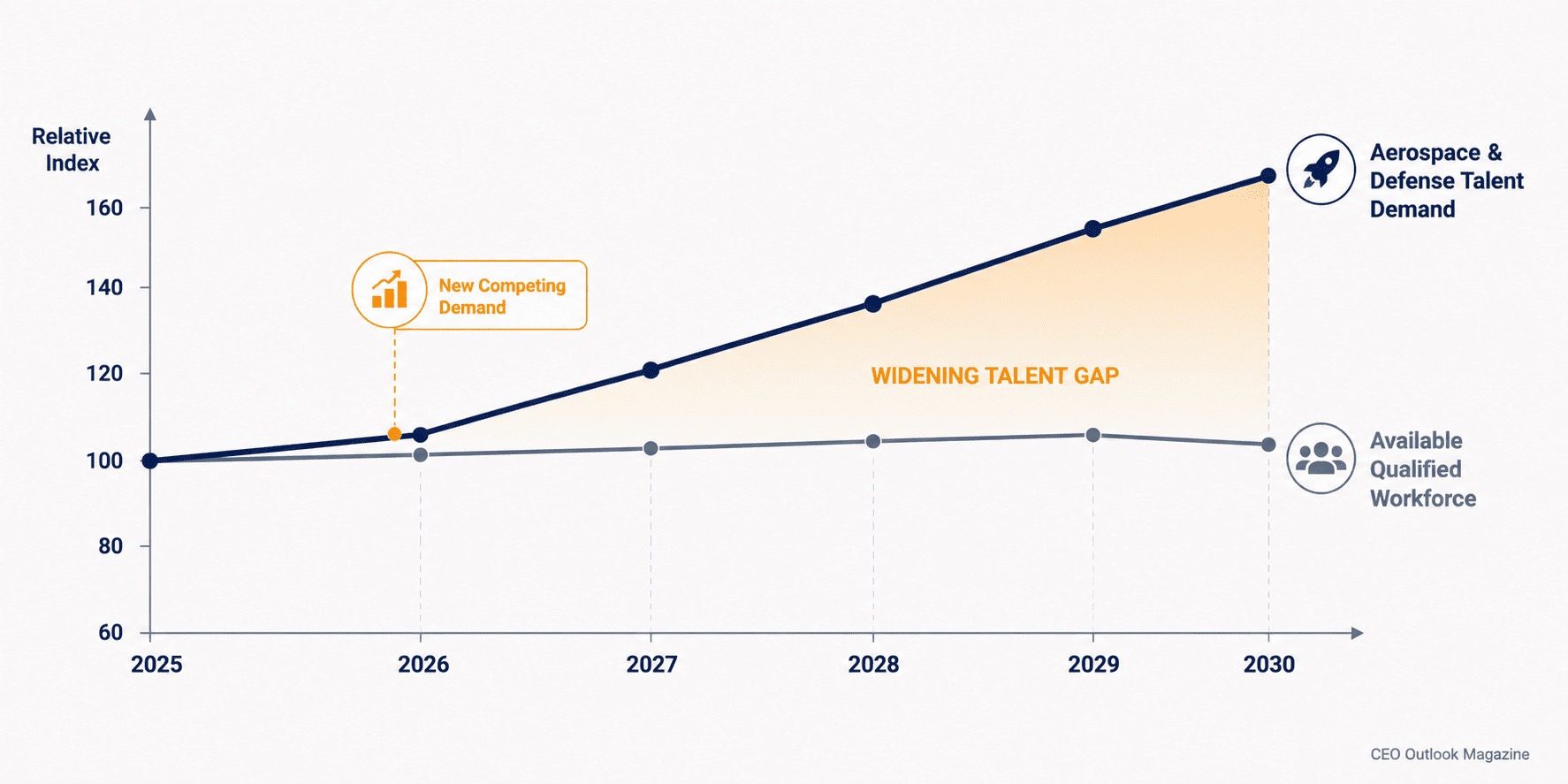



Manufacturing leaders often point to a familiar set of explanations: young people are uninterested, the sector suffers from an image problem, and talent is drifting toward tech, finance, or creative fields. Yet 31 percent of Gen Z is now choosing not to pursue a four-year college degree, a shift that should expand the pool of candidates for skilled trades. Despite this, the industry still faces a projected 2.1 million unfilled jobs by 2030. The persistence of the gap suggests the problem is less about generational attitudes and more about specific, addressable barriers within the hiring process.
The Story Everyone Tells
The usual explanation for manufacturing's labor shortage is straightforward: experienced workers are retiring faster than replacements can be found, younger candidates see factory work as outdated, and the sector struggles to compete with industries viewed as more modern. These factors are real, but they do not fully explain the persistent shortage. Relying on this narrative risks ignoring operational decisions within manufacturing firms that have contributed to the problem.
The Data That Doesn't Fit the Story
Here is what the "young people don't want theseThe claim that young people are uninterested in manufacturing overlooks a significant shift: nearly a third of Gen Z is opting out of the four-year college track, often questioning its value for skill development and career prospects. This group is already inclined toward hands-on, skills-based work, which should align with manufacturing's needs. The continued shortage, despite this trend, points to a bottleneck that is not rooted in generational preference.more precise explanation shows up in hiring data that manufacturing leadership rarely examines directly. Entry-level job postings, roles requiring zero to two years of experience, have declined by an average of 29 percentage points globally since early 2024, even as employers across sectors including manufacturing continue to describe an acute talent shortage. That is a genuine contradiction worth sitting with: fewer entry points are being created at precisely the moment a large cohort of young workers without a four-year degree is actively looking for exactly that kind of access.
Credential and degree inflation adds another barrier. Many manufacturers rely on automated screening systems that prioritize keywords and formal credentials, often at the expense of actual job-relevant skills. This approach excludes capable candidates whose experience does not match predefined criteria, even when they could perform the work. The result is a process that filters out qualified applicants before any human review, while companies continue to report a shortage of talent.
The Hiring Process Itself Is the Leak
The challenges extend beyond automated screening. Slow and opaque hiring processes cause manufacturers to lose candidates who have already been identified as viable, especially when other sectors move faster to secure similar talent. Candidates who receive no status updates often accept other offers rather than wait indefinitely. This issue has become significant enough to attract regulatory scrutiny, with new legislation in several jurisdictions targeting hiring process transparency and requiring timely communication with applicants. Manufacturers that do not address these issues internally may soon face external mandates to do so.
What Manufacturers Actually Need to Fix First
The solution is not to double down on marketing to skeptical young people, but to address the hiring systems that are losing candidates who are already interested. Moving from credential-based to skills-based hiring would open access to the 37 percent of high school graduates who enter the workforce directly, a group manufacturing has often overlooked. Building structured training pipelines with community colleges and technical schools can help address supply constraints. Retention data also shows that offering rotational programs, which allow new hires to experience different departments before choosing a role, can reduce turnover by up to 30 percent. This suggests that when given clear career pathways, new workers are more likely to stay.
The Uncomfortable Reframe
The core issue is not generational disinterest, but hiring systems designed for a different labor market. These systems filter out candidates who are already inclined toward the work manufacturing needs. Addressing the industry's image may take years with uncertain results. Improving the hiring process to capture interested candidates is a more immediate and controllable step for manufacturing leaders.
Manufacturing leaders should ask whether their hiring processes are designed to attract candidates already interested in skilled trades, or whether those systems are quietly excluding them.