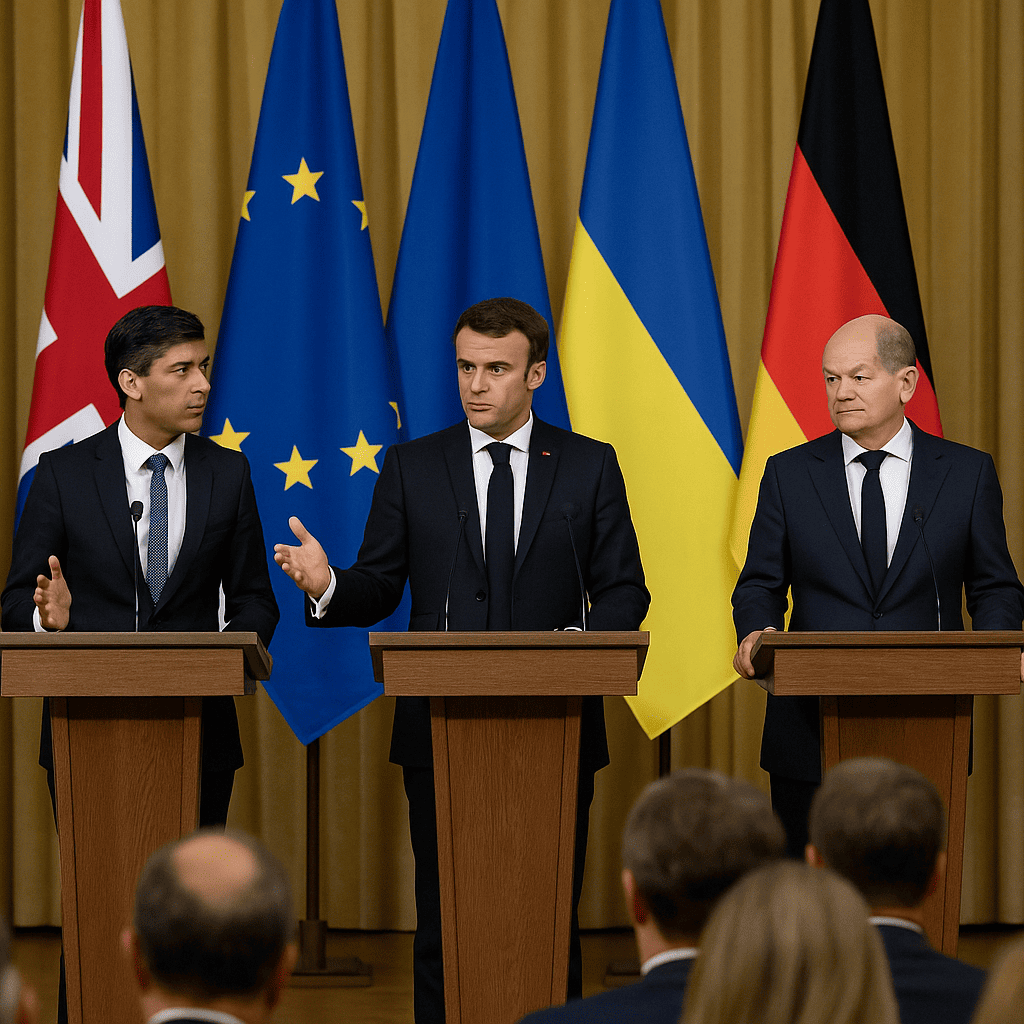
The European counterproposal to the US-Ukraine peace plan is now redefining the direction of Western diplomacy after EU powers rejected several elements of the initial U.S. framework. The UK, France, and Germany jointly produced a detailed rewrite, arguing Washington’s first draft risked embedding Russian strategic gains and weakening long-term European security. Their revised proposal has been sent to the U.S. ahead of follow-up negotiations in Geneva.
At the center of the European counterproposal to the US-Ukraine peace plan is the rejection of any clause that binds NATO to limit future enlargement. European officials removed the U.S. sentence suggesting NATO would halt expansion, replacing it with a broader non-aggression pact between Russia, Ukraine, and NATO. This structure positions security guarantees as reciprocal, not concessions made at Ukraine’s expense.
The European text accepts that Ukraine’s NATO membership lacks consensus today but avoids permanently closing the door. It proposes a peacetime Ukrainian force ceiling, no permanent NATO troop presence inside Ukraine, and rotational NATO air deployments in Poland. Crucially, the proposal demands a U.S.-backed guarantee resembling Article 5: if Russia attacks again, an automatic coordinated military response and global sanctions snapback would activate.
Economically, the European counterproposal to the US-Ukraine peace plan hardens the U.S. approach. It maintains that Russian sovereign assets must remain frozen until Kyiv receives full compensation. Reconstruction would be financed through a Ukraine Development Fund focused on advanced industries, infrastructure, and digital capacity. Sanctions relief and any future Russian reintegration into global institutions would only occur after verified compliance.
On territory, Europe rejected parts of the U.S. draft seen as prematurely validating Russian control. The new text calls for negotiations based on the current line of contact without endorsing annexations. Ukraine would commit to avoiding the use of force to retake the occupied regions, but all territorial outcomes remain subject to future talks.
Humanitarian provisions include full prisoner exchanges, the return of civilian detainees, and international monitoring of displaced children.
Russia dismissed the proposal immediately, creating a difficult diplomatic path. However, speculation indicates Europe is positioning the European counterproposal to the US-Ukraine peace plan as the only viable framework that avoids rewarding territorial aggression while ensuring Ukraine’s long-term security.