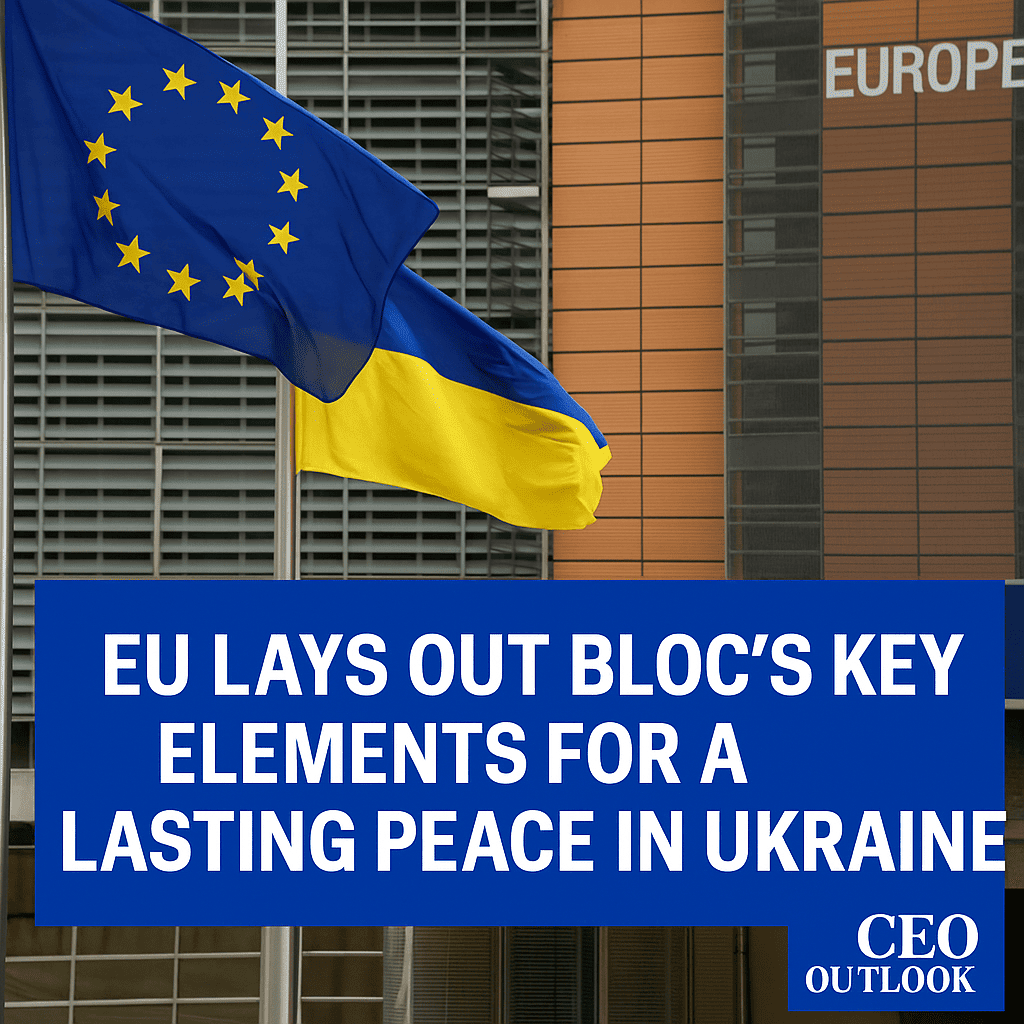
European leaders have presented a consolidated framework outlining the EU’s key elements for a lasting peace in Ukraine, signalling a unified diplomatic posture amid competing international proposals. Senior officials emphasise that any settlement must safeguard Ukraine’s sovereignty, ensure strict accountability measures on Russia, and create defence and economic arrangements resilient enough to prevent a renewed conflict. This is why the EU lays out the bloc’s key elements for a lasting peace in Ukraine as a structured blueprint rather than a symbolic declaration.
The core principles outlined by the EU when it laid out the bloc’s key elements for a lasting peace in Ukraine include complete territorial integrity, the withdrawal of Russian forces, the restoration of Ukraine’s internationally recognised borders, and a reparations mechanism funded through Russian sovereign assets currently frozen across Europe. Brussels is also insisting on binding security guarantees coordinated with NATO, but not replacing NATO’s role. By recognizing that the EU outlines the bloc’s key elements for lasting peace in Ukraine, leaders want to establish political ownership of the process, countering external plans that risk diluting Ukraine’s negotiations.
Energy security, sanctions durability, and legal architecture form a second layer of priorities. The blueprint proposes long-term protection against the weaponisation of energy resources, the enforcement of war-crime investigations, and the digital monitoring of ceasefire lines. This contributes to the argument that the EU’s bloc approach lays the groundwork for lasting peace in Ukraine through a more comprehensive lens than single-country initiatives.
Forward-looking proposals include:
• A multinational enforcement taskforce combining satellite surveillance, AI-driven border monitoring, and digital evidence-verification tools.
• A reconstruction strategy anchored in EU institutions, enabling predictable financing and transparent allocations of Russian assets.
• A standing EU-Ukraine Security Compact featuring defence-industrial cooperation, co-production of ammunition, and cybersecurity alliances.
• (Speculative) Deployment of autonomous drone-based inspection units to track violations of demilitarised zones in real time.
By ensuring the EU lays out the bloc’s key elements for a lasting peace in Ukraine, leaders are preparing a settlement architecture that prioritises long-term stability rather than short-term political appeasement. This approach reinforces Europe’s message: Europe’s peace must be anchored in law, sovereignty, accountability, and enforceable security structures.