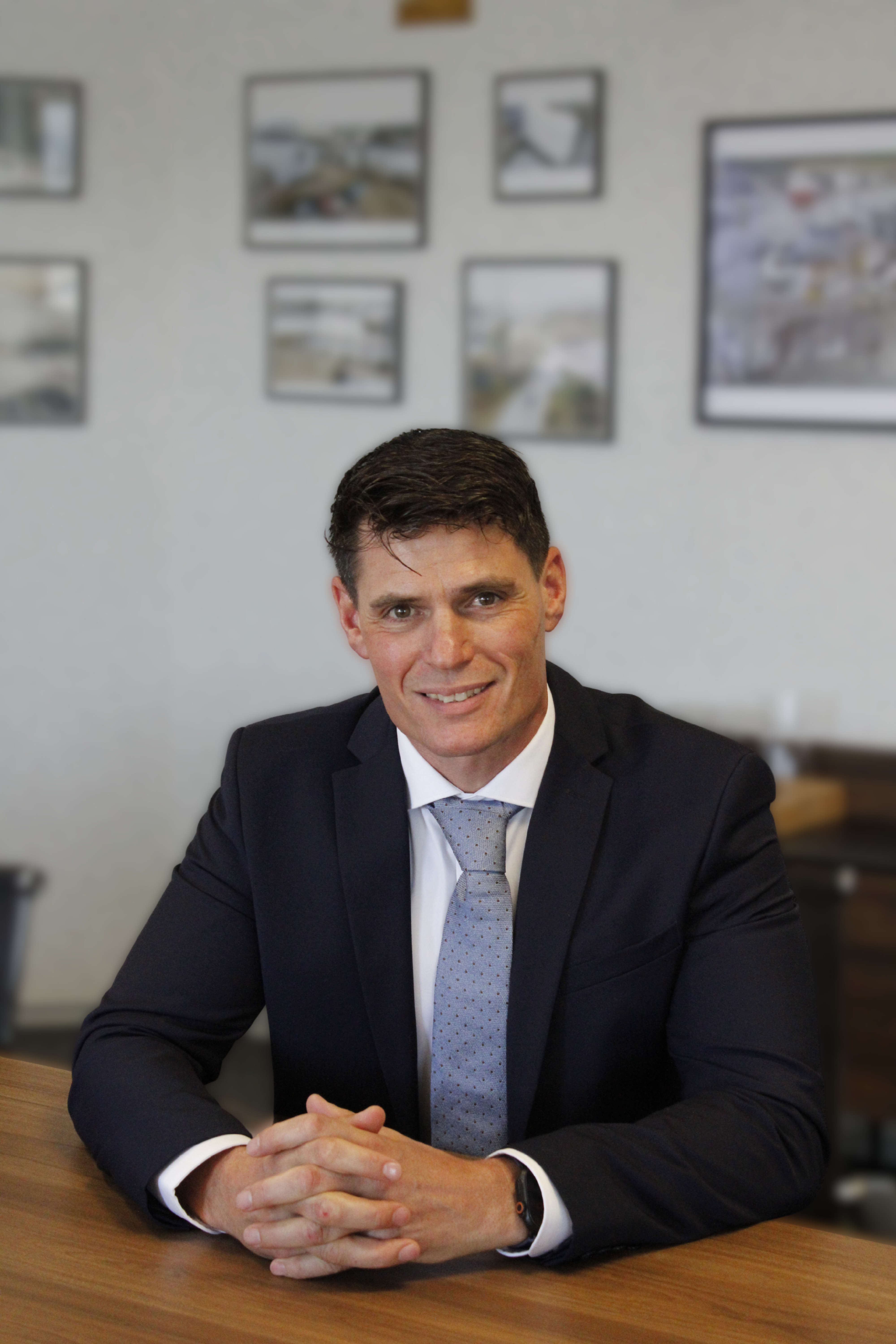
Recycle it Global (RIG) began not in a boardroom, but on a train journey, when Paul Nicholls and co-founder Oscar Milverton Gatta recognised the scale of the world’s waste challenge. That conversation sparked the idea for a business that could combine engineering excellence with commercial rigour to address one of the planet’s most pressing issues.
For Paul, whose career spans the Ministry of Defence, senior roles in local government, and managing successful law firms, it was a natural step. Years spent leading complex projects in high-stakes environments gave him the skills to navigate systems, build teams, and deliver results. But this venture was different, it was not only a technical challenge, but also a mission.
From the outset, Paul and his team chose a path that went against conventional wisdom. Rather than focusing solely on organic growth, RIG pursued acquisitions early. Sites such as RIG Scorrier, RIG Newquay, RIG Roseland, and RIG Plymouth gave the company immediate capacity and credibility in the communities it serves. It was a bold approach that required trust from investors and partners, but it accelerated RIG’s journey to becoming a multi-site operator in just a few years.
At the heart of Paul’s leadership is a simple but powerful principle, waste should be seen as a resource, not an end product. Millions of tonnes of construction, demolition, mining, marine dredging and general waste material are discarded every year, but with the right processes they can be repurposed into valuable building materials.
For Paul, the circular economy is not a slogan but a practical route to reduce reliance on primary extraction, cut carbon emissions, and protect the environment while enabling infrastructure development. Every tonne recycled represents a tangible contribution to climate resilience and every success fuels his determination to do more.
Paul is clear that vision alone is not enough. At RIG, ambition is matched with engineering precision. Asking “what if?” drives innovation, but quality, safety, and compliance remain at the core. With his background in project management and engineering contracts, Paul is able to bridge the gap between strategy and operations, ensuring bold ideas are always matched by practical deliverability.
Acquisitions such as Pomphlett Jetty (now known as RIG Plymouth) and CTC Waste (now operating as RIG Roseland) reflect a long-term strategy rather than opportunistic expansion. RIG evaluates every opportunity against four pillars: Feasibility, Construction, Operations, and R&D. A structured two-stage process—Pre-Feasibility and Bankable Feasibility—ensures that only the most viable opportunities progress. This disciplined approach means that every new site strengthens RIG’s capacity to innovate and deliver sustainable solutions.
Internally, RIG’s success has been underpinned by cultural and operational innovation. Paul has fostered a culture of ownership, where every employee from graduate engineers to senior directors feels accountable for the company’s progress. Investment in advanced wash plants and data-driven logistics has also transformed operations, providing transparency and traceability that builds trust with clients and regulators alike. For Paul, however, success is measured in more than efficiency. Each new facility creates skilled jobs, apprenticeships, and training opportunities. RIG also partners with councils, education providers, and charities to support local communities. Philanthropy, in his view, is not an add-on but a responsibility: businesses should leave a positive legacy, not just profit.
One of Paul’s most memorable moments was seeing the first recycled aggregates leave RIG’s Scorrier site for local construction projects. By supplying high-quality recycled materials, RIG reduced the region’s reliance on imported primary aggregates, cutting transport distances and emissions. For a local contractor, the availability of RIG’s products meant they could win work on sustainability a criteria reminder that RIG’s innovation benefits not only large-scale infrastructure but also small businesses and local communities.
The future for RIG includes deploying our waste management processes and advanced technologies across more sectors and continue to pioneer work in bioremediation and sustainable marine dredging. Advances in bioremediation could transform the restoration of contaminated land and marine environments, while innovative approaches to dredged material are opening new opportunities for ports around the world. Partnerships with global engineering firms, universities, and technology providers will be central to delivering these solutions. Paul is clear: the challenge is not just recycling, but regeneration finding new ways to restore environments, reduce carbon, and create value for future generations.
To entrepreneurs looking to make their mark in sustainability, Paul offers simple advice, start now. Conditions will never be perfect, but conviction and clarity of mission attract the right people and resources.
As Paul reflects on the company’s journey, he emphasises that RIG is not just a recycling business it is a platform for innovation, designed to respond to the unique waste challenges of different regions. With a growing network of sites, advanced engineering capabilities, and a commitment to community, RIG is building both scale and trust. Paul didn’t set out to become a CEO; he set out to solve a problem. In doing so, he is building more than a company he is helping to shape a sustainable future.