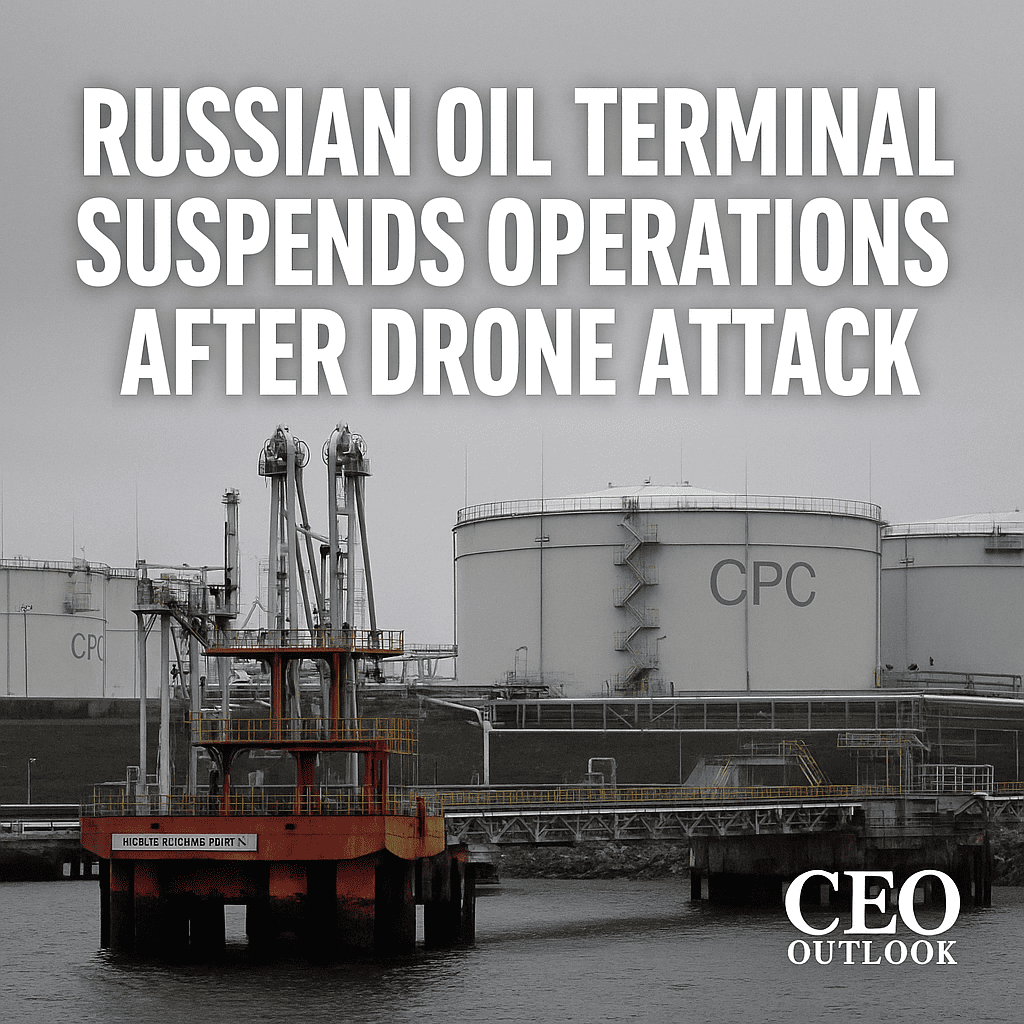
Russian oil terminal suspends operations after drone attack
A central Russian oil terminal suspends operations after a drone attack on the Caspian Pipeline Consortium’s (CPC) marine hub in Novorossiysk, forcing a halt to crude loading at one of the most strategic export points in the Black Sea. According to official CPC statements, the assault occurred at 04:06 a.m. when unmanned surface drones struck Single Mooring Point-2, damaging the loading system and triggering emergency shutdown procedures. The consortium confirmed that no oil leaked and all personnel remained unharmed, but the Russian oil terminal suspended operations after a drone attack until repairs and security assessments are complete.
CPC handles roughly 1% of the world’s oil supply and transports around 80% of Kazakhstan’s crude output before it is shipped onward from Russian territory. Following a drone attack that suspended operations at the Russian oil terminal, Kazakhstan’s energy ministry activated contingency protocols to divert volumes through alternative routes, including potential Caspian Sea tankers and rail-based options. Officials have framed the strike as sabotage against civilian energy infrastructure that impacts global markets, not just regional politics.
The shutdown follows earlier attacks on vessels heading to Novorossiysk, including tankers from Russia’s “shadow fleet” targeted by naval drones while approaching the Black Sea port. Ukraine has intensified strikes against refineries, ports, and energy hubs throughout 2025, aiming to reduce Moscow’s export revenue. Within this broader trend, the latest incident — where the Russian oil terminal suspends operations after a drone attack — represents a significant addition to the list of compromised logistics nodes.
Energy analysts say the market impact will depend on repair timelines. Even a short disruption at CPC can cause scheduling delays, raise freight insurance premiums, and tighten supplies to Mediterranean refiners. Should similar strikes continue and another Russian oil terminal suspends operations after a drone attack, traders may price in a higher risk premium for Russian-linked crude, especially as maritime insurers reassess Black Sea exposure.
For Kazakhstan, the episode renews the urgency of diversifying export corridors to reduce reliance on Russia-controlled terminals. For global markets, the attack reinforces how vulnerable centralized oil hubs have become in an era of unmanned weapon systems and increasingly asymmetric warfare.