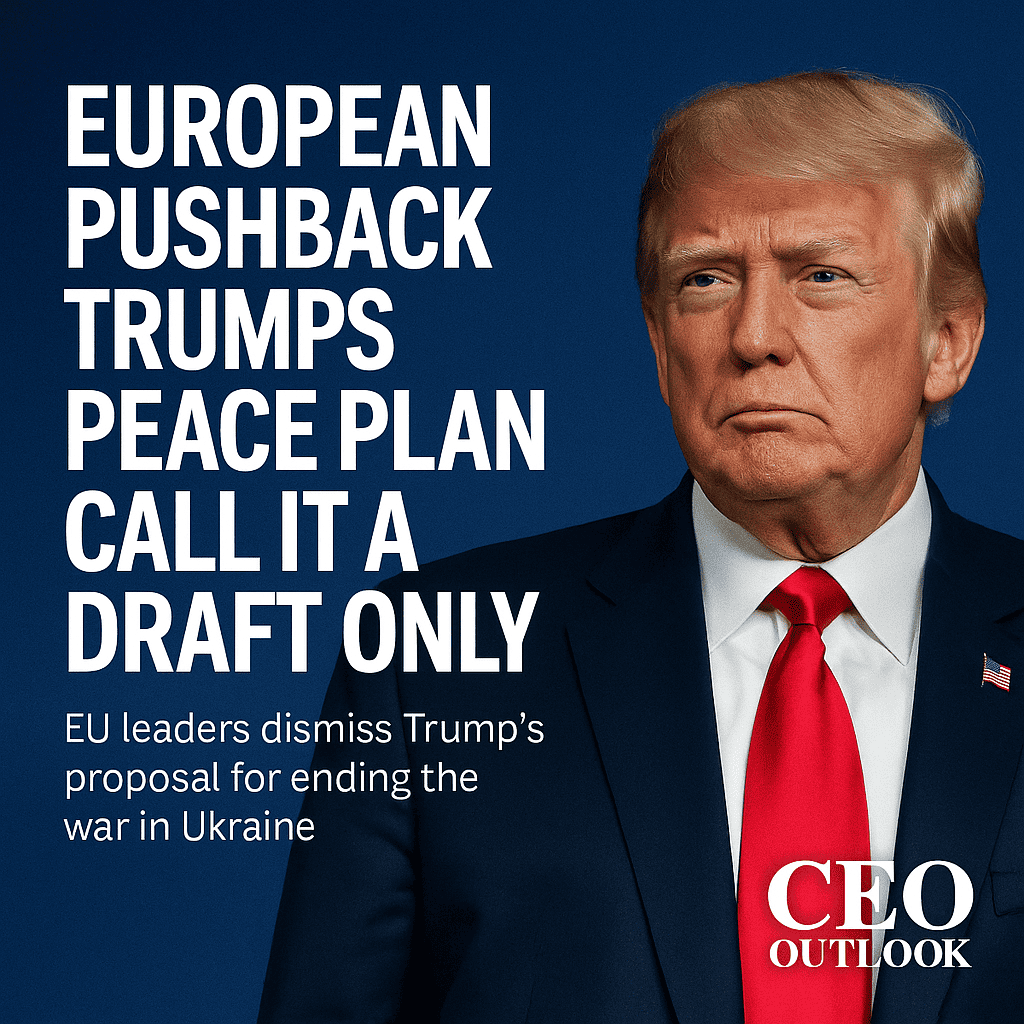
European officials have made it clear that the European pushback trumps the peace plan; they call it a draft only and responded sharply to the 28-point peace proposal circulated by former U.S. President Donald Trump regarding the war in Ukraine. Senior diplomats from France, Germany, Italy, Poland, the Baltics, and EU institutions stressed that the proposal cannot be considered a viable peace framework, underscoring that the European pushback trumps the peace plan, calling it a draft only until core concerns are addressed.
The reason European pushback trumps the peace plan’s call to treat it as a draft stems from several fundamental disagreements. European leaders reject any arrangement that undermines Ukraine’s territorial integrity, particularly sections implying recognition of Russian control over Crimea and the Donbas. They also oppose provisions limiting Ukraine’s future defence capability, viewing such restrictions as a structural threat to European security. With these gaps unresolved, the European pushback trumps the peace plan; call it a draft, and only a position remains firm.
Diplomats also argue that the proposal bypasses existing EU and NATO security frameworks. Any sustainable agreement, they insist, must integrate positions from Kyiv, Brussels, and major European capitals. This insistence explains why European pushback trumps the peace plan: it’s only a draft — Europe demands a central drafting role, not an after-the-fact endorsement.
Economic and legal concerns further reinforce the stance. Europe rejects premature discussions on unfreezing Russian sovereign assets without clear commitments on reparations. The EU wants asset-use mechanisms tied to international law, not bilateral arrangements. Europe also seeks guarantees that Russia cannot exploit loopholes in sanctions during a transition period. These factors reinforce the message that European pushback trumps the peace plan; call it a draft only until a more credible foundation is created.
Forward-looking strategies emerging from this diplomatic phase include:
• A Europe-led alternative plan with binding security guarantees and international monitoring.
• A reconstruction mechanism anchored in EU institutions, combining frozen Russian assets with long-term financial assistance.
• (Speculative) Deployment of AI-driven border-monitoring systems and satellite-verified ceasefire compliance to ensure Russia cannot manipulate on-the-ground conditions.
Ultimately, the stance that European pushback trumps the peace plan, by calling it a draft only, signals Europe’s intention to shape the final settlement—not merely respond to external proposals.
Also Read: