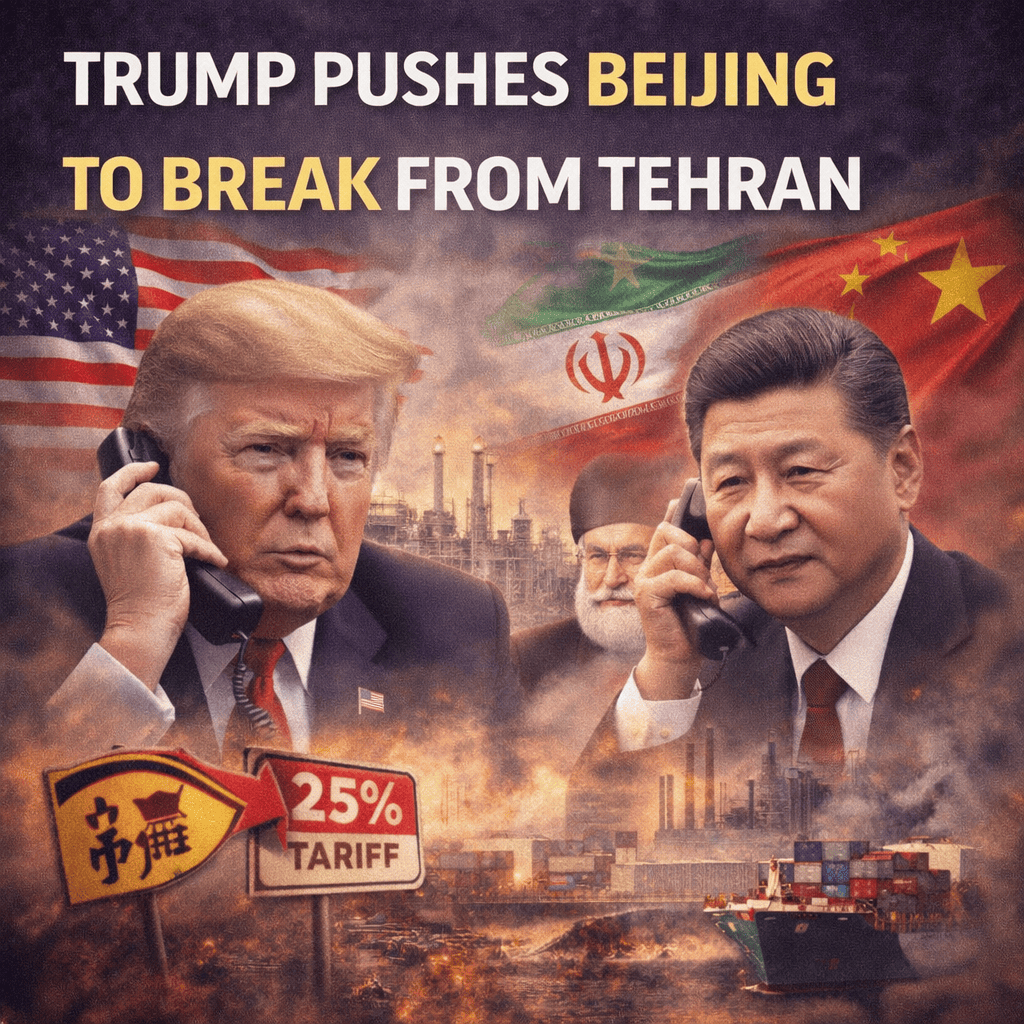
Trump pushes Beijing to break from Tehran as part of a broader effort to realign China’s regional positioning during a phone call with Chinese President Xi Jinping, according to U.S. officials familiar with the exchange. The conversation reflects Washington’s renewed attempt to use its relationship with Beijing to increase pressure on Iran while simultaneously managing friction points across trade, Taiwan, and global security.
President Donald Trump framed Iran as a central destabilising force in the Middle East and urged China to scale back political and economic engagement with Iran. The White House said Trump emphasised that continued Chinese ties with Tehran complicate diplomatic efforts and undermine U.S. attempts to curb Iran’s nuclear ambitions and regional influence. While Trump publicly described the call as constructive, Chinese state readouts avoided direct reference to Iran, focusing instead on stability in bilateral relations.
The timing is strategic. As Trump pushes Beijing to break from Tehran, Washington is escalating economic pressure by warning of secondary tariffs on countries that continue significant trade with Iran. China remains one of Iran’s most important economic partners, particularly in energy, infrastructure, and logistics. That leverage makes Beijing a key variable in Washington’s Iran strategy, even as U.S.–China relations remain strained.
Beyond Iran, the call underscored how interconnected current geopolitical disputes have become. Trade was a major topic, with Trump reiterating concerns over market access, tariffs, and supply chains for critical minerals. He also raised agricultural exports and energy sales, signalling that economic incentives remain part of Washington’s diplomatic toolkit. For Beijing, these discussions come as it seeks to stabilise growth while navigating a more transactional U.S. foreign policy.
Taiwan added another layer of tension. Chinese officials reiterated long‑standing objections to U.S. arms sales, framing the issue as a core sovereignty concern. This backdrop complicates any expectation that Trump’s push for Beijing to break with Tehran will translate into immediate policy shifts, given China’s reluctance to align with U.S. pressure campaigns while sensitive regional issues remain unresolved.
Diplomatically, the outreach coincides with planned U.S.–Iran talks in Oman. Trump has said he prefers a negotiated outcome but continues to pair diplomacy with coercive measures. Pressing China to distance itself from Tehran fits that dual approach, designed to narrow Iran’s external options while talks remain fragile.
From Beijing’s perspective, cutting ties with Iran carries costs. Energy security, Belt and Road investments, and long‑term strategic positioning all factor into China’s calculus. That makes it unlikely Beijing will dramatically reverse course. Instead, analysts expect incremental adjustments—reduced visibility, quieter engagement, or selective compliance—rather than an outright break.
Still, Trump’s push for Beijing to break from Tehran signals a clear message: Washington views China’s role as pivotal in shaping Iran’s strategic environment. Whether this pressure produces tangible change will depend on how Trump balances economic incentives, geopolitical trade‑offs, and the broader trajectory of U.S.–China relations in the months ahead.